
Algae is in your pool right now. Spores blow in on the wind, ride in on swimsuits, and fall with the rain.
They land in every pool on the street. Only some of those pools turn green. The difference is conditions, not luck.
Algae needs three things
It needs light, warmth, and food. Your pool sits in the South Texas sun all summer, so light and warmth are already handed over.
That leaves you one real lever. Kill the spores faster than they multiply, and keep the water moving so they cannot settle anywhere.
Everything below is a version of failing at one of those two.
1. Chlorine dropped, even briefly
This is the cause behind most blooms. Free chlorine needs to stay between 1 and 3 parts per million.
It does not take long. A few hot days, a busy weekend, and a floater that ran out on Thursday is enough. Algae doubles fast once it starts.
Testing weekly catches this. Testing monthly does not.
2. pH drifted high
Here is the one that fools people. Your chlorine reading can be perfect and still do almost nothing.
Chlorine loses most of its killing power as pH climbs. At 8.0 the same dose is a fraction as effective as it is at 7.4.
So a pool with good chlorine and high pH goes green while the owner stares at a test strip. We cover the fix in how to manage pool pH.
3. Stabilizer climbed too high
Cyanuric acid protects chlorine from the sun, and you need some. Target 30 to 50 parts per million.
Past that it starts working against you. High stabilizer binds chlorine so tightly that it tests fine and sanitizes poorly.
Tablets add stabilizer with every single one. Use them all season with no dilution and the level creeps up without anyone noticing.
4. The water is not moving enough
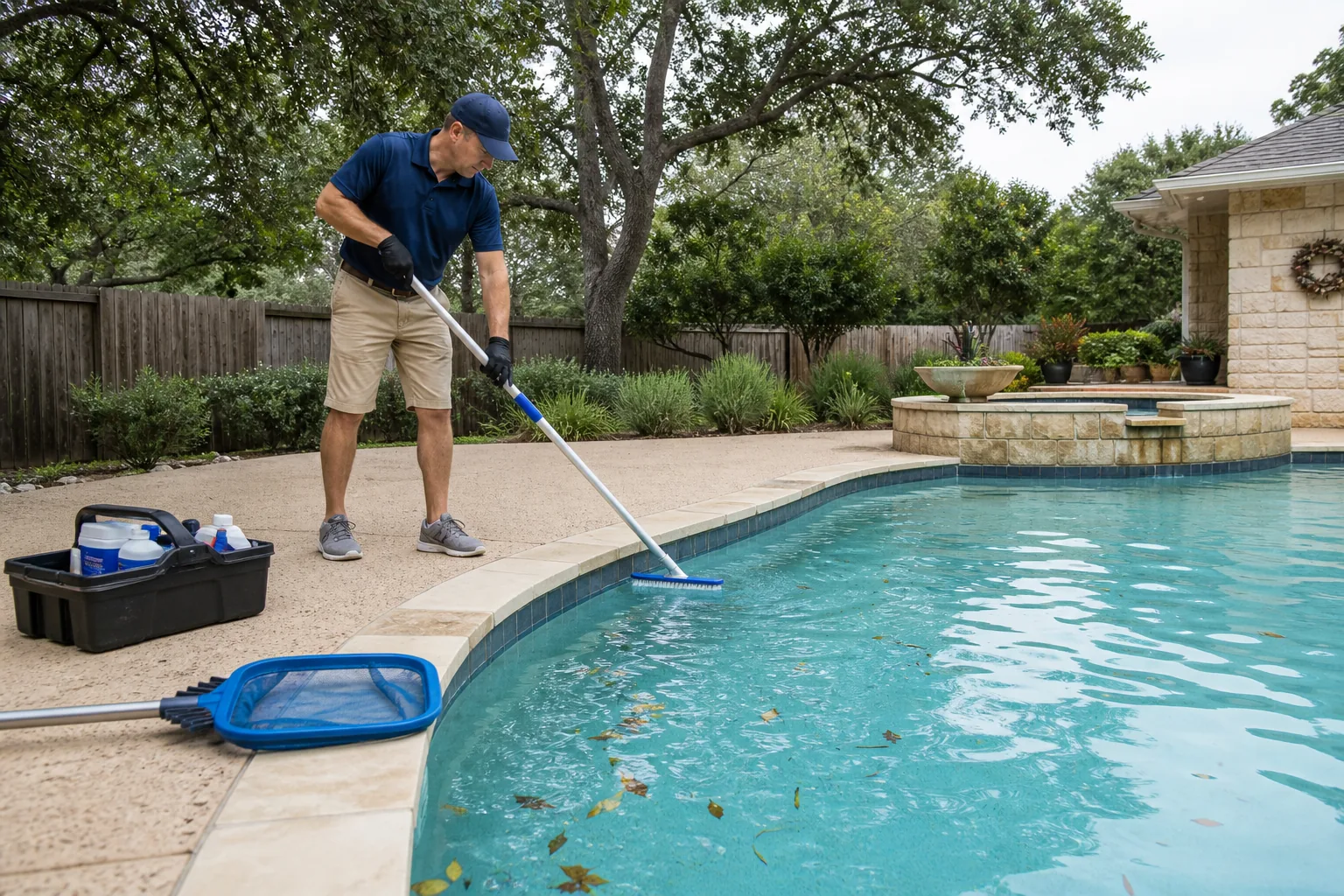
Algae takes hold where water sits still. Steps, corners, behind the ladder, under the light, and the deep end floor.
Short pump run time is the usual reason. If the water never fully turns over, parts of the pool never get treated. Our breakdown of how long to run a pool pump covers the math.
Return jets pointed wrong do it too. Aim one down and one across to keep the whole pool turning.
5. The filter is dirty or failing
A clogged filter drops your flow rate, so the pump runs its normal hours and moves far less water.
Worse, a filter loaded with organic debris becomes a place where algae lives between treatments. You shock the pool, the filter reinfects it.
Check the pressure gauge, and use our guide on cleaning a pool filter.
6. Rain and storm runoff
Every heavy rain dilutes your chlorine and stabilizer at the same time. It also washes lawn fertilizer, dirt, and organic matter into the pool.
Fertilizer is food. That is why pools go green after a storm week even when nothing else changed.
Test and shock after any heavy rain. Our storm prep guide covers the bigger events.
7. Something carried it in
Lake water on a swimsuit. A float that was in another pool. A borrowed net. A dog that swam in a creek.
This is how mustard algae usually arrives, and we go deeper on that in mustard algae in a pool.
What prevention actually looks like
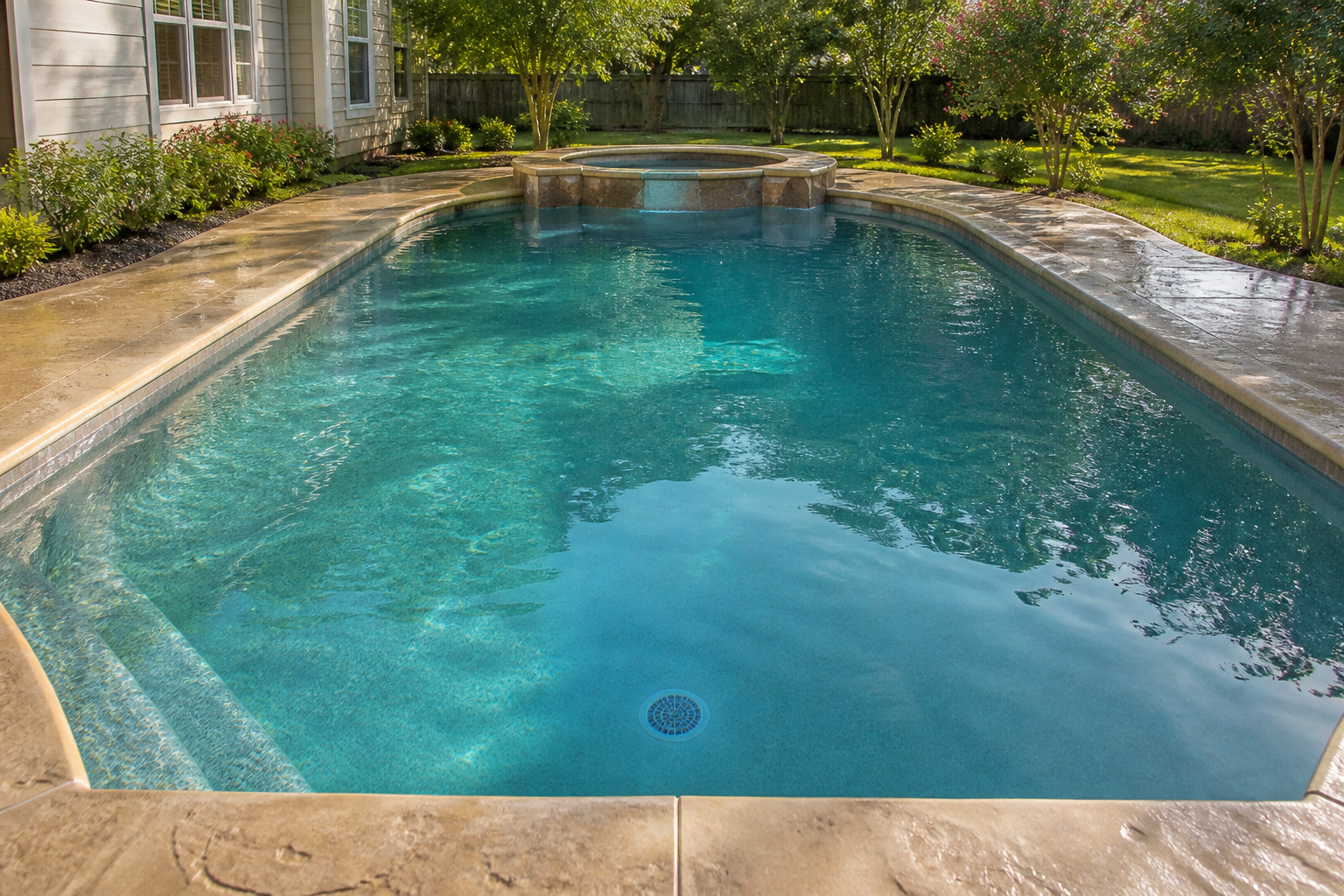
Test weekly. Hold chlorine steady instead of letting it swing. Brush the walls every week, including the shaded ones, because brushing breaks up the film before you can see it.
Run the pump long enough for a full turnover, keep the filter clean, and shock after rain and after a crowd.
If the pool is already green, start with how to clear a green pool.
Bring us a sample for free testing at the supply store and we will tell you which of the seven is yours. Call (361) 575-5821.
Frequently Asked Questions
What causes algae to grow in a pool?
Sanitizer that dropped too low, pH that drifted high, poor circulation, a dirty filter, or heavy rain washing in organic matter. Algae spores are always present. Those conditions decide whether they bloom.
Can a pool with good chlorine still get algae?
Yes. High pH weakens chlorine badly, and high cyanuric acid binds it up. In both cases the test reads fine while the chlorine does very little work.
Why does my pool turn green after it rains?
Rain dilutes chlorine and stabilizer, and runoff carries in lawn fertilizer and organic debris that feed algae. Test and shock after any heavy rain.
How fast can algae take over a pool?
A visible bloom can appear within 24 to 48 hours once chlorine drops in warm water. That is why weekly testing matters far more than monthly.
Do phosphates cause algae?
Phosphates feed algae, but they are not the trigger. A pool with steady chlorine and good circulation handles phosphates fine. Treat sanitizer and flow first.
How do I stop algae from coming back?
Hold chlorine steady between 1 and 3 ppm, keep pH at 7.4 to 7.6, brush weekly including shaded walls, run the pump long enough for a full turnover, and keep the filter clean.
