
When a filter’s pressure climbs back up a few weeks after a hose rinse, the cause is almost always a film of sunscreen, body oil and fine dust baked into the pleats where a hose can’t reach. Clearing it takes a different method for each of the three filter types, and an overnight soak in filter cleaner does most of the work on all of them.
Find out what you have first
Open the tank lid or follow the plumbing. A cartridge filter holds one or more pleated tubes that lift straight out, a sand filter holds a bed of sand hidden inside the tank, and a DE filter holds fabric grids coated in white powder. Each type cleans differently, and a pressure washer on a cartridge or a shovel in a sand tank can ruin the filter in an afternoon.
Shut it down and bleed the pressure
Turn the pump off at the breaker as well as the timer, so it cannot switch on while the tank is open. Then open the air relief valve on top of the tank and let it hiss until it stops. A filter lid under pressure can blow off hard enough to break bone, and bleeding the air takes about thirty seconds.
Cleaning a cartridge filter
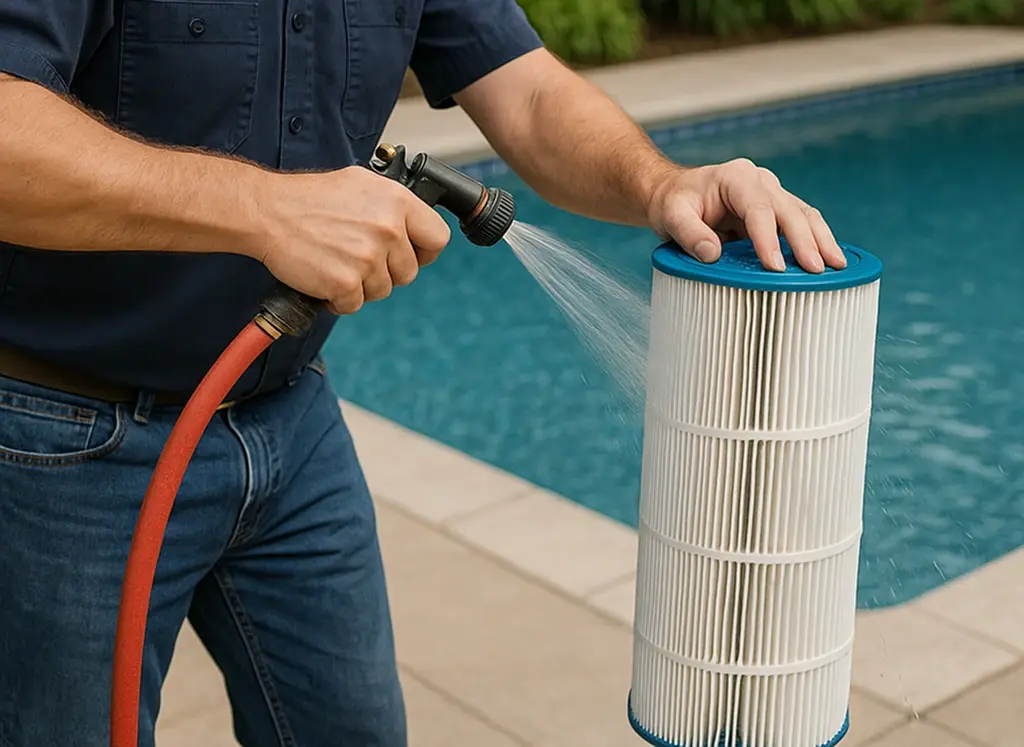
Pull the cartridge out and stand it on end. Use a garden hose with a straight nozzle and hold the water at an angle so it slides down inside each pleat instead of hitting it head on. Work from top to bottom all the way around, spreading each pleat open with your thumb as you go.
Keep the pressure washer in the garage for this job, even on its widest tip. The jet frays the polyester pleat fabric and drives fine dirt deeper into it, and the frayed spots open gaps that let debris pass back into the pool. A frayed cartridge has to be replaced. A cartridge cleaning wand that clips onto a garden hose sprays between the pleats at hose pressure and speeds the rinse up safely. The same goes for DE grids, whose fabric is even thinner.
A rinse moves dirt but leaves the oil film behind. Two or three times a season, soak the cartridge overnight in a cartridge cleaner made for the job, then rinse it again; the water coming off will be darker than you expect. If you ever need to acid-soak a cartridge for calcium, degrease it first, because acid sets the oils into the fabric and ruins the cartridge.
Cleaning a sand filter
Sand stays in the tank and gets cleaned by backwashing, which we cover step by step in how to backwash a pool filter. Once or twice a year, oils gum the grains into clumps and water tunnels straight through the bed, so the pressure stays high after a backwash. Pour a sand filter cleaner into the skimmer, let it sit overnight with the pump off, and backwash it out in the morning. The sand itself lasts five to seven years before the grains wear round and stop catching fine particles.
Cleaning a DE filter
Backwash first to flush the old powder, then open the tank and lift out the grid assembly. Hose every grid on both sides until the fabric is white again, and look closely while you do it, because a tear the size of a fingernail sends DE back into the pool and clouds the water for days. Set the grids back exactly as they came out, close the tank, and add fresh DE through the skimmer with the pump running.
How often
Rinse a cartridge whenever the gauge reads 8 to 10 PSI above its clean number, and deep clean it every three to four months in season. Chemically clean sand or DE once or twice a year. A pool full of kids and sunscreen every weekend dirties a filter two or three times faster than one that mostly sits, so heavy use moves all of those dates up.
Know when to stop cleaning and buy
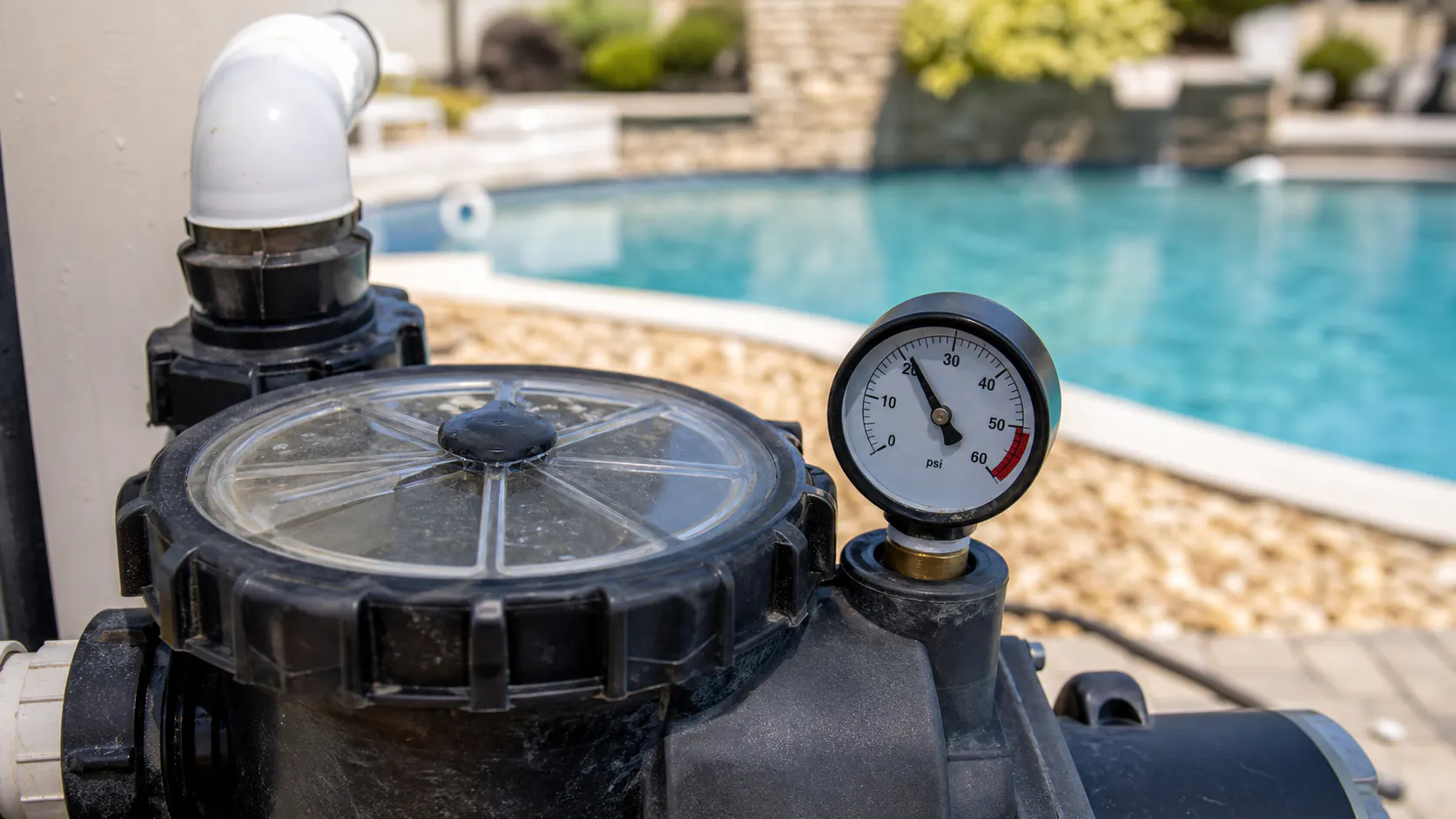
Replace the filter media if pressure stays high after a proper cleaning or you see any of these signs:
- Pleats that stay gray after an overnight soak.
- Cracked bands, or end caps pulling loose from the pleats.
- Pleats crushed flat or splayed apart.
- Any tear in a DE grid.
- Sand older than seven years.
Most cartridges last two to three years with regular soaking. A worn-out filter costs you in extra chemicals and in cloudy water, and our post on whether to repair or replace pool equipment covers how that decision works out.
If the water is still cloudy after
If the water stays cloudy with a clean filter, test the chemistry and check that the pump runs long enough each day to turn the water over. Our post on what makes pool water cloudy walks through both. You can also bring about a pint of pool water to our supply store on Navarro, taken from elbow depth away from the returns, and we will test it free.
If you would rather hand the job off, call (361) 575-5821, tell us the filter brand and model from the label on the tank, and we can bring the right replacement cartridge or grids on the first visit.
Frequently Asked Questions
How do you clean a pool filter cartridge?
Shut the pump off, bleed the air, and lift the cartridge out. Rinse it with a garden hose held at an angle so the water runs down inside each pleat, spreading the pleats with your thumb as you work around it.
Can I use a pressure washer on a pool filter?
Skip it. The force tears the pleat fabric and drives dirt deeper into it, and a standard garden hose nozzle does the job.
How often should a pool filter be cleaned?
Rinse a cartridge whenever the pressure gauge reads 8 to 10 PSI above clean. Soak it in filter cleaner every three to four months during swim season, and more often if the pool gets heavy use.
Why is my filter dirty again so fast?
Sunscreen and body oil coat the fabric in a film that a hose leaves behind, so the filter loads up again within weeks. An overnight soak in filter cleaner removes it.
Can you clean a pool filter with vinegar or bleach?
Neither works well. Vinegar is too weak for the oils, and bleach can weaken the fabric. Use a filter cleaner made for pool cartridges.
When should I replace a pool filter cartridge instead of cleaning it?
Replace it when the pleats stay gray after a proper soak, when the bands crack, or when the pleats are crushed or splayed. Most cartridges last two to three years.
