
You see a yellowish film on the shady side of the pool. It looks like fine sand or pollen. You brush it and it disappears in a cloud.
The next morning it is back in the same spot. That is mustard algae.
What it actually is
Mustard algae is a yellow or brownish green algae, and people also call it yellow algae. It is a cousin of green algae with one important difference.
It tolerates chlorine far better. A pool holding a normal chlorine reading can still grow it. That is why owners test, see good numbers, and stay confused.
It also does not cling like black algae. It brushes away instantly. That is what fools people into thinking they killed it.
Telling it apart from dirt
Dirt, sand, and pollen all settle in the same places. Two quick checks separate them.
Brush a patch and watch the cloud. Dirt sinks back into a pile within a minute or two. Mustard algae hangs in the water longer and then settles as an even film.
Then wait a day. Dirt stays gone once you vacuum it. Mustard algae comes back in the same shaded spot with no new debris in the pool.
Why it picks your pool
It shows up where three things line up.
- Shade, especially walls that never get direct sun.
- Still water, so steps, corners, behind ladders, and under lights.
- Chlorine that swings low, even briefly, or gets locked up by high stabilizer.
Most of the time it arrives from outside. Swimsuits, floats, nets, and brushes used in a lake or another pool carry it in. So do hoses and even a dog.
That is the reason it returns after a clean shock. You killed what was in the water and left it living on everything else.
The treatment that works
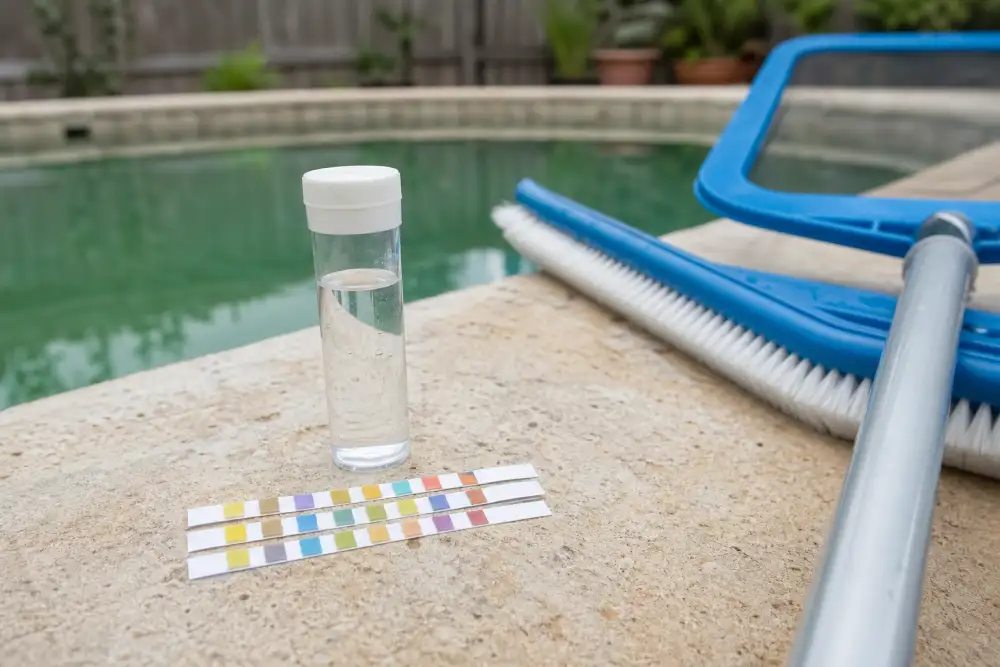
Start with chemistry. Get pH into the 7.2 to 7.4 range so your chlorine has real strength, and check that stabilizer is not sky high.
Brush every surface next, especially the shaded walls, the steps, and behind the ladder. You are lifting it into the water where chlorine can reach it.
Then shock the pool hard. Mustard algae needs far more than a routine dose, roughly triple what you would use for maintenance.
Run the pump 24 hours while it works. Brush again the next day, then vacuum the settled residue to waste if your valve allows.
Clean everything that touched the water
Skip this and you will do the whole treatment twice.
While the pool is at shock level, drop your brushes, poles, nets, floats, and toys into the shallow end and leave them. The high chlorine sanitizes them.
Wash swimsuits and towels. Put the automatic cleaner in the pool too, and run it.
Then clean the filter. Everything you brushed loose is living in there. Our step by step on cleaning a pool filter covers the soak that clears it.
Keeping it gone
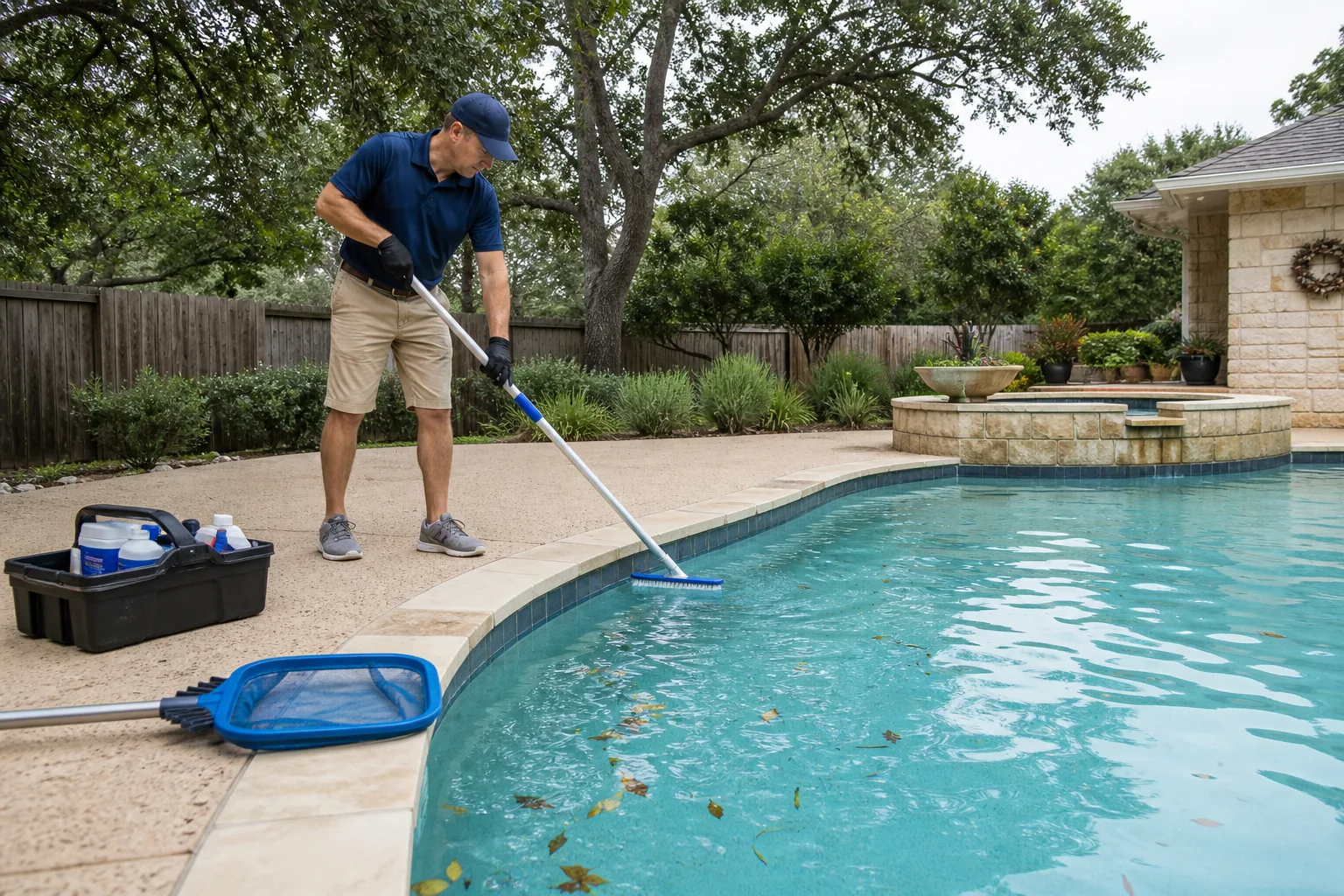
Hold chlorine steady rather than letting it dip between visits. Brush the shaded walls weekly even when the water looks perfect.
Fix the dead spots. Angle a return jet toward the corner that never moves. Make sure your run time covers a full turnover, which we break down in how long to run a pool pump.
If your pool went green before this, mustard algae often follows the same weaknesses. Our guide on clearing a green pool covers that side.
When to call
Call if it comes back after two full treatment rounds. Call if the pool clouds and will not clear. Call if you are guessing at your numbers.
Bring a water sample in for free testing at the supply store, or call (361) 575-5821. We have been treating South Texas pools since 1968 and we know which shady wall to check first.
Frequently Asked Questions
What causes mustard algae in a pool?
Low or unstable chlorine combined with shade and still water. It usually arrives from outside on swimsuits, floats, nets, or gear that was used in a lake or another pool.
Is mustard algae the same as yellow algae?
Yes, they are two names for the same thing. It looks like fine yellow or brown sand on the pool floor and walls.
How do I tell mustard algae from sand or pollen?
Brush a patch. Dirt and sand settle back into a pile within a minute. Mustard algae hangs in the water and resettles as an even film. Then check the next day. Algae comes back in the same shaded spot on its own.
Why does mustard algae keep coming back?
Because it survives on the things you put in the pool. Brushes, poles, floats, swimsuits, and the automatic cleaner all carry it. Sanitize every one of them during the shock or it reinfects the water.
Is mustard algae harmful to swimmers?
The algae itself is not the main risk. It signals that your sanitizer is losing, and the same conditions let bacteria grow. Stay out until the pool holds a proper chlorine level.
Can you swim in a pool with mustard algae?
Wait until treatment is finished and chlorine is back in the normal range. Shock levels are too high to swim in anyway.
