
You pull the cover back on a Saturday morning and the water is green. Maybe it is a light tint over the steps, maybe you cannot see the main drain at all. Either way, the fix follows the same order every time. Knowing how to clear a green pool is mostly about doing five or six things in the right sequence instead of dumping shock in and hoping.
This guide walks through the recovery process a technician follows, what to expect on each day, and the specific points where a do-it-yourself cleanup stops being worth it. Victoria Pool Service has been handling green-to-clean recoveries in the Crossroads since 1968, and the pools that clear fastest are almost always the ones where the owner diagnosed before dosing.
First, Confirm the Green Is Actually Algae
Most green water is algae that multiplied faster than the sanitizer could control it. Not all of it is. Dissolved copper or iron can tint water green after a shock treatment, and heavy pollen can leave a green film that never behaves like an algae bloom. Treating a metal problem with more chlorine usually makes the color worse.
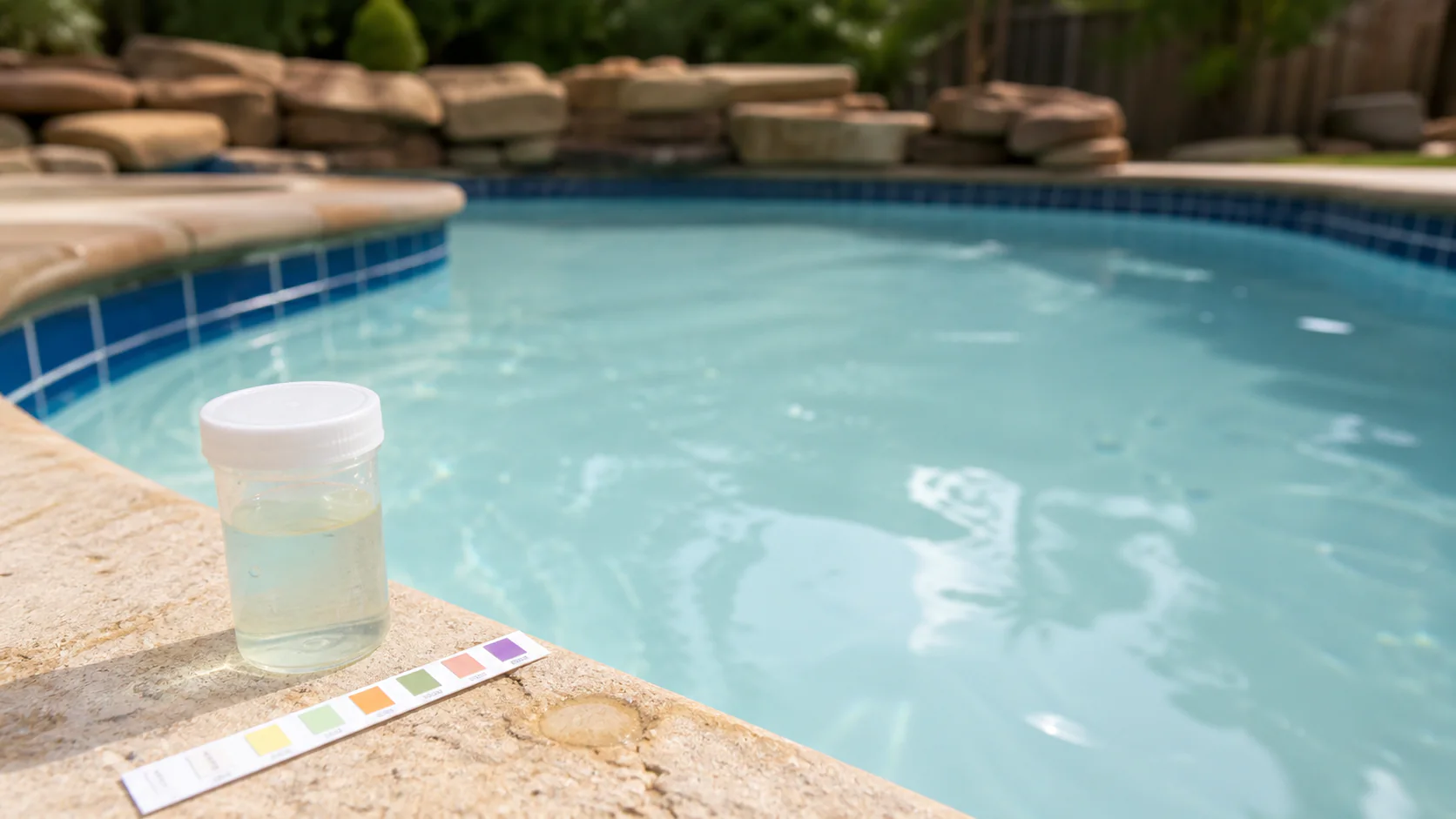
A quick field test: scoop a glass of pool water and hold it against something white. Algae water stays green in the glass. Metal-stained water usually looks clear in the glass even though the pool looks green. For a fuller breakdown of the causes, see the companion article on why pool water turns green in Victoria, TX.
Before You Add Anything, Run These Checks
Chemicals only work if water is moving through the filter. Every hour spent shocking a pool with a clogged filter or a pump that will not prime is an hour wasted, and the chemicals are not cheap.
- Does the pump prime, hold prime, and push water from the returns?
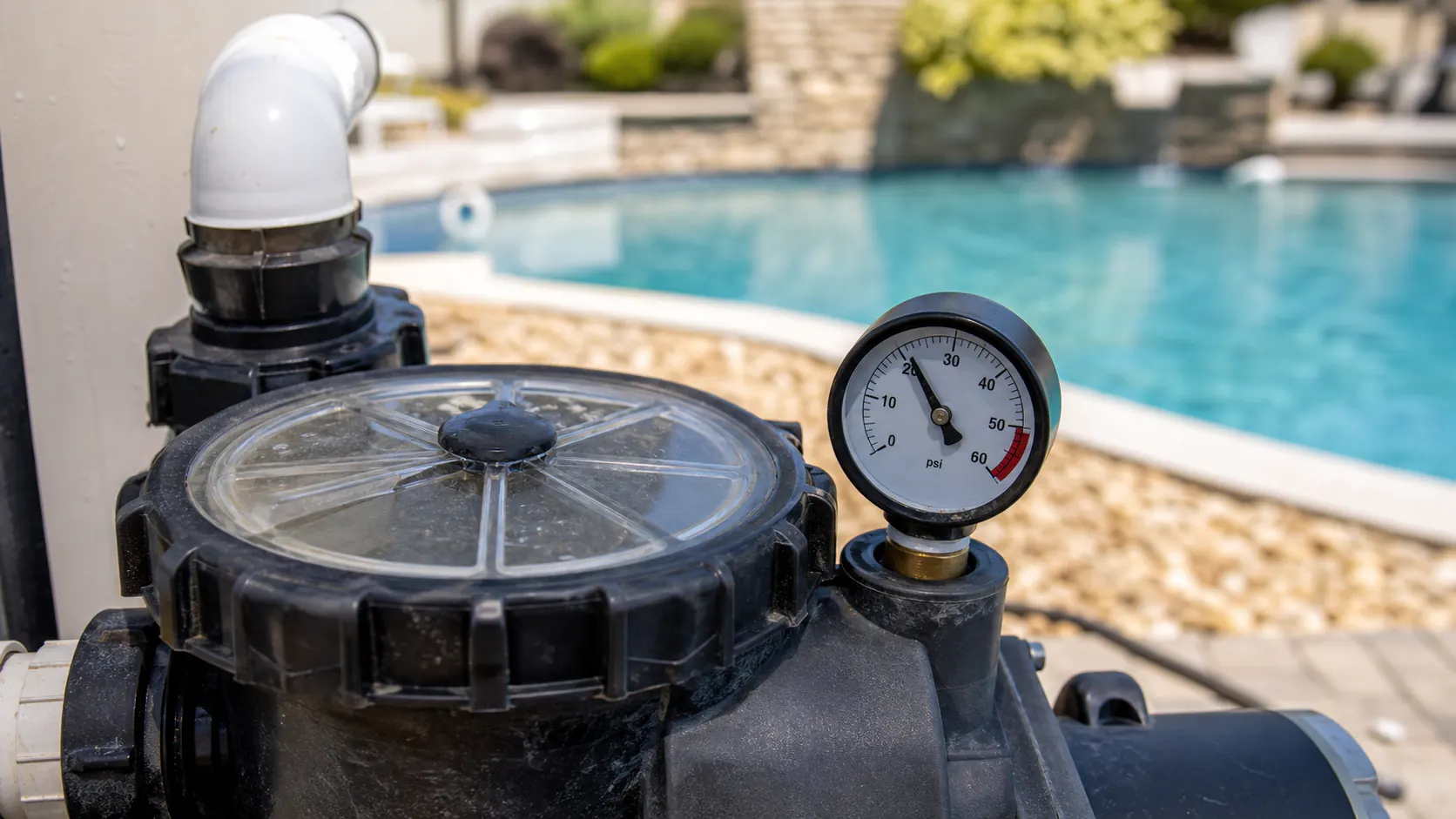
- Is the filter pressure gauge sitting in its normal range, or 8 to 10 psi above it?
- Are the skimmer and pump baskets clear?
- Is the water level high enough that the skimmer is not sucking air?
- Does a full test show chlorine, pH, total alkalinity, calcium hardness, stabilizer, and metals?
Test strips are fine for a daily chlorine glance, but a recovery needs real numbers. Victoria Pool Service offers free BioGuard SpinLab water testing at the store on N Navarro. Bring about a pint of water in a clean container and you leave with a treatment plan built around your actual readings.
How to Clear a Green Pool, Step by Step
Step 1: Get the debris out first
Net the leaves, twigs, acorns, and anything else floating or sitting on the bottom. Organic debris consumes chlorine continuously, so leaving it in place means the shock gets used up on leaves instead of algae. Empty both baskets and check the pump lid O-ring while it is open.
Step 2: Fix pH and alkalinity before you shock
Chlorine loses a large share of its killing power as pH climbs. The CDC recommends keeping home pools in a pH range of 7.0 to 7.8 with free chlorine of at least 1 ppm, or at least 2 ppm when stabilized chlorine products are in use. Adjust total alkalinity first, since it steadies pH, then bring pH toward the low end of the range before shocking.
Check stabilizer at the same time. Cyanuric acid protects chlorine from sunlight, but too much of it slows chlorine down. Most suppliers target roughly 30 to 50 ppm, and readings approaching 100 ppm are a common reason a pool refuses to clear no matter how much shock goes in. High stabilizer is corrected by dilution, not by another chemical.
Step 3: Brush every surface
Brush walls, floor, steps, ladder pockets, behind the return fittings, and the light niche. Algae anchors to the surface and forms a protective layer, and brushing breaks it open so chlorine can reach the cells. This step is skipped more than any other, and skipping it is why some pools take a week instead of two days.
Use a nylon brush on vinyl and fiberglass. A stainless brush is fine on plaster and gunite but will damage a liner. Brush again before every shock dose.
Step 4: Shock after sunset
Sunlight burns off unstabilized chlorine quickly, so an evening dose gets a full night to work. Follow the label rate for your pool volume, add the product with the pump running, and pre-dissolve granular shock in a bucket of pool water if the label calls for it. Add chemicals to water, never water to chemicals, and never mix two products together in the same container.
A badly neglected pool usually needs more than one dose. Retest the next evening. If free chlorine has crashed back to zero, the algae is still winning and the pool needs another treatment, not a wait-and-see day. You can pick up shock, algaecide, clarifier, and test reagents from the pool chemicals and supplies department.
Step 5: Run the filter around the clock
Killing algae turns the water from green to cloudy gray or milky blue. That color change means the treatment worked, and the dead algae now has to be filtered out. Run the pump continuously during recovery. On a variable-speed pump, a higher speed moves more water through the media than a long low-speed cycle does.
Step 6: Clean the filter as pressure rises
Note the clean starting pressure. When the gauge climbs about 8 to 10 psi above it, backwash a sand or DE filter or pull and rinse the cartridges. During a heavy recovery this can happen more than once a day. A loaded filter stops removing anything, and the water will sit cloudy indefinitely while the owner assumes the chemicals failed.
Step 7: Vacuum, retest, then rebalance
Vacuum settled debris off the bottom once you can see it. If you use a flocculant to drop the fine particles, vacuum to waste rather than through the filter, and watch the water level while you do it. Once the water is clear, retest everything and bring pH, alkalinity, calcium hardness, and sanitizer back to normal operating levels before anyone swims.
Clarity is a safety issue, not just an appearance issue. CDC healthy swimming guidance uses a simple check before anyone gets in: make sure you can see the drain at the bottom of the deep end. If you cannot see the bottom clearly, the pool is not ready. The article on why clear water can still fool you covers what clarity does and does not prove.
How Long Does It Take to Clear a Green Pool?
Recovery time depends on how far the bloom has gone, how well the filter works, and how consistently the steps get repeated. These are typical ranges for a healthy system in Victoria heat, not guarantees.
| Water condition | What you are dealing with | Typical time to clear |
|---|---|---|
| Slight green tint, bottom visible | Early bloom, sanitizer dipped recently | 24 to 48 hours |
| Cloudy green, bottom faint | Established algae, filter is behind | 2 to 4 days |
| Dark green, bottom not visible | Heavy bloom plus organic load | 4 to 7 days |
| Swamp green, debris, standing algae | Weeks of neglect or an equipment failure | 1 to 2 weeks, often with repairs |
Scope drives the bill as much as the calendar does. The breakdown of what affects green pool cleanup cost in Victoria, TX explains which conditions push a recovery into the higher range.
Mistakes That Keep a Green Pool Green
- Shocking without testing. High stabilizer, high pH, or a metal problem will absorb the whole treatment.
- Shocking at noon. Sunlight strips unstabilized chlorine before it finishes the job.
- Running the pump on a timer. Recovery needs continuous circulation, not the summer schedule.
- Never brushing. Surface algae survives under its own film.
- Ignoring filter pressure. A loaded filter removes nothing.
- Adding algaecide first. Most algaecides are a preventive follow-up, not a rescue for an active bloom.
- Swimming too early. Cloudy water hides hazards and usually means sanitizer is still unstable.
When to Call a Pro
Plenty of green pools clear with a weekend of work and the right products. Some do not, and the difference is usually equipment rather than chemistry.
Call before you start if any of these apply
- The pump will not prime, runs loud, leaks, or trips a breaker.
- Filter pressure reads zero or pins high with the pump running.
- You see a crack in the shell, a torn liner, or a loose main drain cover.
- The water level drops several inches a week and the ground near the pad stays wet.
- The heater, salt cell, or automation panel is throwing errors.
- Any repair would mean opening an electrical connection.
That last point matters in Texas. Pool pumps, lights, heaters, and automation are wired equipment, and the electrical side of that work is licensed work. Every Victoria Pool Service technician is licensed for it. If a pump or panel is involved, book pool repair and service rather than opening the pad yourself, and review the common causes of pool pump trouble so you can describe the symptoms accurately.
Call if the pool stalls
Stop and get help when the pool holds no chlorine after two or three correct doses, when the water goes cloudy and stays cloudy for more than three days of continuous filtration, when the green returns within a week of clearing, or when you have already spent more on chemicals than a service visit would cost. Each of those points to something the chemicals cannot fix on their own, such as high stabilizer, phosphate loading, undersized filtration, or a failing pump.
Should You Just Drain It?
Draining looks like the shortcut and is rarely the right first move on the Gulf Coast. An empty shell loses the water weight that counteracts groundwater pressure underneath it, and after heavy rain that pressure can lift or crack a pool. Plaster and vinyl surfaces also do not tolerate sitting empty in Victoria sun.
Where the water goes matters too. Chlorinated pool water is not supposed to enter the storm drain system, which is regulated under EPA municipal stormwater rules and enforced through local ordinances. A partial drain to dilute stabilizer is often the better and safer answer, and it should be sized to test results. Ask a technician before pulling the plug.
How to Keep It From Happening Again
- Test sanitizer and pH at least twice a week in summer, and after every heavy rain or pool party.
- Keep the pump schedule matched to the weather rather than leaving one setting all season.
- Empty baskets and skim before debris breaks down in the water.
- Note the clean filter pressure so you can recognize a rising gauge early.
- Recheck stabilizer a few times a year, especially if you use trichlor tablets.
- Get the water professionally tested when readings stop making sense.
Owners who would rather not track all of it can hand the routine off. Regular pool cleaning and maintenance catches a falling chlorine level or a rising filter pressure before the water turns, and the breakdown of what a weekly pool service includes shows exactly what gets checked on each visit.
Final Thoughts
Clearing a green pool comes down to order of operations: diagnose, balance, brush, shock, filter, and repeat until the water is clear. Handle those in sequence and most Victoria pools come back within a few days. If the pool stalls, or if the pump, filter, or electrical side is part of the problem, that is the point to bring in a technician. Bring a water sample by the store for a free water test, schedule pool maintenance, or call (361) 575-5821. Victoria Pool Service covers Victoria and the surrounding Crossroads service areas, and you can also request a service call online.
Frequently Asked Questions
How do I clear a green pool fast?
Remove debris, correct pH and alkalinity, brush every surface, shock after sunset at the label rate for your pool volume, and run the filter continuously. Clean or backwash the filter each time pressure climbs about 8 to 10 psi above its clean reading. Skipping the brushing or the filter cleaning is what usually stretches a two-day recovery into a week.
How long does it take to clear a green pool?
A light green pool with working equipment often clears in 24 to 48 hours. A dark green pool where the bottom is not visible usually takes four to seven days. Pools that have been neglected for weeks, or that have a failing pump or filter, can take one to two weeks and may need repairs before the water responds at all.
Why is my pool still green after shocking it?
The most common reasons are high cyanuric acid, high pH, an underdosed treatment, a clogged filter, or poor circulation. Green that will not budge can also be dissolved metal rather than algae. A full water test showing chlorine, pH, alkalinity, hardness, stabilizer, and metals will tell you which one you are dealing with.
Why did my pool turn cloudy instead of blue after shocking?
Cloudy water after shock is normal and usually a good sign. The algae is dead, and the fine particles are still suspended in the water. They have to be removed by filtration, so run the pump continuously and clean the filter as pressure rises until the water clears.
Can I swim in a green pool?
No. Keep swimmers out until the water is clear, balanced, and retested. Green or cloudy water hides the bottom and anyone in trouble under the surface, and it generally means sanitizer levels are too low to control germs.
Should I drain my green pool instead of treating it?
Usually not. An empty pool on the Texas Gulf Coast can be lifted or cracked by groundwater pressure, and surfaces are damaged by sitting empty in direct sun. Chlorinated water also cannot be sent into the storm drain system. A partial drain sized to your test results is often the better option, and it should be planned with a pool professional.
When should I call a pool professional instead of treating it myself?
Call right away if the pump will not prime, the filter pressure is abnormal, a breaker trips, the shell or liner is damaged, or the pool is losing water. Call after a few days if the pool holds no chlorine following correct doses, stays cloudy through continuous filtration, or turns green again within a week of clearing.
