
Your test reads 7.0 and swimmers come out with red eyes. The handrail is losing its shine. Something feels rough underfoot on the steps.
That is low pH working on your pool. It is a quick fix, but the fix has a right order.
What low pH is doing
Water below 7.2 is acidic, and acidic water goes looking for minerals to take.
It pulls calcium out of plaster, which leaves the surface rough and etched. It corrodes ladders, rails, the heat exchanger inside a heater, and the plate inside a salt cell. It irritates eyes and skin, and it chews through chlorine faster than it should.
Target is 7.4 to 7.6. Under 7.2 is where damage starts.
Check alkalinity in the same breath
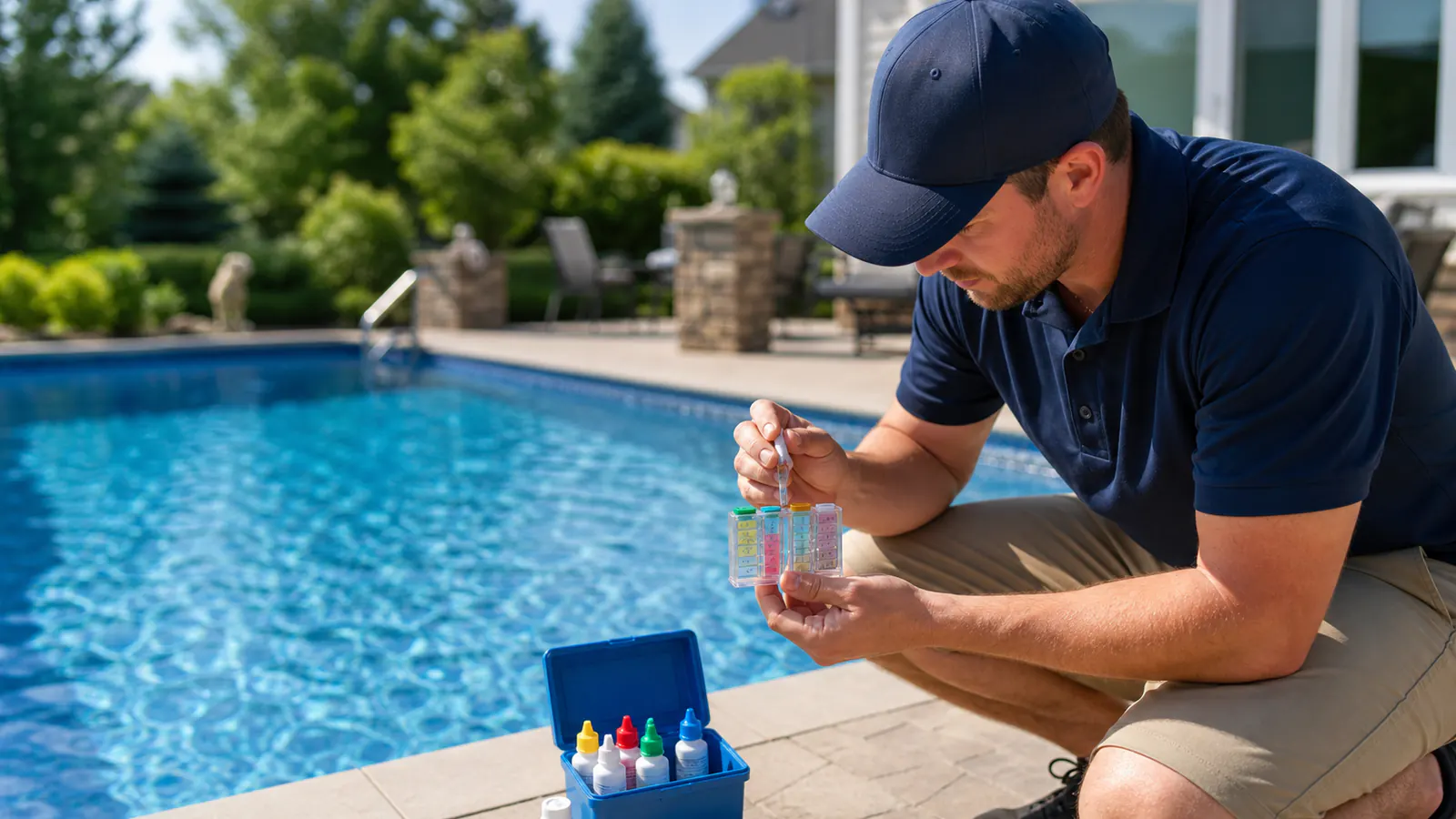
Do not touch pH until you have read total alkalinity. Target 80 to 120 parts per million.
Alkalinity is the buffer holding pH in place. If it is low, pH will not stay wherever you put it, and you will be adding product again in two days.
Low on both is common. Raise alkalinity first with sodium bicarbonate, which is baking soda. It lifts alkalinity a lot and pH only a little, and often the pH comes up on its own once the buffer is back.
Soda ash, when you need pH up now
Sodium carbonate, sold as soda ash or pH increaser, is the standard choice. It moves pH hard and alkalinity only a little.
Dissolve it in a bucket of water first. Then pour it slowly into the deep end with the pump running.
Add less than you think you need. Wait four to six hours and retest. Overshoot and you now need acid. Every bounce back and forth adds more dissolved solids to the water.
Borax, when alkalinity is already fine
Sodium tetraborate, sold as borax, raises pH with very little effect on alkalinity.
That makes it the better pick when your alkalinity is already sitting at 100 and only pH is low. It also leaves a mild residual that slows algae.
Same method. Dissolve first, add with the pump running, wait, retest.
Aeration, the free option
Here is the one most owners never hear about. You can raise pH with no chemicals at all.
Agitating the water drives carbon dioxide out of it, and losing carbon dioxide raises pH. Point your return jets upward to break the surface. Run a water feature or a spa spillover. Turn on a fountain.
It is slow, taking a day or more. But it raises pH without touching alkalinity and without adding anything to the water.
That makes it the right tool when alkalinity is already high and pH is low. That is the one combination where most products make things worse.
Why it went low in the first place
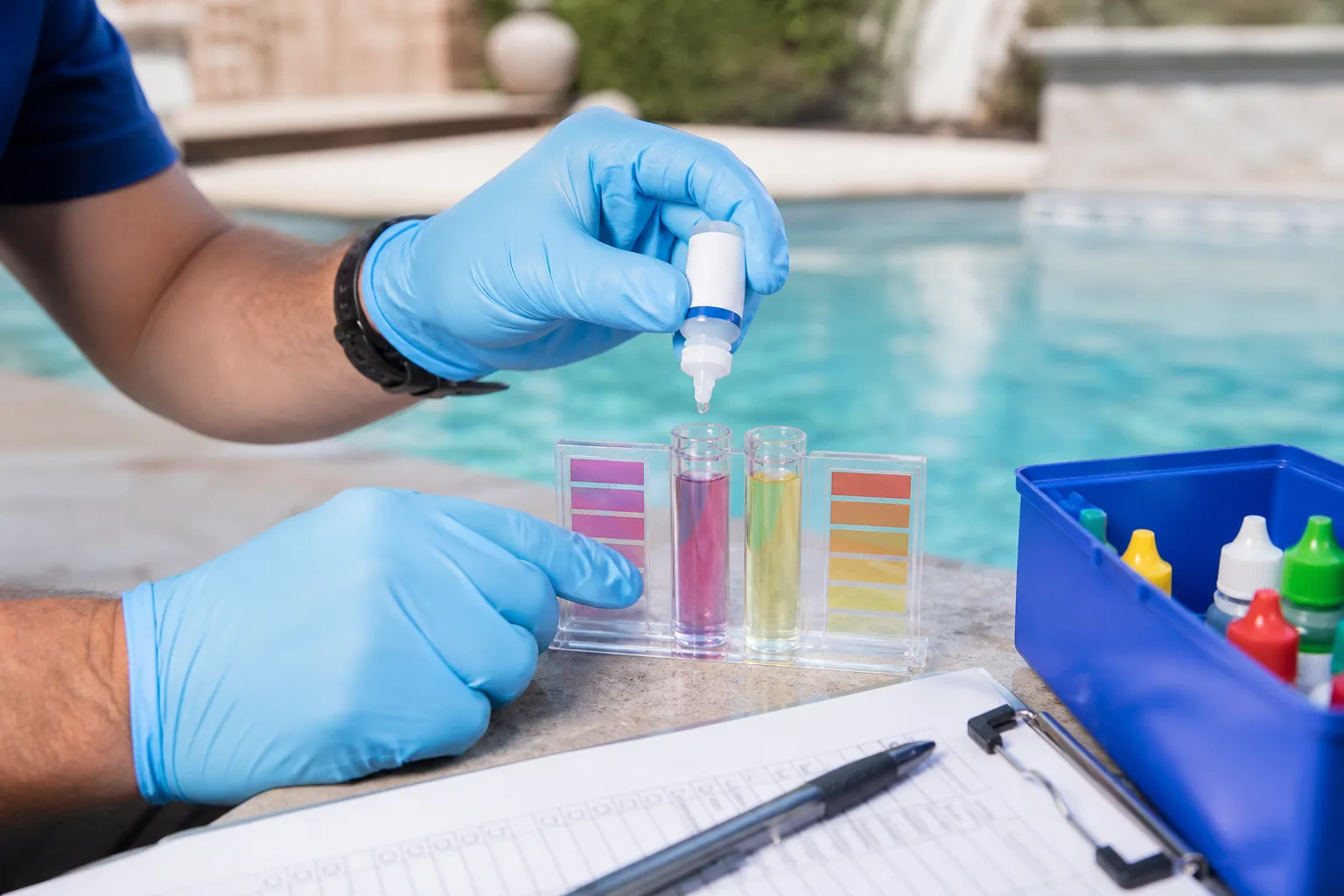
Fixing the number is easy. Keeping it there means knowing the cause.
- Too much acid added on the last correction.
- Heavy rain, which is naturally acidic and dilutes your buffer.
- Trichlor tablets, which are acidic and push pH down over time.
- Low alkalinity, so pH swings with anything you do.
- Fill water that is naturally soft or acidic.
In South Texas, a run of storms is the usual answer. Test after every heavy rain, the same way you would after a storm cleanup in our hurricane prep guide.
Where it fits with everything else
pH is one of five numbers that have to work together. We lay all of them out in what pool chemicals you actually need.
Get pH wrong and your chlorine stops working, which is the usual hidden cause behind cloudy pool water.
Bring a sample in for free testing at the supply store. We will tell you exactly how much to add for your pool size. Call (361) 575-5821.
Frequently Asked Questions
What raises pH in a pool?
Soda ash, also sold as pH increaser, is the standard. Borax raises pH with almost no effect on alkalinity. Aeration raises pH with no chemicals at all by driving carbon dioxide out of the water.
Can I use baking soda to raise pool pH?
Baking soda mainly raises alkalinity, and pH only slightly. Use it when both are low. If only pH is low and alkalinity is fine, use soda ash or borax instead.
What should pool pH be?
Between 7.4 and 7.6. Below 7.2 the water turns corrosive and starts etching plaster and attacking metal parts.
How long does it take for pH to rise after adding soda ash?
Wait four to six hours with the pump running before retesting. Add less than you think you need, because overshooting means adding acid to come back down.
Why does my pool pH keep dropping?
Usually low total alkalinity, heavy rain, or trichlor tablets, which are acidic. Fix alkalinity first and pH will stop swinging.
Is low pH in a pool dangerous?
It irritates eyes and skin, and over time it damages plaster, metal rails, heater parts, and salt cells. It also weakens your chlorine. It is worth correcting quickly.
