
A hurricane in the Gulf can change direction or strength quickly, leaving Texas Coast pool owners with a short preparation window. If you live in Port Lavaca, Port O’Connor, Victoria, or a nearby community, start with people, pets, medications, documents, and evacuation plans. Work on the pool only after those priorities are handled.
The short answer for how to prepare a pool for a hurricane in Texas is simple: leave the pool filled, balance and chlorinate the water, remove loose objects, protect the equipment, and shut off power before conditions deteriorate. Never risk your safety for a pool. Follow local officials and use the Texas Division of Emergency Management preparedness resources for evacuation and storm updates.
The 30-Minute Texas Hurricane Pool Checklist
If a watch or warning has already been issued, work from the top of this list. Stop when wind, lightning, floodwater, or an evacuation order makes outdoor work unsafe.
| Priority | Action | Reason |
|---|---|---|
| 1 | Leave the pool filled | Water adds weight that helps resist groundwater pressure. |
| 2 | Remove furniture, toys, tools, and automatic cleaners | Wind can turn loose objects into debris. |
| 3 | Test, balance, and chlorinate the water | Storm runoff and organic debris consume sanitizer. |
| 4 | Clean baskets and filter | A clean system handles the final circulation cycle better. |
| 5 | Photograph the pool and equipment | Current photos document pre-storm condition. |
| 6 | Shut off power at the breaker | This protects motors and reduces electrical risk during flooding. |
Do Not Drain the Pool Before the Storm
A full pool is heavy. That weight helps hold the shell in place when saturated soil and a rising water table press upward. Draining an in-ground pool before a hurricane can contribute to cracking, shifting, or a shell that lifts from the ground. Coastal areas face added concern from storm surge and prolonged rain.
Keep the normal operating water level unless a pool professional who knows the installation gives different instructions. Do not lower the level several feet in an attempt to create rain capacity. Your overflow system should handle ordinary excess water, and water over the coping usually causes less damage than a floating shell.
Above-ground pools also need the weight of their water. Leave them filled, remove detachable accessories, and check the manufacturer’s storm instructions. If you need help with that pool type, review our above-ground pool options and support.
Balance and Chlorinate the Water Before Rain Arrives
Test the water while you still have time to circulate it. Bring pH, total alkalinity, and sanitizer into their normal ranges for your pool. Then add the chlorine dose recommended for storm preparation by the product label or your pool professional. Do not guess, mix products, or pour different chemicals into the same container.
Heavy rain dilutes pool water. Leaves, soil, insects, and runoff add organic material that uses chlorine. Starting with balanced, sanitized water gives the pool a better chance of staying manageable through a power outage.
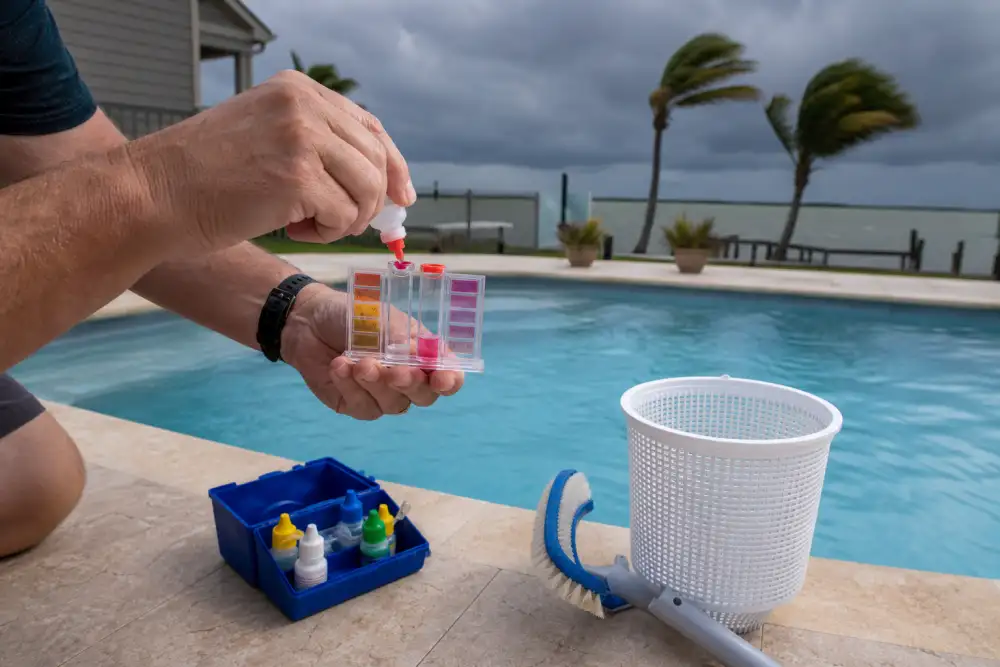
Victoria Pool Service offers free in-store pool water testing and carries pool chemicals and supplies. Bring a fresh water sample before the weather worsens if your latest readings are uncertain.
Run one final cleaning and circulation cycle
Brush the walls, skim the surface, empty the pump and skimmer baskets, and clean or backwash the filter when its pressure indicates service. Run the system long enough to distribute treatment throughout the pool. Remove the automatic cleaner afterward so debris cannot trap or damage it during the storm. Our pool cleaning and maintenance team can help when the forecast leaves enough safe lead time.
Clear the Deck Before the Wind Picks Up
Pool floats, umbrellas, furniture, skimmer poles, planters, toys, chemical containers, and grills can become projectiles. Move them into a garage or another enclosed structure. Do not throw patio furniture into the pool. Metal can stain the finish, sharp edges can damage plaster or liners, and furniture will still need to be removed from dirty water later.
Take down shade sails and umbrellas. Remove removable fence panels only if the manufacturer directs it and local safety rules permit it. Keep the pool barrier secure so children and pets cannot enter the area.
Skip the pool cover during a hurricane
Most standard pool covers are not designed for hurricane winds or falling branches. A damaged cover may tear, pull out anchors, or drag hardware into the water. Leave it off unless its manufacturer rates it for the expected conditions and provides storm instructions for that exact model.
Protect the Pump, Filter, Heater, and Controls
Photograph the pump, filter, heater, valves, automation panel, and equipment pad before the storm. Include model and serial labels when you can do so safely. Store the photos with your insurance records.
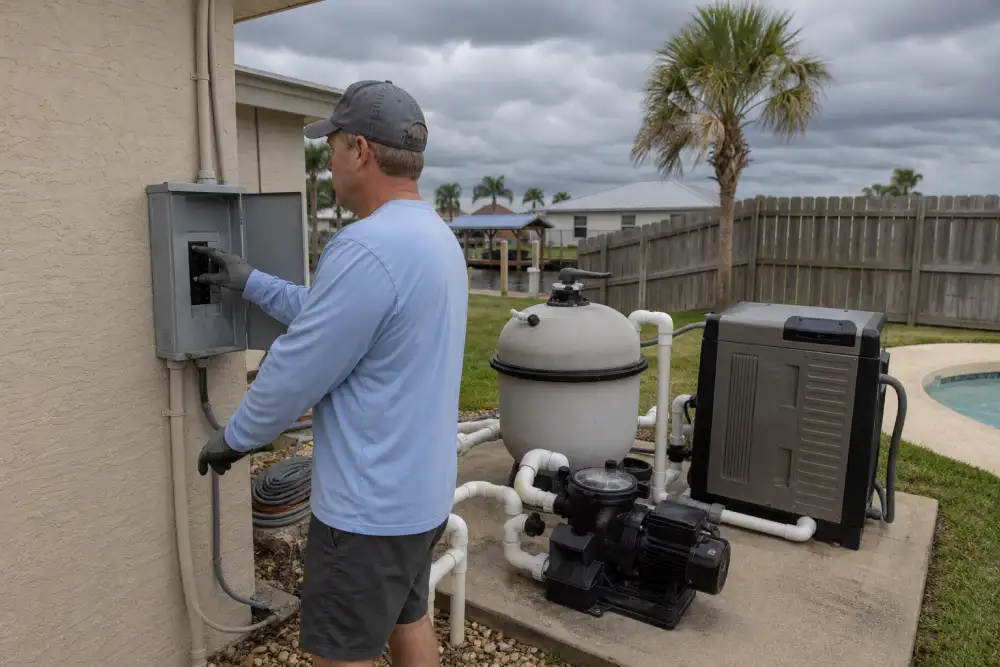
Turn off pool equipment at the dedicated breakers before the first bands arrive. A timer or automation schedule can restart a pump unexpectedly, so disabling schedules alone is not enough. Do not wrap a running motor or heater in plastic. Trapped heat and blocked ventilation create another hazard.
If your equipment pad has removable electronics that a qualified technician can disconnect, arrange that work early. Permanent motors, heaters, gas lines, and hardwired controls should stay in place unless a licensed professional handles them. FEMA guidance on flood protection notes that electrical components should be elevated or protected from water where practical. Never touch a breaker, motor, or control panel while standing in water.
For damaged or submerged equipment, schedule pool equipment repair and inspection before restoring power. A silent pump does not prove that its motor, wiring, or seals are safe.
What to Do While the Hurricane Is Passing
Stay indoors or evacuate as directed. Do not go outside to adjust a valve, pull debris from the pool, or check whether water is overflowing. Lightning, windborne debris, storm surge, and downed lines can reach the pool area before conditions look severe from inside the house.
Port O’Connor and Port Lavaca properties face direct coastal wind, surge, and saltwater exposure. Victoria sits farther inland but can still receive hurricane-force gusts, flash flooding, and long power outages. The same rule applies in every location: property cleanup waits until local officials say it is safe to return or go outside.
How to Recover the Pool After the Storm
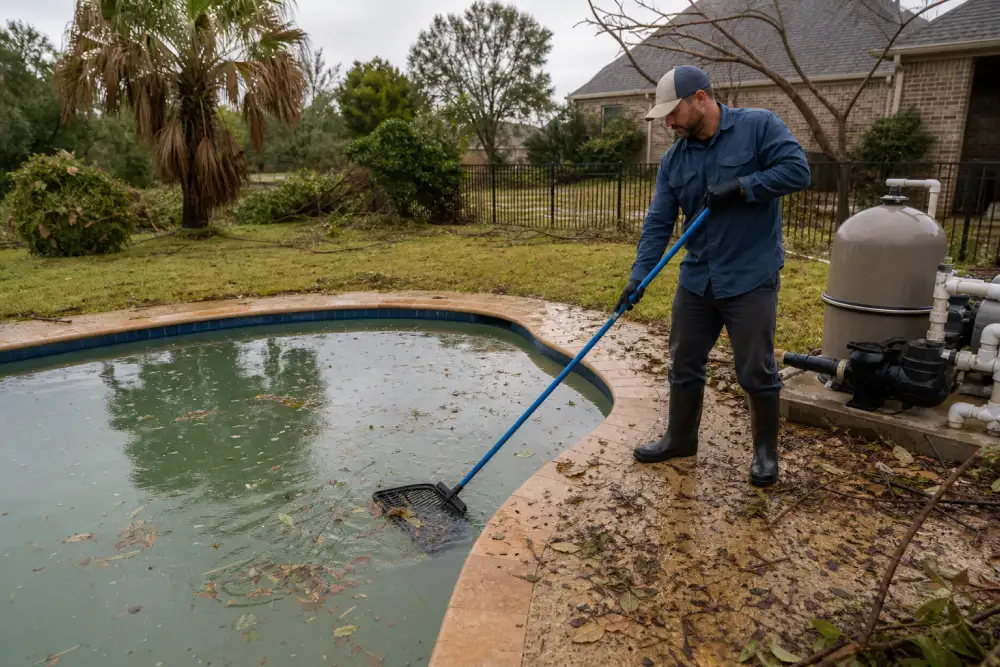
Start with the yard, deck, and equipment pad. Look for downed electrical lines, standing water, displaced gas equipment, broken glass, unstable fencing, and damaged trees. If floodwater reached the equipment, keep every pool breaker off and call a qualified technician.
- Document damage first. Take wide and close photos before moving debris or starting repairs.
- Remove large debris by hand or leaf rake. Wear gloves and closed-toe shoes. Avoid sharp, unknown, or contaminated items.
- Skim and vacuum with care. Heavy silt can overwhelm a filter. A service professional may recommend vacuuming to waste based on the system and local discharge rules.
- Test the water. Check pH, alkalinity, sanitizer, and salt or stabilizer where applicable. Saltwater intrusion and floodwater can require a more involved treatment plan.
- Inspect equipment before startup. Check the pump, filter, heater, automation, valves, wiring, and bonding. Do not energize submerged equipment.
- Restore circulation and treatment. Follow test results and product labels, then clean the filter as pressure rises.
Floodwater may contain sewage, fuel, pesticides, and bacteria. Keep people and pets out of the pool until the water and equipment have been assessed. If the pool turns green after the outage, our article on green pool causes and fixes in Victoria explains what the color can signal. Cloudy water can also hide poor chemistry, as covered in our pool water safety article.
Pre-Storm Steps and the Damage They Reduce
| Preparation | What it helps reduce |
|---|---|
| Leave the pool filled | Upward pressure on an in-ground shell |
| Remove deck items | Impact damage and windborne debris |
| Balance and chlorinate | Rapid sanitizer loss and difficult cleanup |
| Shut off breakers | Unexpected startup and electrical damage |
| Take photos | Gaps in insurance and repair documentation |
Final Thoughts
Once your household is safe, a short pool checklist can prevent avoidable damage and shorten cleanup. Victoria Pool Service supports owners across Victoria and nearby coastal communities. Check our pool service areas or contact the team before a storm or after conditions are safe.
Frequently Asked Questions
Should I drain my pool before a hurricane?
No. Leave an in-ground pool filled near its normal operating level. The water’s weight helps the shell resist upward pressure from saturated soil and a high water table. Draining can contribute to cracking, shifting, or a lifted shell.
Do I cover my pool during a storm?
Usually, no. Standard covers can tear or suffer damage from wind and falling debris. Use a cover only if its manufacturer rates it for the expected storm conditions and gives instructions for that model.
Should I add chlorine before a hurricane?
Yes. Test and balance the water, then add the storm-preparation dose listed on the chlorine product label or recommended by your pool professional. Circulate it before shutting down the equipment. Never mix pool chemicals.
What do I do with my pool after a flood?
Keep everyone out, photograph the damage, and leave the power off if water reached the equipment. Floodwater can contain sewage, fuel, pesticides, and bacteria. Have the equipment and water assessed before restarting or swimming.
Will my pool overflow in a hurricane?
It may. Most pools route excess water through an overflow or across the deck. Do not drain several feet for extra capacity. During the storm, stay inside and do not try to manage the water level.
When should I turn off my pool pump before a hurricane?
Run the final treatment and circulation cycle, then turn off the dedicated pool breakers before wind, lightning, or flooding reaches your area. Disable automation schedules as well.
Can I put patio furniture in the pool so it will not blow away?
No. Furniture can stain or damage the finish, puncture a liner, and create a difficult cleanup. Move it into a garage or another enclosed structure.
