
Run the pump too little and the water goes cloudy, then green. Run it too much and you are paying for water that is already clean.
There is a right number for your pool. It is not the same as your neighbor’s.
Turnover is the whole idea
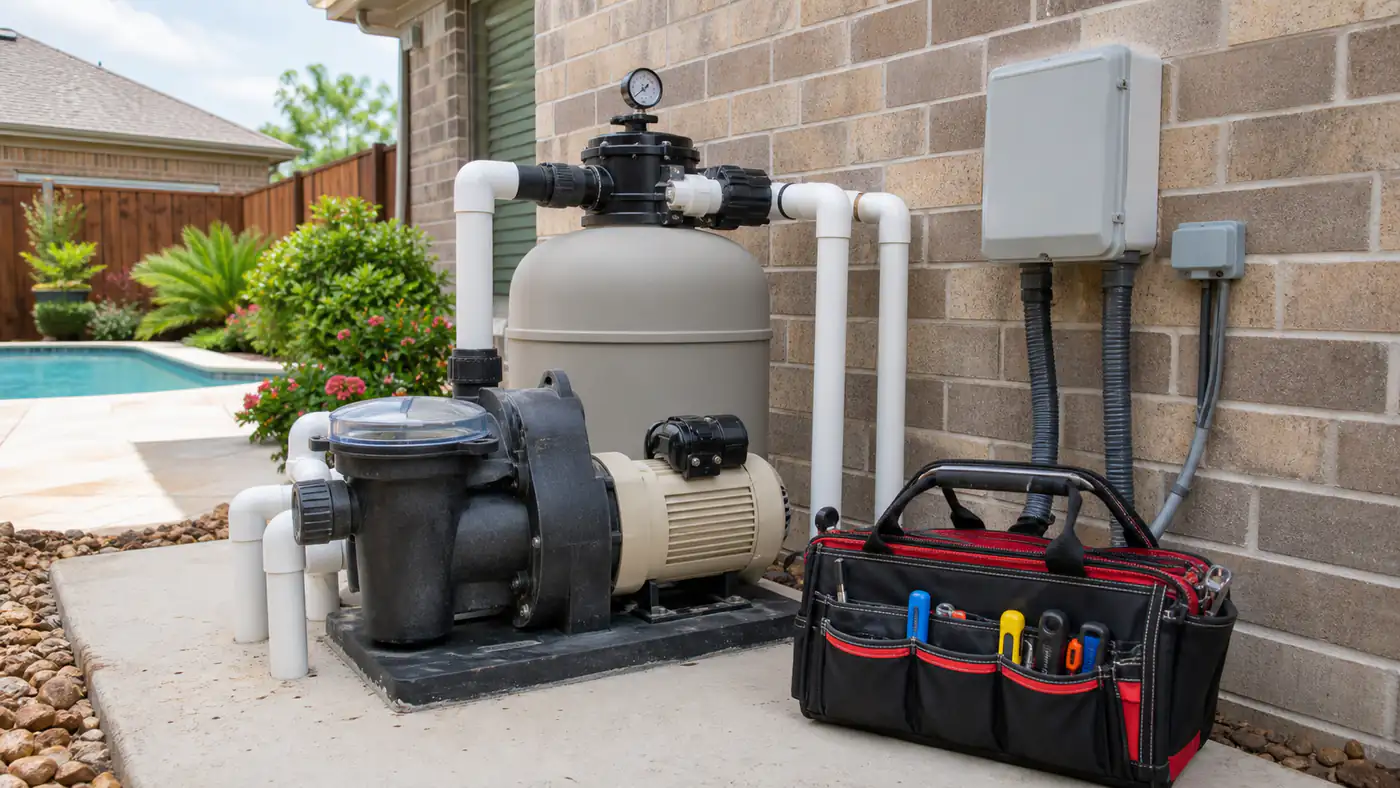
Turnover means pushing every gallon in the pool through the filter once. Most pools want one full turnover a day, and the water gets noticeably better at closer to two.
Two things set that number: how many gallons you have, and how many gallons a minute your pump moves.
Divide the gallons by the flow rate and you get minutes. Divide by 60 and you get hours. That is your target run time.
A 20,000 gallon pool with a pump moving 40 gallons a minute needs about eight and a half hours. Change either number and the answer moves.
Where eight hours came from
Eight hours is not a law. It fit an average pool with an average single speed pump. Then it got repeated until it sounded official.
It is still a fine starting point if you have a single speed pump. Start at eight hours in summer and adjust from there.
Variable speed changes the math
A variable speed pump runs slower, moves less water per minute, and needs more hours to hit the same turnover. That sounds worse. It is not.
Power use does not climb in a straight line with speed. Cutting the speed in half cuts the power draw far more than half, so running 12 hours slow costs much less than running 6 hours fast.
Slower water also filters better. It gives the filter time to catch fine particles instead of blowing them past.
So if you have variable speed, run it longer and lower. Many owners land somewhere between 10 and 14 hours.
Summer and winter are different seasons
Heat and sunlight both work against you. Warm water grows algae faster, and UV burns chlorine off all day long.
In a Victoria July, run the full turnover and then some. In December, when the water is cold and nothing is growing, you can cut run time back substantially.
Pool season here runs longer than most people expect, and we broke that down in is pool season ever over in Victoria.
One winter rule overrides all of this. When a freeze is forecast, run the pump continuously. Moving water does not freeze in the pipes, and a burst line is a far bigger bill than a night of electricity.
Run it during the day, not overnight
Chlorine gets destroyed by sunlight, and algae grows in daylight. Filtering while the sun is up is when the pool needs help most.
Running at night to chase off peak power rates saves a little and costs you water quality. Split the difference if you must, but keep most of your hours in daylight.
Whatever you choose, run it in one block or two long blocks. Short bursts never fully turn the water over.
Let the pool tell you
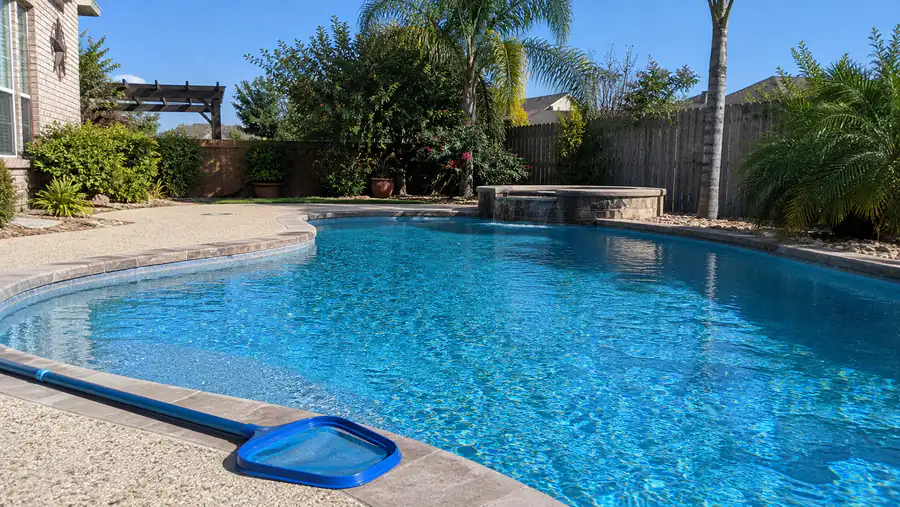
The math gives you a starting point. The water gives you the answer.
Cloudy water, slick walls, or chlorine that keeps vanishing? Add an hour and check again in a week. Water that stays clear at fewer hours means you can trim.
Two things fake a run time problem. A dirty filter chokes the flow, so eight hours may only turn over half a pool. And bad chemistry will not fix itself with more hours. Cloudy water needs the cloudy water checklist first.
Bring us a water sample for free testing at the supply store, or call (361) 575-5821 and we will size the run time to your pump.
Frequently Asked Questions
How many hours a day should a pool pump run?
Long enough to push every gallon through the filter at least once. For a single speed pump that is often around eight hours in summer. For a variable speed pump running slow, it is usually 10 to 14 hours.
Is it cheaper to run a variable speed pump longer?
Usually yes. Power draw falls much faster than speed does, so running 12 hours at low speed often costs less than six hours at full speed, and it filters finer.
Should I run the pool pump at night or during the day?
Mostly during the day. Sunlight burns off chlorine and algae grows in daylight, so that is when filtration and circulation matter most.
Can I run the pool pump less in winter?
Yes. Cold water slows algae growth and chlorine lasts longer, so run time can come down a lot. The exception is a freeze warning, when the pump should run continuously.
What happens if I do not run the pump enough?
Water goes cloudy, chlorine stops holding, and algae gets a foothold on the walls. Dead spots form where water barely moves, usually steps and corners.
Does a dirty filter change how long I should run the pump?
It does. A clogged filter cuts the flow rate, so the same hours move far less water. Check the pressure gauge before you add run time.
