
Stay out. In green water a swimmer who slips under is invisible from two feet away, and the chlorine is too low to kill the bacteria people carry in. The algae itself is mostly harmless to touch; the danger is everything that comes with it.
The real risk is what you cannot see
Green water means the chlorine lost. If free chlorine is too low to stop algae, it is too low to kill the germs swimmers bring in, so E. coli, giardia and the bugs behind ear and skin infections all survive longer in that water.
Algae also eats chlorine about as fast as you add it, which leaves the water unprotected the whole time it looks green.
You cannot see the bottom
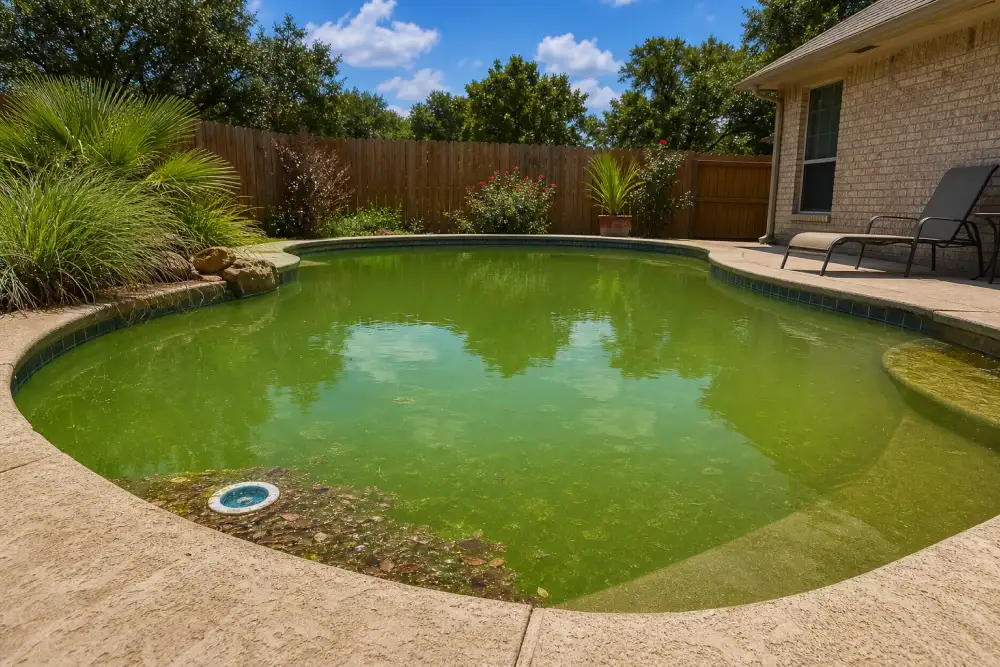
Public pools in Texas must keep the main drain visible, and it is a good rule at home too. If you cannot see the floor from the deck, you cannot see a child on it either.
Broken glass, dropped toys and the edge of a slick step disappear under a green surface as well.
Slippery is its own hazard
Algae coats steps, ladders and the tile line with a film you only feel once your foot is on it. Black algae is the worst of these, because it roots into the plaster and keeps the surface slick until it is brushed and treated. We cover the treatment in how to get rid of black algae.
What about a little green tint
A faint tint in water you can still see through is an early bloom. Shock it that evening to about 10 ppm free chlorine and it is usually gone by morning. In a 15,000-gallon pool starting near zero, 10 ppm takes about 1.5 gallons of 10% liquid chlorine or close to 2 pounds of 65% cal hypo dissolved in a bucket first.
Pea soup green, water where the drain has vanished, or a floor that feels slick underfoot all mean stay out until the pool is cleared.
Mustard algae is harder to spot. It looks like sand in the shady corners and returns again and again, which we explain in our guide to mustard algae in a pool.
If someone already swam in it
Have them shower with soap and warm water and rinse their ears with clean water as soon as they get out. Swimmer’s ear tends to show up a day or two later as pain when the ear is tugged, and a rash from dirty water shows up as itchy red bumps under the swimsuit. Keep any cuts or scrapes clean. Stomach illness from swallowed water can take several days to appear, so anyone who gets sick that week should tell their doctor about the swim.
Dogs that drink from a green pool pick up the same bacteria. Keep them away from the water and give them a fresh bowl on the deck.
After a summer storm
A Victoria thunderstorm can turn a clear pool green within two or three days. Two inches of rain on a 15-by-30-foot pool adds about 560 gallons, a small dilution, but runoff from the yard carries dirt, fertilizer and leaves over the coping, and the debris uses up chlorine overnight. Test the morning after any heavy rain, skim before the leaves sink, and raise chlorine back to 3 ppm before the afternoon heat. If the water has risen above the skimmer opening, the skimmer stops pulling floating debris, so lower the level back to the middle of the opening.
How fast you can get back in
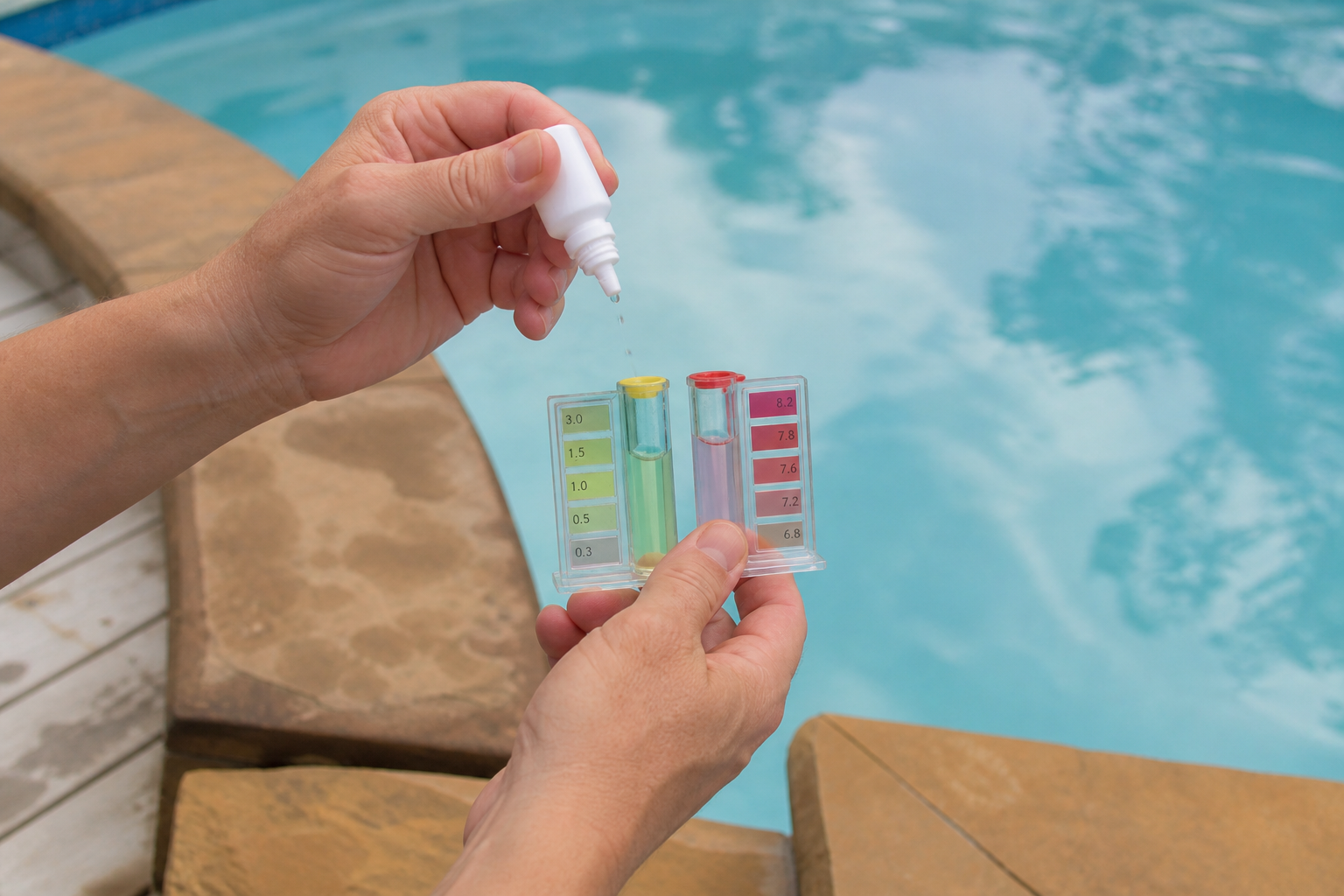
A light bloom clears in a day or two, and a deep green pool takes three to five days. You can swim again once free chlorine has fallen back to 1 to 3 parts per million on its own, pH reads 7.4 to 7.6, and you can read the drain cover from the deck.
Stay out while chlorine is still at shock level. Our walkthrough on how to clear a green pool has the order of steps, and the dead algae on the floor comes out with the method in how to remove dead algae from the pool bottom.
Stop it before it starts
Hold free chlorine at 1 to 3 ppm and stabilizer at 30 to 50, brush the walls weekly, and test twice a week from May through September. The usual openings, from low chlorine after a storm to dead spots in circulation, are listed in what causes algae in a pool.
If your pool turns green after every rain, bring about a pint of water from elbow depth for free water testing, and mention how many days ago it last turned. We will read the stabilizer along with everything else and tell you what is feeding it, or call (361) 575-5821.
Frequently Asked Questions
Can algae in a pool make you sick?
The algae itself rarely does. The bacteria that thrive alongside it can, because green water means chlorine is too low to kill germs like E. coli and the ones behind ear and skin infections.
Is a little green in the pool okay to swim in?
A faint tint with clear water is low risk, but it means chlorine is losing. Shock it that evening. If you cannot see the main drain from the deck, stay out.
How long after shocking can I swim?
Wait until free chlorine drops back to 1 to 3 parts per million on its own. That is usually one to three days depending on how much you added and how hot it is.
Is black algae dangerous to swim in?
It is slippery and it means chlorine has been low for a while, which is the real hazard. It also roots into plaster, so it needs brushing and treating rather than waiting out.
Can kids swim in a pool with algae?
Keep them out. Beyond the water quality, a child under green water is invisible from the deck. Public pools in Texas must keep the main drain visible for that reason, and it is a good rule at home too.
Do I have to drain a pool with algae?
Almost never. Shocking, brushing and filtering clear even dark green water in the pool. A partial drain makes sense only when stabilizer tests above 100 ppm, because water replacement is the only way to bring it down.
Why does the pool still go green with normal chlorine?
Usually high stabilizer. Above about 80 ppm chlorine works noticeably slower, so the test reads fine while algae gets ahead. A full water test will show it.
