
Gray or brown dust on the floor a day after a shock is dead algae, which means the chlorine did its job. It stays on the floor until you vacuum it out, and the method matters, because the usual routine of brushing and filtering puts most of it back into the water.
Why it sinks and settles
Living algae floats and clings to walls. Once chlorine kills it, the cells lose their grip and drop. The dust is finer and lighter than sand, and it lifts off the floor at the slightest movement, which is what makes it awkward to remove.
Left in the pool, dead cells feed the next bloom, and the cycle in our guide to what causes algae in a pool starts over from there.
Let it settle before you brush
Brushing throws the whole layer back into the water, so leave the floor alone for now. The pool clouds up again and the dust lands somewhere else an hour later.
Give everything a full day to settle before you touch it. Keep the pump running while you wait so the water above the floor keeps clearing.
Vacuum to waste
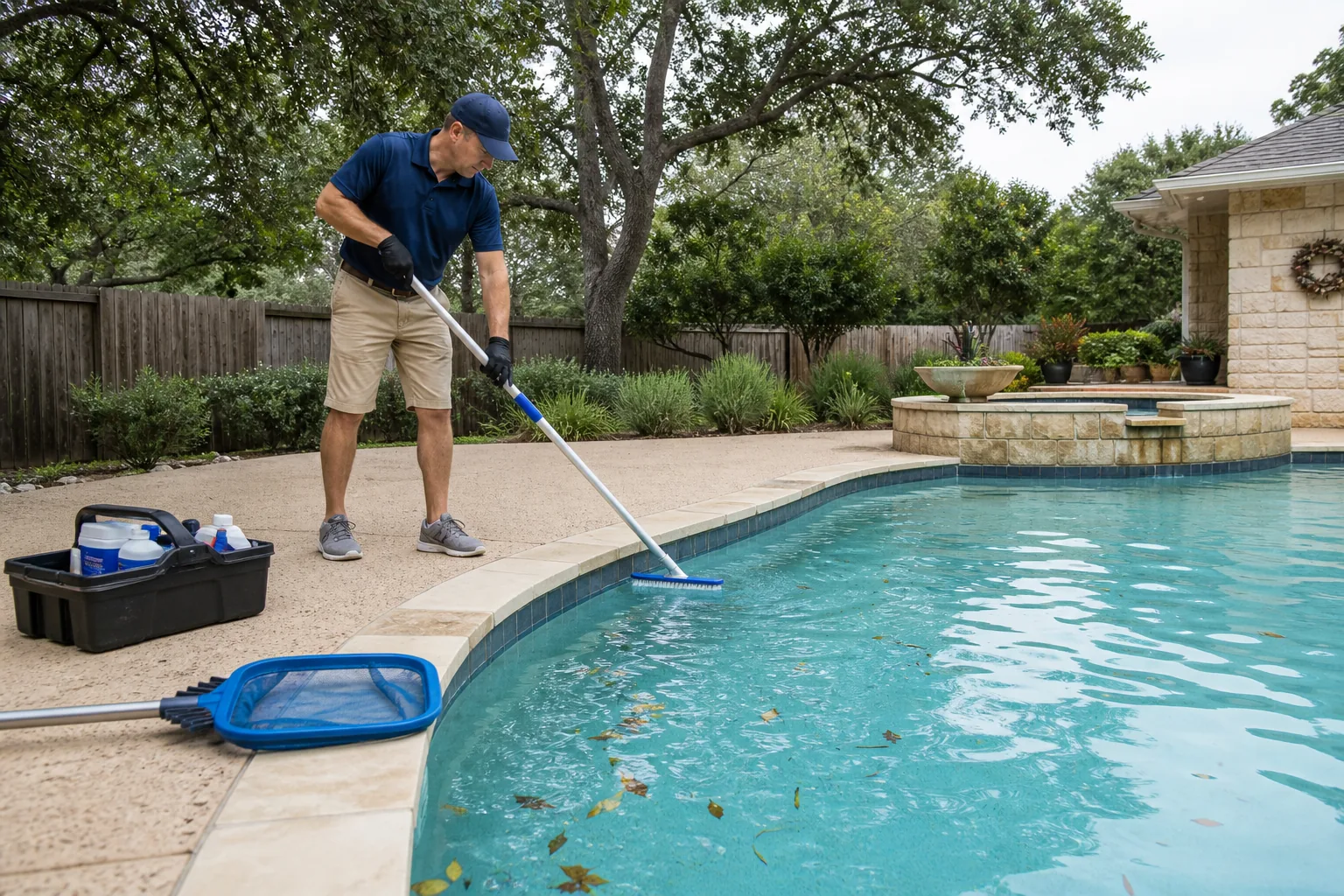
On a sand or DE filter, set the multiport valve to waste. That setting sends the water straight out the backwash line and skips the filter, which matters because dead algae is fine enough to pass through sand and come right back into the pool.
Run the hose to top the pool up as you go. The water has to stay above the skimmer mouth or the pump sucks air and loses prime, and our post on how to prime a pool pump covers getting it running again if that happens.
Move the head about a foot every few seconds; go faster and you stir up more than you pick up. Work in one direction across the floor in overlapping passes, and leave each cleared strip alone once you have covered it.
Fill the pool to the top of the tile before you start, because the level drops fast. A 15,000 gallon pool about five feet deep loses roughly an inch for every 250 gallons, so a pump moving 40 gallons a minute takes an inch off every six minutes. A garden hose adds back only a fraction of that. On a big job, stop when the water nears the bottom of the skimmer, refill, and pick up where you left off.
If you have a cartridge filter
Cartridge filters have no waste setting. Some equipment pads have a drain port or waste valve plumbed in before the cartridge, and if yours does, vacuum out through it. Otherwise a submersible pump with a discharge hose can pull the settled algae out of the pool.
The last option is to vacuum through the filter and expect to pull and rinse the cartridge several times, using the method in how to clean a pool filter.
Wherever the water goes, it carries shock-level chlorine. Check the city’s rules before sending it to the street or a storm drain, and keep it out of your neighbor’s yard.
If the dust comes back
Dead algae stays gone once it is out. Yellow or brown dust that returns to the same shady corner a day after you vacuum is usually live mustard algae, which brushes off as a cloud and resettles within hours. Test free chlorine the morning after the shock. A reading near zero means the dose ran out before the algae died, and the pool needs another shock held overnight at 20 to 30 ppm. A brown patch that stays put under the brush is a stain, which is a different problem.
Clear the last of the haze
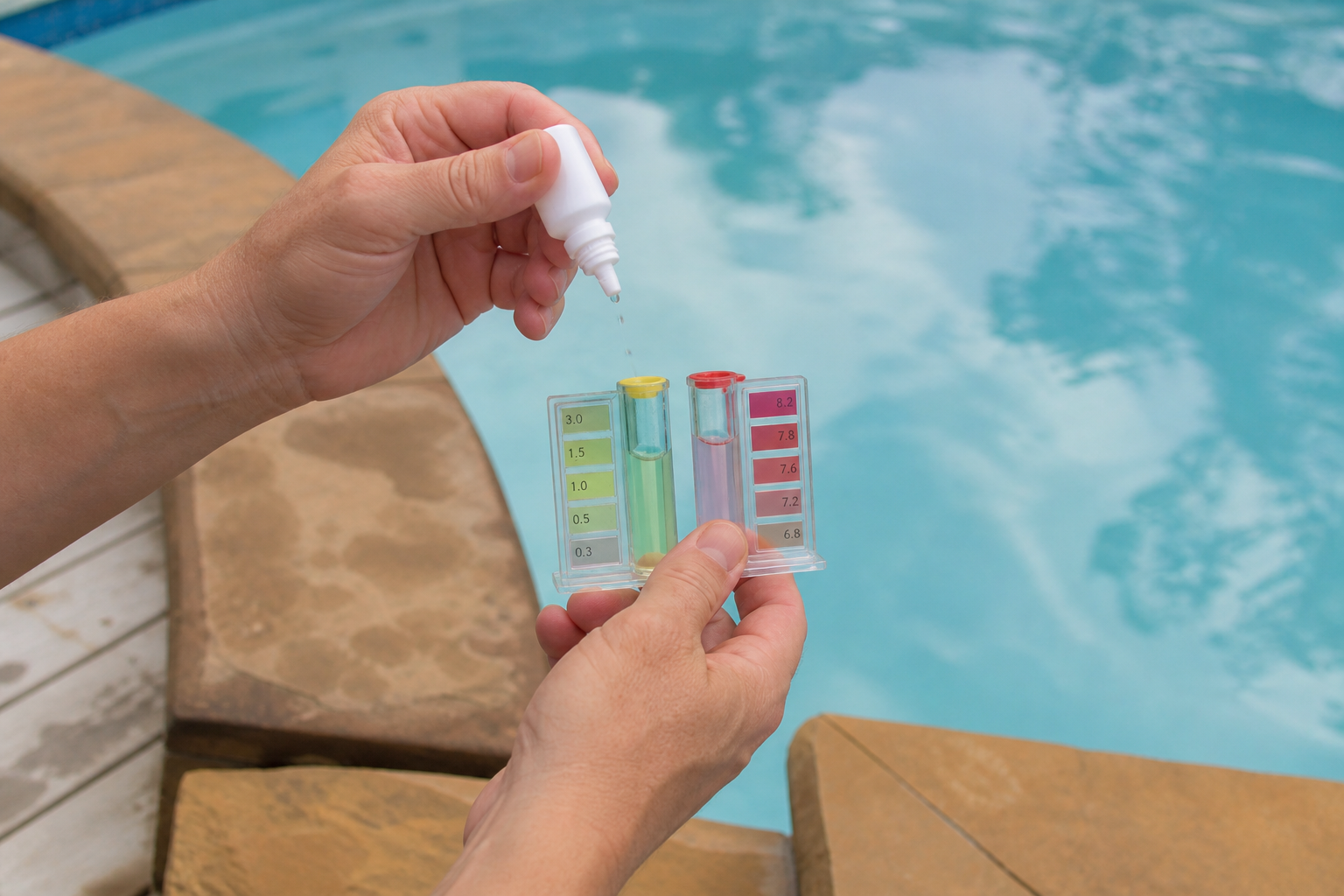
After vacuuming, a fine cloud usually hangs in the water. A clarifier gathers the small particles into bigger ones the filter can catch, and it works over a day or two. A flocculant drops everything to the floor so you can vacuum to waste a second time, which is faster and uses more water.
Run the pump around the clock until the water is clear and check filter pressure often. More on the haze itself is in our post on why your pool is cloudy.
Then stop it coming back
Brush the walls and steps once the floor is clean. Hold free chlorine at 1 to 3 parts per million, pH at 7.4 to 7.6 and stabilizer at 30 to 50 ppm, and test twice a week through the summer.
Every gallon sent to waste comes back as fresh fill water, which dilutes stabilizer and, from Victoria’s hard tap water, adds calcium. Test both after a heavy vacuum session, since a stabilizer reading that dropped below 30 leaves the new chlorine exposed to the sun.
If the numbers look off, bring about a pint of water from elbow depth for free water testing at the store. A pool that goes green again after every rain usually has a stabilizer or circulation problem, so tell us when it last turned and how long the pump runs, or call (361) 575-5821.
Frequently Asked Questions
Why is there gray dust on my pool floor after shocking?
That is dead algae. Chlorine kills the cells, they lose their grip, and the remains settle on the floor as fine gray or brown dust.
Should I brush dead algae before vacuuming?
Wait. Brushing lifts the whole layer into the water and clouds the pool again. Let it settle for a day, vacuum it out, then brush the walls afterwards.
What does vacuum to waste mean?
On a sand or DE filter, you set the multiport valve to waste so the water goes straight out the backwash line instead of through the filter. Dead algae is too fine for sand to catch, so filtering it returns much of it to the pool.
How do I vacuum dead algae with a cartridge filter?
Cartridge filters have no waste setting. Use a drain port or waste valve before the filter if your pad has one, or a submersible pump with a discharge hose. Failing that, vacuum through the filter and expect to rinse the cartridge several times.
Will the filter clear dead algae on its own?
Some of it, slowly, and a lot of it will pass straight back through. Vacuuming to waste is faster and it removes the dead cells that feed the next bloom.
How much water will I lose vacuuming to waste?
Enough that you should run the hose the whole time. Keep the level above the skimmer mouth or the pump will suck air and lose prime.
Can a robotic cleaner pick up dead algae?
Only with its finest filter installed, and it clogs fast. Most robot screens let the dust pass back into the pool.
