
You see dark spots the size of a pencil eraser on the plaster. You brush them and they stay. You shock the pool and they are still there next week.
That is black algae, and it is the toughest thing that grows in a pool.
Why it survives your chlorine
Black algae is not really a plant. It is cyanobacteria, and it does two things that green algae cannot.
It grows roots down into porous surfaces, so plaster, gunite, and grout are its favorite homes. Cut the top off and the roots grow it right back.
It also builds a waxy protective layer over itself. Chlorine hits that shell and stops. You can hold a perfect chlorine reading all week and the spots will not care.
This is why black algae is a brushing problem first and a chemistry problem second.
Check that it is really algae
Black algae sits slightly raised and has a defined round edge. Scrape one with your fingernail and the top comes away, leaving a lighter spot underneath that darkens again in days.
A stain is flat, spreads with no edge, and does not come off at all. Metal stains from iron or copper look similar and need a completely different fix.
If you are unsure, bring us a water sample and describe the spot.
Balance the water first
Chlorine does almost nothing at high pH. Get pH to the 7.2 to 7.4 range before you shock, or you are throwing money in the water.
Check stabilizer too. Very high cyanuric acid locks chlorine up and makes every treatment weaker.
Brush hard, and brush the right way
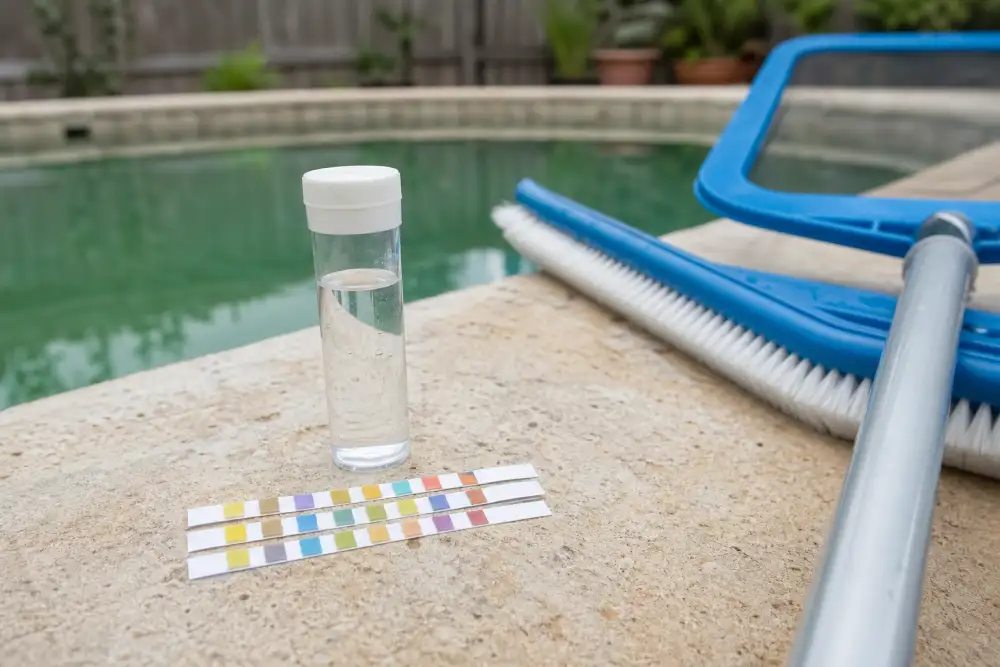
This is the step that wins. You are not cleaning the spot, you are breaking the shell open so chlorine can reach the living layer underneath.
On plaster or gunite, use a stainless steel algae brush. On vinyl or fiberglass, use nylon only, because steel will cut the surface.
Scrub each spot hard until you see the head come off. Then brush the whole pool, including steps, corners, and the light ring.
A lot of people add a second step here. Rub a chlorine tablet directly on each stubborn spot after brushing. That puts undiluted chlorine right on the roots.
Shock it, then do it again
After brushing, shock the pool hard. Black algae needs far more than a normal maintenance dose.
Run the pump 24 hours straight while the shock works. Circulation matters as much as the chemical.
Then repeat the whole cycle. Brush, spot treat, shock, circulate. Every two or three days.
Here is the part nobody wants to hear. Black algae takes weeks, not days. Quit after one round and the roots bring it straight back.
Clean the filter or you reinfect the pool
Everything you brush loose goes into the filter and stays alive in there. Clean the filter after each treatment round, and deep clean it when you are done.
Our step by step on cleaning a pool filter covers the soak that actually clears it.
Brushes and poles need a soak in chlorinated water too. So do floats and toys.
Keep it from coming back
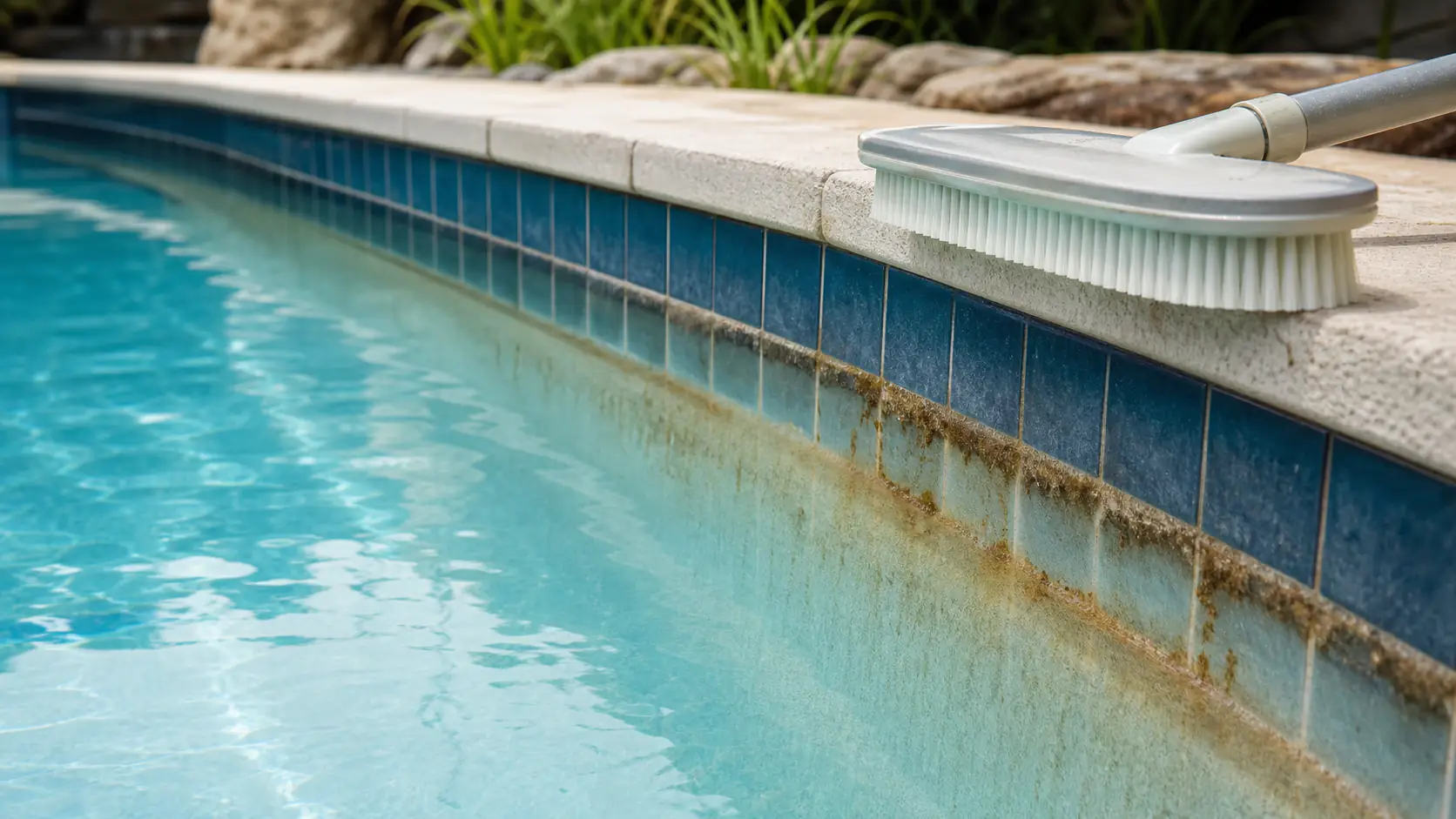
Black algae takes hold where water sits still and surfaces are rough. Look at your dead spots, your plaster cracks, and the grout between tiles.
Hold a steady chlorine level rather than letting it swing. Brush weekly, not monthly. Rough or failing plaster is an open invitation. Resurfacing is sometimes the only permanent fix.
A weak pump or short run time makes all of it worse, which ties back to how long to run a pool pump.
When to call us
Call if the spots survive three full treatment rounds, if they are spreading, or if the plaster is crumbling around them.
A bad case sometimes needs draining and an acid wash, and that is not a weekend project. Our Texas RAIL licensed crew has been handling these in Victoria since 1968.
Call (361) 575-5821 and we will look at it before it gets into more of your plaster.
Frequently Asked Questions
What kills black algae in a pool?
Brushing followed by a heavy shock, repeated every two or three days. Brushing breaks the protective layer so the chlorine can reach the living cells. Chemicals alone will not do it.
How long does it take to get rid of black algae?
Usually two to four weeks of repeated treatment. One round of brushing and shock knocks the tops off but leaves the roots, and the spots return within days.
Is black algae dangerous to swim in?
The algae itself is not the main worry. The problem is that it shelters bacteria and signals that your chlorine is not doing its job. Keep people out until the water holds a proper chlorine level.
What brush should I use on black algae?
A stainless steel algae brush on plaster or gunite. Use a nylon brush only on vinyl or fiberglass, because steel bristles will cut those surfaces.
Does black algae mean my pool is dirty?
Not necessarily. It often arrives on swimsuits or gear used in a lake or another pool, then takes hold anywhere the surface is rough and the water is still.
Can black algae come back after treatment?
Yes, if the roots survive in porous plaster or the filter was never cleaned out. Hold a steady chlorine level, brush weekly, and deep clean the filter after treatment.
