
Your pool looked fine yesterday. Today, the water has a milky haze, and the drain seems harder to see. If you are asking, “Why is my pool cloudy?”, the cause usually falls into one of five groups: unbalanced water chemistry, weak sanitizer, poor filtration, weak circulation, or fine debris after weather or heavy use.
Cloudy water often clears once you test before treating and keep the pump running long enough for the filter to catch suspended particles. Randomly adding more products can make the haze worse. Use the quick comparison below to narrow down the cause, then follow the matching fix.
Safety first: Keep swimmers out until the water is clear enough to see the main drain and the sanitizer and pH readings are back in range. The CDC recommends testing home pool chlorine and pH regularly because both affect germ control and swimmer comfort.
Why Is My Pool Cloudy? Start With This Quick Check
A fast diagnosis starts with four checks: water clarity, free chlorine, pH, and water flow. Test the water before adding anything. Then inspect the skimmer, pump basket, filter pressure, and return jets. Those readings separate a chemistry problem from a filtration or circulation problem.
| What you notice | Likely cause | First action |
|---|---|---|
| Haze appeared after a hot, busy day | Low free chlorine or high swimmer load | Test chlorine and pH, then treat from the results |
| Water turned cloudy after adding chemicals | High pH, calcium precipitation, or incompatible additions | Stop adding products and run a full water test |
| Weak return flow or rising filter pressure | Dirty filter or blocked circulation | Clean baskets and service the filter |
| Haze followed rain, wind, or yard work | Fine debris and diluted chemistry | Skim, brush, vacuum, test, and filter |
| Cloudiness remains after shocking | Dead contaminants waiting to be filtered | Run the pump, brush, and clean the filter as needed |
Cause 1: Unbalanced Water Chemistry
High pH, high total alkalinity, or excess calcium hardness can push dissolved minerals out of solution. The particles stay suspended and scatter light, creating a white or gray haze. High pH also makes chlorine less active, so a chemistry problem can quickly turn into a sanitation problem.
Start with a dependable drop-based kit or bring a sample for professional in-store pool water testing. Check free chlorine, combined chlorine, pH, total alkalinity, calcium hardness, and cyanuric acid. Salt pools also need a salt reading and a look at the cell output.
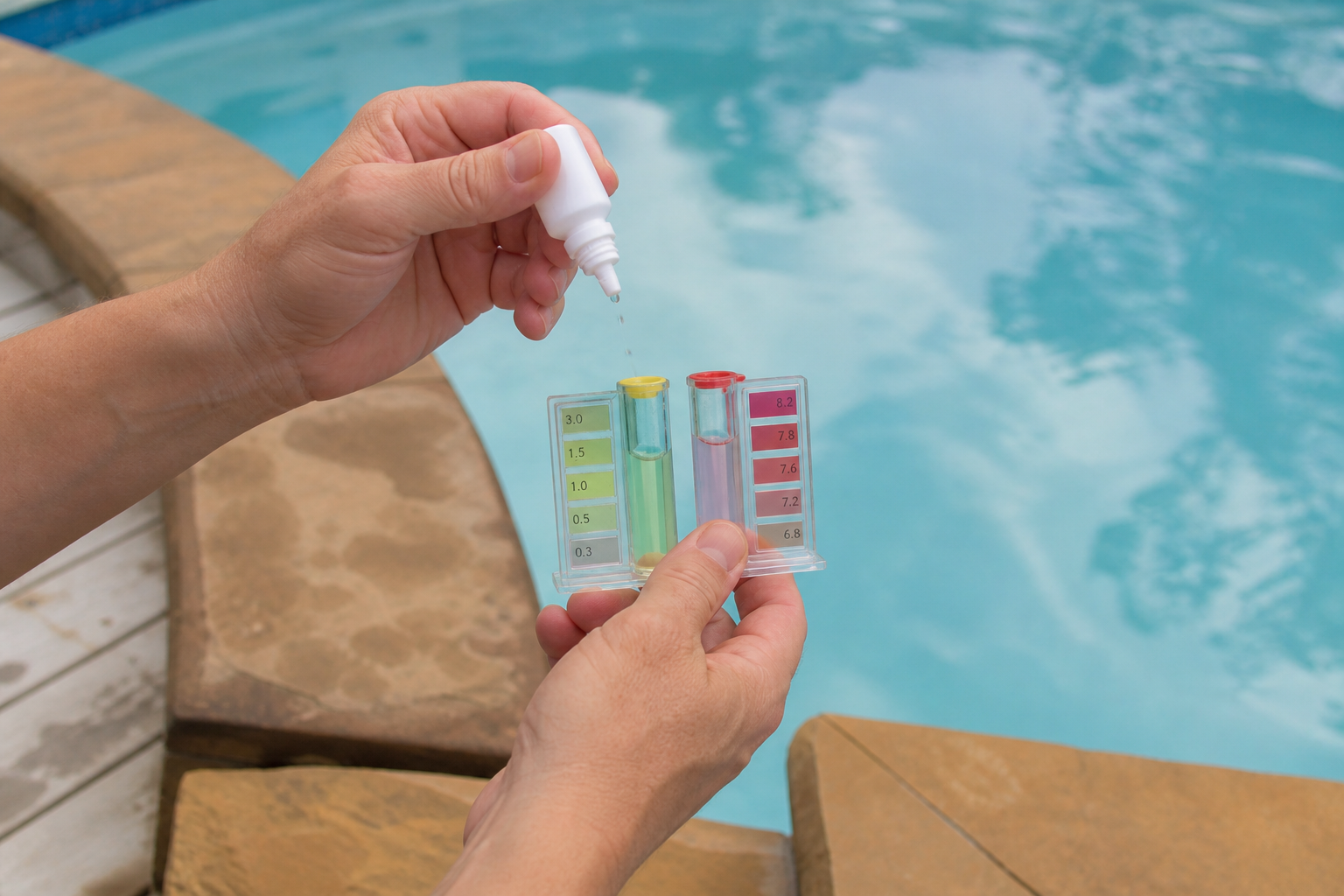
How to fix cloudy water caused by chemistry
- Test the water and record each result.
- Correct pH and alkalinity in small, measured doses according to the product label and your pool volume.
- Allow the water to circulate between additions, then retest.
- Brush the pool so settled material reaches the filter.
The CDC lists a pH range of 7.0 to 7.8 for home pools. Your pool surface, sanitizer system, and chemical product may call for a narrower working target, so follow the label and equipment instructions. If you are unsure which product fits the test results, Victoria Pool Service carries pool chemicals and water-care supplies and can help you avoid conflicting treatments.
Cause 2: Low Free Chlorine or High Chlorine Demand
Free chlorine gets used up as it attacks sweat, sunscreen, leaves, pollen, and other organic material. Hot Texas sun also breaks down unstabilized chlorine. Once the available sanitizer falls behind the demand, bacteria and early algae growth can create haze before the water turns green.
A strong chlorine smell does not prove the pool has too much usable chlorine. That odor often comes from chloramines, which form when chlorine combines with swimmer waste. The CDC explains how chloramines reduce the chlorine available to kill germs.
How to restore sanitizer without guessing
Measure free chlorine, combined chlorine, pH, and cyanuric acid. Follow the sanitizer or shock label for your pool volume and current readings. Brush the walls, steps, ladders, and floor, then keep the pump running so the filter can remove what the treatment breaks down.
If the water has shifted from pale haze to green, follow the steps in our green pool cleanup article. Never mix pool chemicals.
Cause 3: A Dirty, Undersized, or Poorly Working Filter
Your filter removes the fine particles that chemicals cannot make disappear. A dirty cartridge, channeled sand bed, depleted filter media, or damaged internal part lets those particles recirculate. The pool may test well and still look dull because the physical cleanup has stalled.
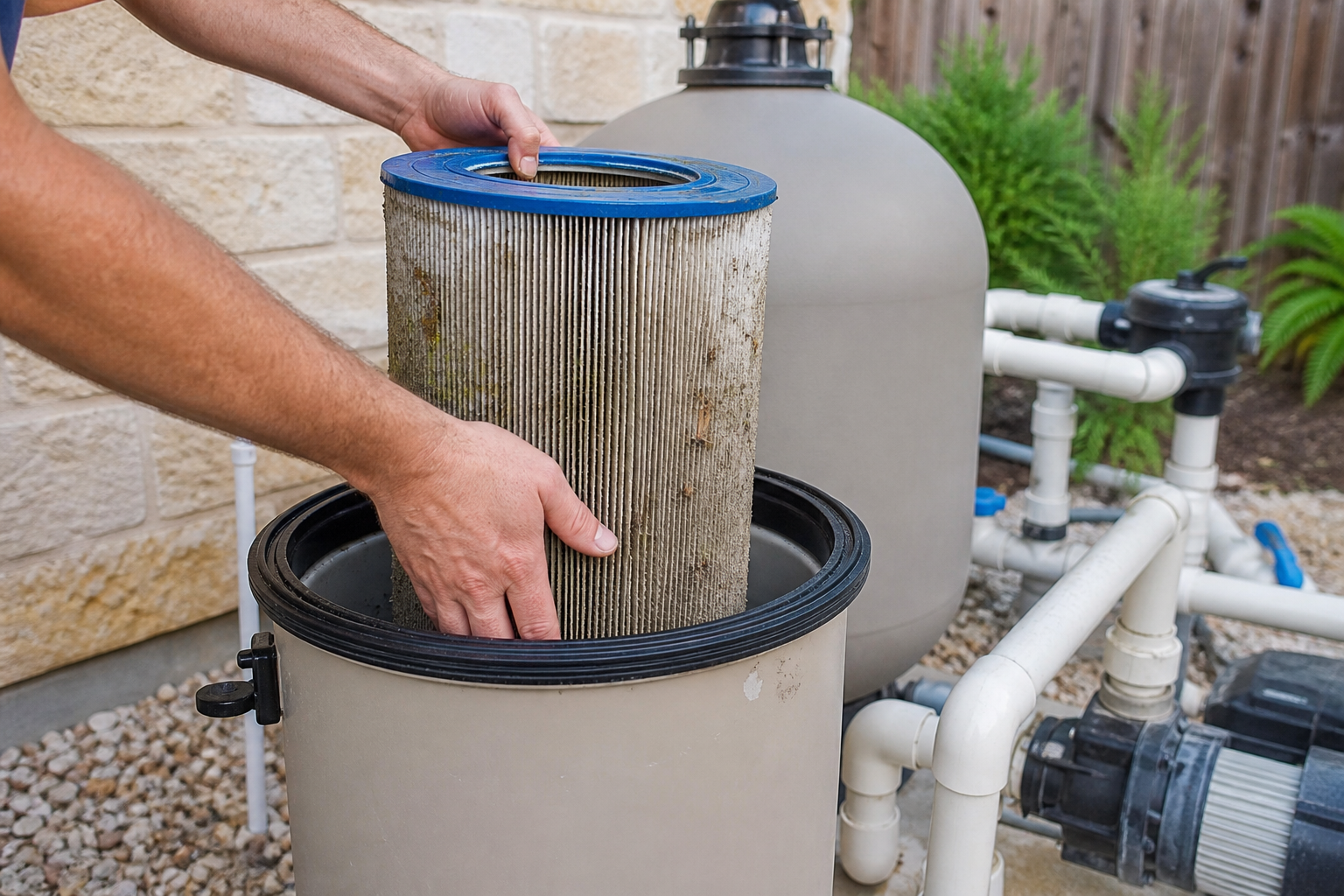
How to fix a filtration problem
- Cartridge filter: Shut off the system, release pressure, remove the cartridge, and clean it according to the manufacturer’s directions. Replace torn or flattened cartridges.
- Sand filter: Backwash only when the pressure rise or manufacturer’s instructions call for it. Frequent backwashing can prevent the filter from catching finer material.
- D.E. filter: Backwash or clean the grids as directed, then add the correct amount of fresh media. Damaged grids need replacement.
Use the clean-filter pressure as your baseline. A rising gauge points to trapped debris. A reading that stays unusually low can signal a flow problem, bypass, damaged gauge, or internal filter fault. Our team handles pool maintenance and equipment repairs when cleaning alone does not restore clear water.
Cause 4: Poor Circulation or Too Little Run Time
Sanitized water must reach the whole pool, and cloudy water must pass through the filter. Clogged baskets, a low water level, closed valves, air leaks, weak return flow, or a struggling pump can leave dead spots. Those areas collect dust and organic material even while the equipment sounds normal.
How to improve circulation
- Bring the water level to the normal operating range.
- Empty the skimmer and pump baskets.
- Check that valves are in their normal positions.
- Look for air bubbles at the returns or air under the pump lid.
- Aim return jets to create steady movement across the surface and through deeper water.
- Run the system continuously during active cleanup, subject to the equipment manufacturer’s limits.
If the pump loses prime, makes a new grinding sound, or cannot produce normal return flow, stop treating the water as a chemistry-only problem. Review the common causes of pool pump trouble or schedule pool equipment repair in the Victoria area.
Cause 5: Rain, Dust, Pollen, or Heavy Swimmer Use
Rain can dilute sanitizer and shift pH while wind carries soil, pollen, and plant debris into the water. A party adds sunscreen, body oils, and sweat. Each event increases the load on the sanitizer and filter, which explains why clear water can turn hazy within hours.
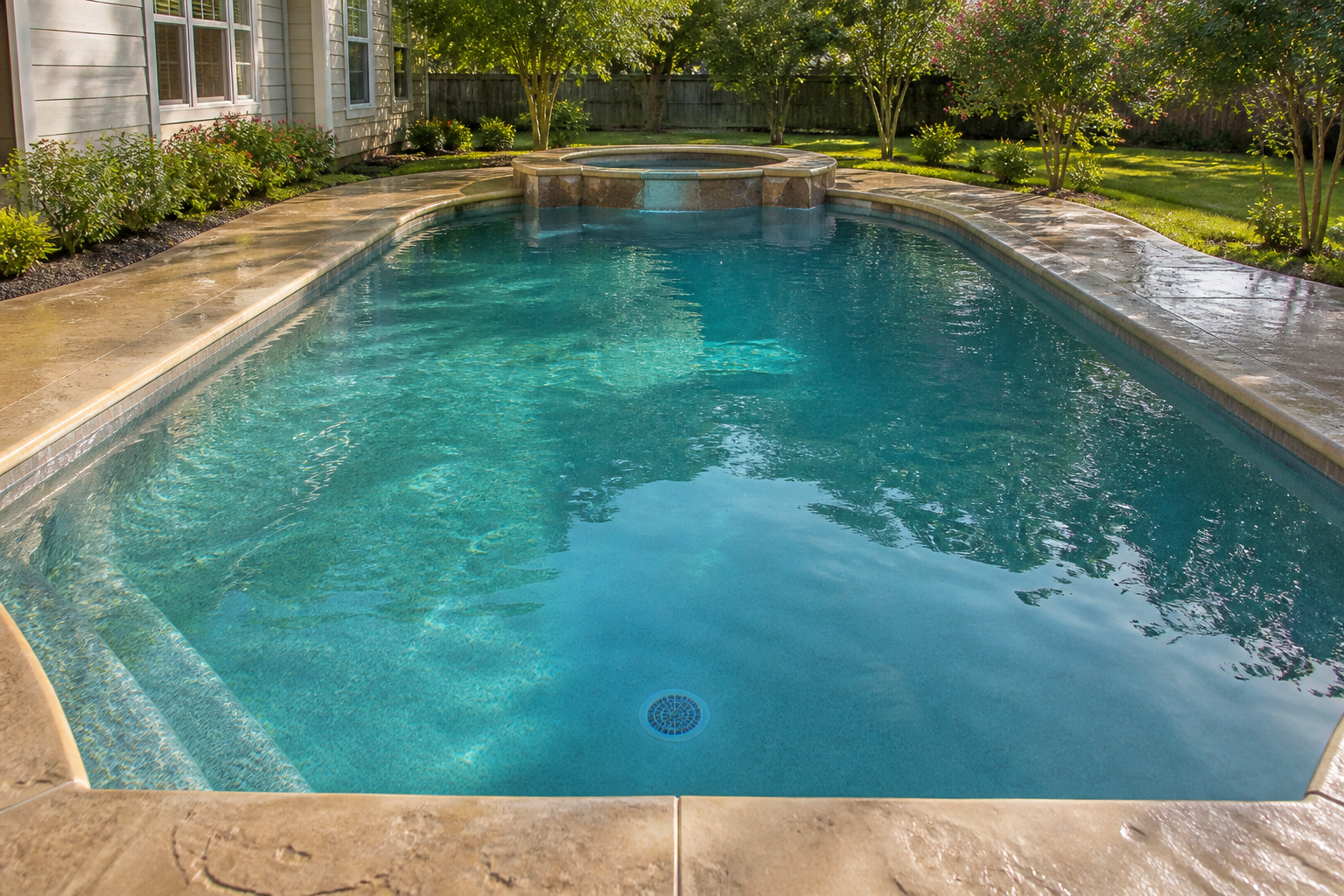
How to clear weather-related or swimmer-related haze
Remove leaves first. Brush the walls and floor, vacuum the pool, clean full baskets, and test the water. Correct the chemistry from measured results, then give the filter enough time to capture suspended material. Clean or backwash the filter when its pressure indicates that it is loaded.
After a coastal storm, check the equipment pad for standing water or damage before restarting it. Use our Texas Coast hurricane pool checklist for the first safety checks.
Why Is My Pool Cloudy After Shocking?
Cloudiness after shocking often means the treatment oxidized contaminants and left fine particles for the filter to remove. High pH or calcium can also produce a milky reaction after a chemical addition. Test again, brush the pool, run the circulation system, and watch filter pressure before adding another dose.
Clean the filter when pressure rises above its clean baseline. If the haze remains after a full filtration cycle, arrange pool cleaning and water-balance service.
Will Pool Clarifier Fix Cloudy Water?
Clarifier can help a working filter catch very fine particles by grouping them into larger clusters. It cannot correct low sanitizer, high pH, a clogged filter, or poor circulation. Too much clarifier can create more haze and load the filter, so test first and follow the label exactly.
Flocculant is a different product. It drops particles to the floor for vacuuming to waste and may not suit every pool or filter setup. Confirm that your plumbing can vacuum to waste before using it. Most cloudy pools respond better to corrected chemistry, steady circulation, brushing, and proper filtration.
Key Takeaways for Clearer Pool Water
- Test before adding chemicals. Free chlorine and pH are the first readings to check.
- Keep swimmers out when the main drain is not plainly visible.
- Clean baskets, check return flow, and compare filter pressure with the clean baseline.
- Run the pump long enough to filter the full pool during cleanup.
- Use clarifier only after chemistry, circulation, and filtration are working.
- Call for help when cloudy water persists, flow stays weak, or the equipment behaves differently.
Final Thoughts
Test, correct one issue at a time, and let the circulation system finish the cleanup. If the haze remains, schedule pool maintenance with Victoria Pool Service.
Frequently Asked Questions
How do I fix cloudy pool water fast?
Test free chlorine, pH, alkalinity, calcium hardness, and cyanuric acid first. Correct the readings in measured steps, brush and vacuum the pool, clean the baskets, and run the filter continuously during cleanup. Clean the filter when its pressure rises above the clean baseline.
Can I swim in a cloudy pool?
Do not swim if you cannot plainly see the main drain or the pool floor. Poor visibility raises drowning risk and can hide a sanitation problem. Wait until the water is clear and the sanitizer and pH test within the proper range.
Does rain make a pool cloudy?
Yes. Rain can dilute chlorine, shift pH, and wash dust, pollen, or soil into the water. Remove debris, brush and vacuum, test the water, correct the readings, and let the filter run long enough to collect fine particles.
Will a clarifier fix cloudy water?
Clarifier can help a working filter collect tiny suspended particles. It will not repair weak circulation, clean a clogged filter, or correct bad chemistry. Use it only after testing and follow the product label because overdosing can make the pool cloudier.
Why is my pool cloudy after shocking?
Shock can leave dead algae and oxidized organic material suspended in the water. High pH or calcium can also cause a milky reaction. Brush the pool, run the filter, monitor pressure, and retest before adding another treatment.
How long does cloudy pool water take to clear?
A mild case can improve within one full filtration cycle after the cause is corrected. Heavy debris, a loaded filter, or badly unbalanced water can take longer. Lack of improvement points to a missed chemistry, circulation, or equipment issue.
Why is my pool cloudy but the chemicals look normal?
Look at filtration and circulation next. A dirty cartridge, damaged filter part, low pump flow, clogged basket, closed valve, or short run time can leave fine particles suspended even when a basic test strip appears normal.
