
A pump that hums along with a half-empty basket, no flow at the return jets and a rising whine has lost its prime, which means it is spinning against air. Air does nothing to cool the motor or the shaft seal, so shut the pump off now and read the rest with it off. Most of the time, filling the pump with water gets it going again in about ten minutes.
Why priming matters
A pool pump can move water but cannot pull air out of a pipe, so it needs water already sitting in the housing before it can start drawing from the pool. That same water keeps the shaft seal cool. Run the pump dry and the seal can fail within minutes, which turns a ten-minute fix into a service call and sometimes a new motor.
Check the water level before anything else
Walk to the pool and look at the skimmer. The water should sit halfway up the opening. When it drops lower, the skimmer gulps air with every ripple and the pump will keep losing its prime however carefully you fill it, so top the pool up first.
Prime it
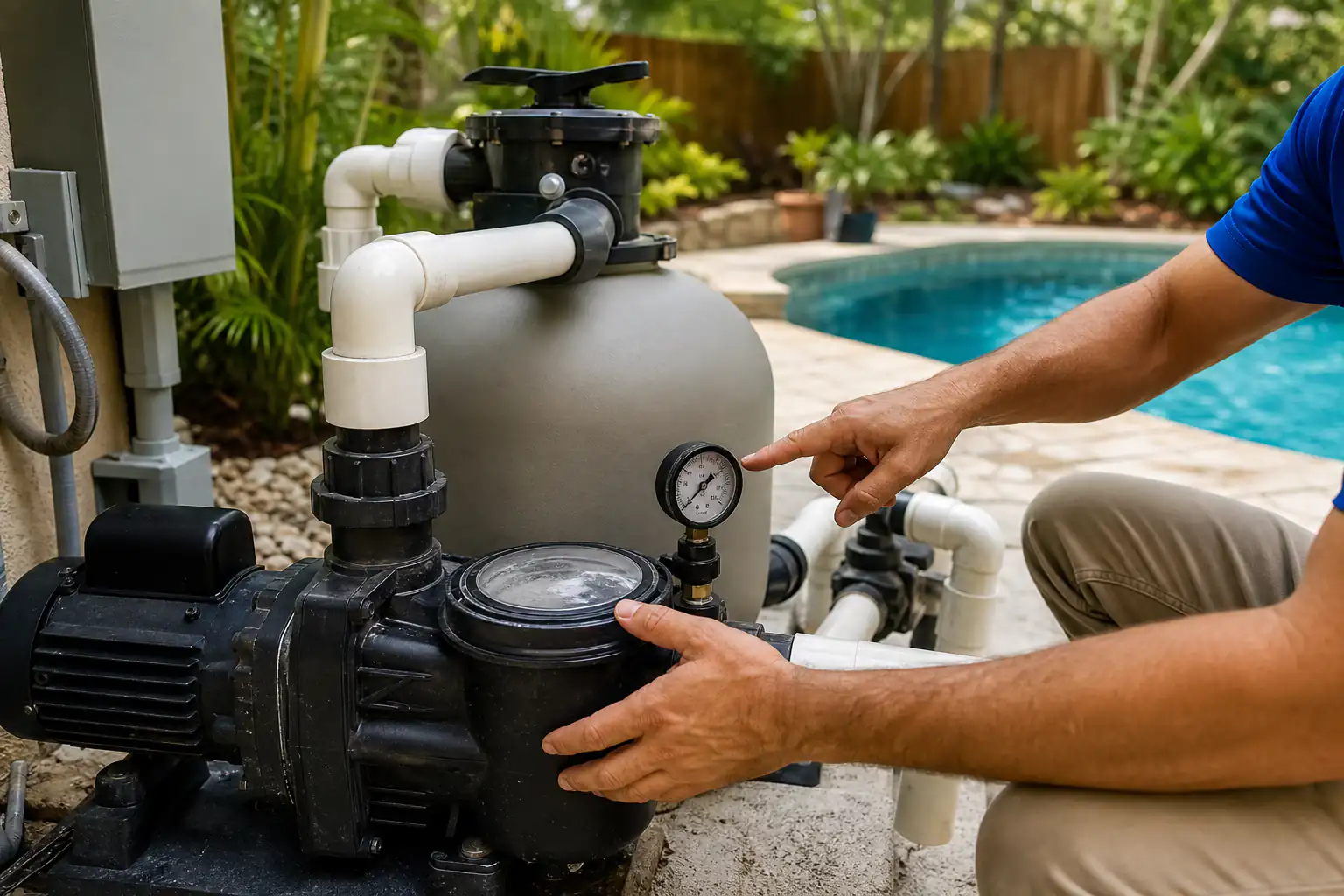
Turn the pump off at the breaker, and if you have a multiport valve, set it to FILTER. Open the air relief valve on top of the filter and leave it open so trapped air has a way out.
Twist the clear pump lid off, lift out the basket and empty it, since a basket packed with leaves starves the pump all by itself. Fill the pump housing from a hose until it overflows, set the basket back in, and fill again.
Before you close the lid, look at the o-ring. It should be soft and clean. Wipe it and rub on a thin coat of silicone lubricant, then hand-tighten the lid. Hand-tight is enough, because a wrench deforms the o-ring and creates the air leak you were chasing. Petroleum jelly is the other way people ruin that o-ring, since it swells the rubber, so stick to silicone.
Turn the breaker on. Water should start moving within 30 seconds, and once a steady stream comes out of the air relief valve, close it. If nothing moves after two minutes, shut the pump off and fill the housing again rather than letting it run. Some pumps take three tries, and each dry run wears the seal a little more.
Above ground pools and pumps set high
An above ground pool pump usually sits below the water line, so gravity does most of the work. Open the valves on the skimmer and return hoses, crack the pump lid or the air relief valve, and let pool water push the air out until a steady trickle appears. Tighten the lid and switch the pump on.
An inground pump set above the pool level, or a long way from it, has more suction pipe to fill before it catches. Fill the housing as usual and expect it to need the full two minutes, sometimes a second fill. The same goes for the first start after a drain and refill, a sand change or a winter shutdown, when the lines are full of air.
When priming does not hold
If the pump catches and then loses its prime again by morning, air is getting in on the suction side, meaning anywhere between the pool and the pump. Check these:
- Air bubbles coming out of the return jets in the pool.
- A pump basket that never fills completely while the pump runs.
- A cracked or flattened lid o-ring.
- A cracked pump lid, common after a few years in the Texas sun.
- A loose drain plug at the bottom of the pump.
- A leaking pipe union at the pump inlet.
A suction leak pulls air in, so it usually leaves no puddle, and you won’t find it by looking for water on the pad. With the pump running, spray a little shaving cream around each joint and union on the suction side. Wherever the cream gets drawn into the joint, you have found the leak.
When to call instead
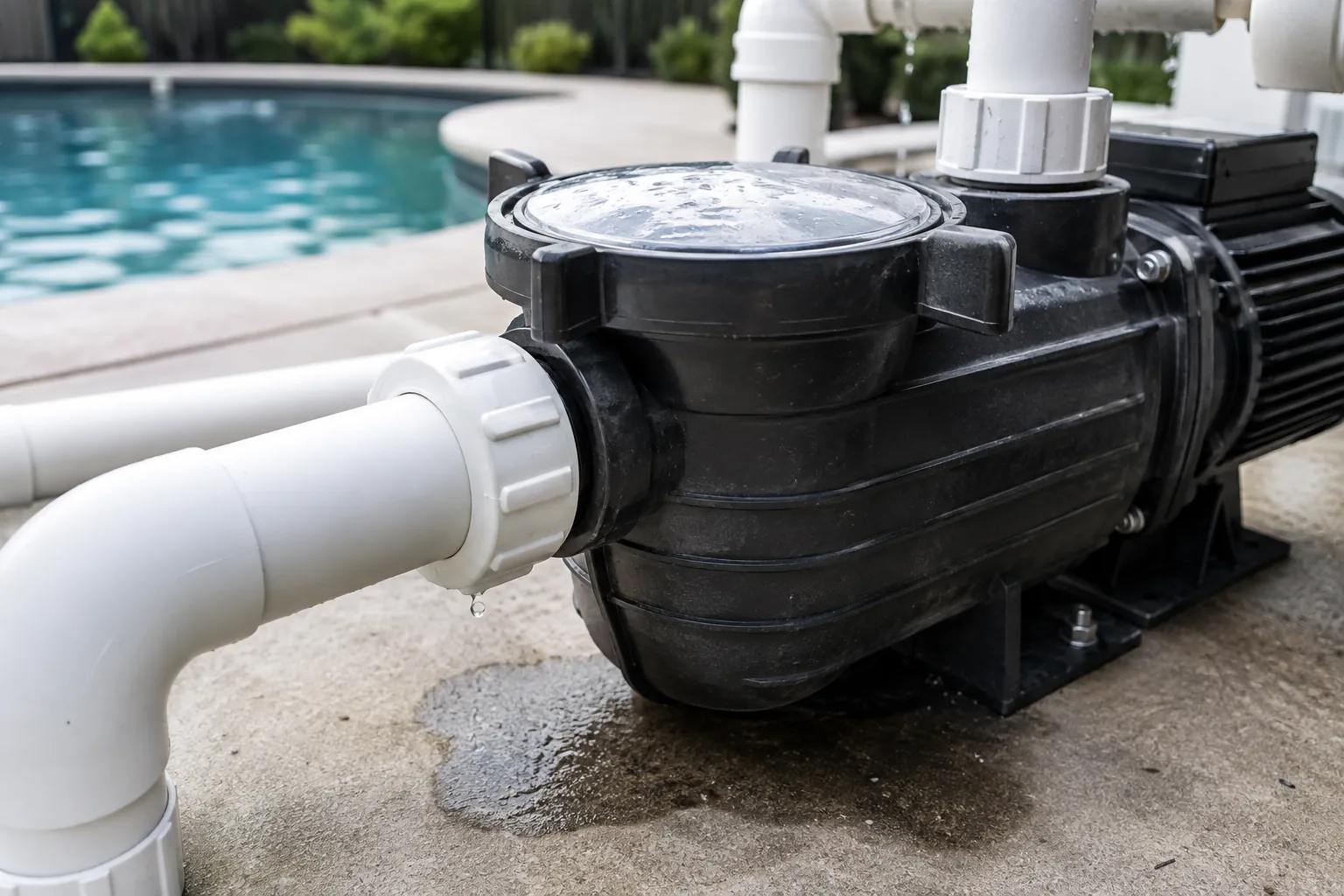
Call us if the motor hums without spinning, trips the breaker, smells hot, or screeches after it catches water. A screech usually means worn bearings and a breaker trip usually means an electrical fault, and our post on common pool pump repairs covers what each sound points to. Motor and wiring work is where our repair techs, who hold Texas RAIL licenses, take over.
If the water level keeps dropping on its own, the lost prime is a symptom of water loss. Run the bucket test in our post on evaporation versus a real leak before you replace any parts.
When you call (361) 575-5821, tell us the pump brand and horsepower from the motor label and whether it hums, trips or screeches, and we can usually tell you if it needs a lid o-ring from the store or a visit.
Frequently Asked Questions
How do you prime a pool pump?
Shut the power off, open the air relief valve on the filter, take the pump lid off, and fill the pump housing with a hose until it overflows. Put the basket and lid back on hand-tight, then turn the power on, and close the relief valve once steady water comes out.
How long does it take a pool pump to prime?
Usually 30 seconds to two minutes. If no water is moving after two minutes, shut it off and fill the housing again instead of letting it run dry.
Why does my pool pump keep losing prime?
Air is getting in somewhere between the pool and the pump. The usual causes are a low water level, a clogged skimmer or pump basket, a worn pump lid o-ring, a cracked lid, or a loose drain plug.
Can running a pool pump dry damage it?
Yes, and quickly. Water cools the shaft seal, and without it the seal can fail in a few minutes, with the motor following if it keeps running.
What do air bubbles in the return jets mean?
The pump is pulling air. Check the water level at the skimmer first, then the pump lid o-ring and the pipe unions at the pump.
Do I need to prime the pump every time I turn it on?
A pump with a tight lid and a sealed suction side holds water in the housing when it stops and restarts on its own. Needing to prime after every shutdown means air is getting in, usually at the lid o-ring or a suction union.
Should I grease the pump lid o-ring?
Yes, with a thin coat of silicone lubricant. Petroleum jelly swells the rubber and ruins the seal.
