The pool problems that cost the most usually show up first as a number, weeks before anything shows in the water: a pH that needs acid on every visit, chlorine that reads 3 ppm at dusk and zero by lunch, a water bill that climbs in a month when you watered the lawn less. Caught early, they keep the repair at the equipment pad small, and they are the ones our pool repair and service crew wishes owners had called about sooner.
For the louder warnings, such as a grinding pump, weak jets or a sudden green pool, see our list of seven pool repair warning signs.
Cloudy Water After Cleaning Is a Warning
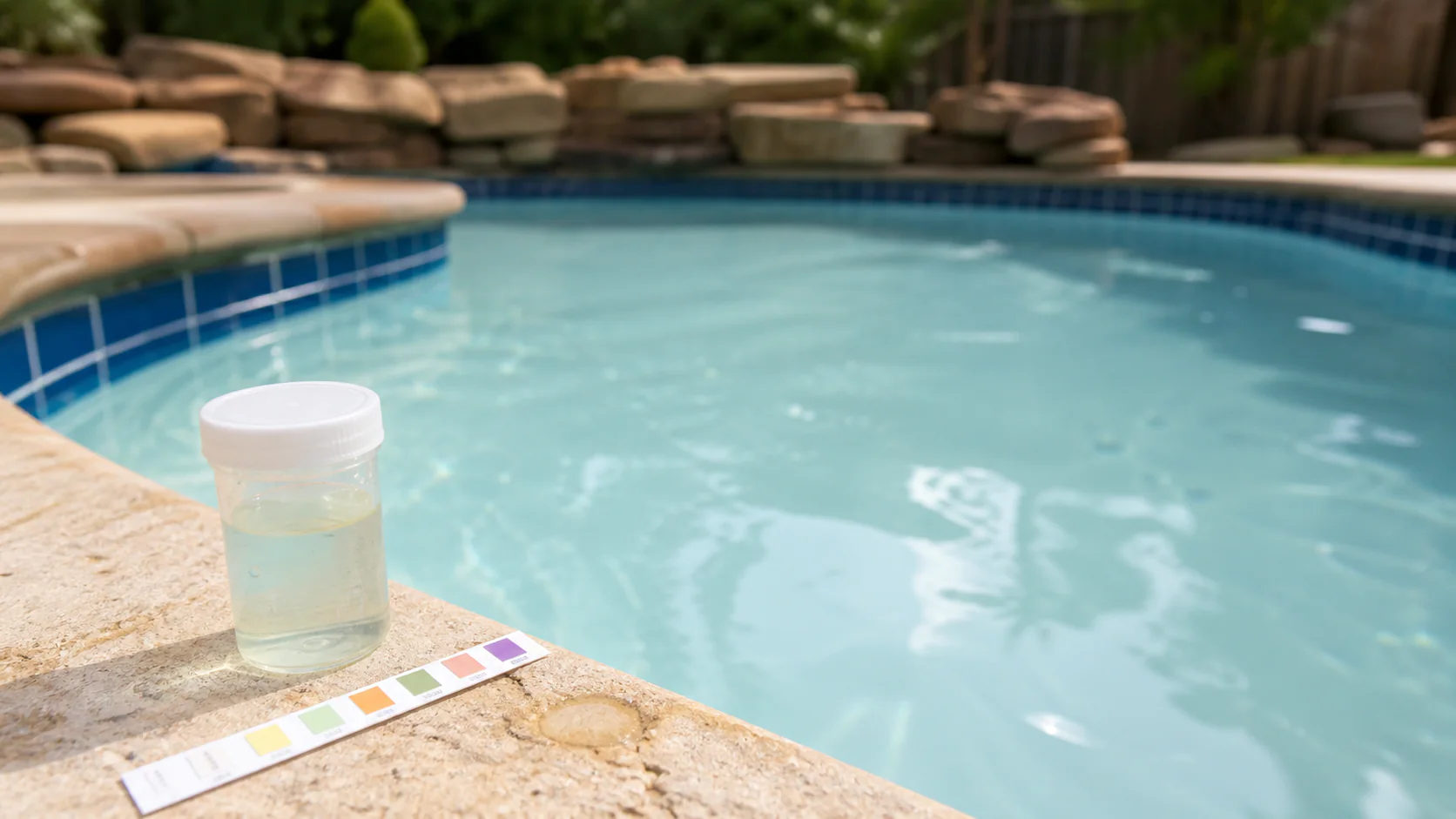
A pool that clouds up a day or two after it was brushed, vacuumed and dosed is telling you the chlorine or the filter is falling behind. The quieter version comes before the cloudiness: chlorine that will not hold. Test free chlorine at dusk, leave the pool unused, and test again at dawn. A drop of more than about 1 ppm overnight usually means early algae you cannot see yet, or a heavy load of organic debris.
If the chlorine holds overnight but disappears during the day, look at stabilizer: below 30 ppm, sunlight burns chlorine off fast, and above about 80 ppm it works noticeably slower. Our post on why clear pool water can still be unsafe covers the readings that matter when the water looks fine.
Equipment Sounds That Should Not Be Ignored
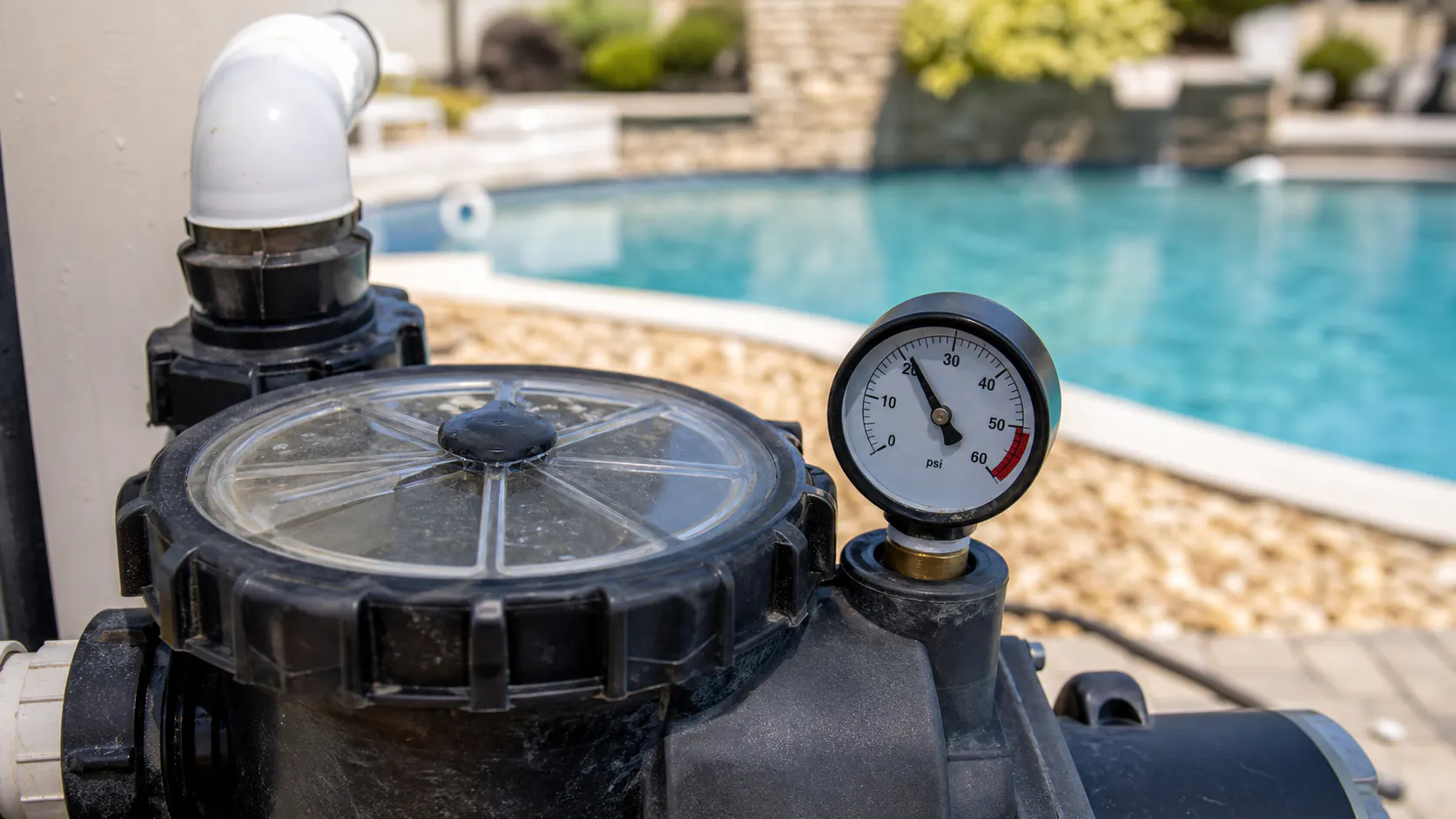
A pump that cycles oddly is easier to miss than one that grinds. A pump that shuts itself off in the afternoon heat and restarts later is often overheating and tripping its thermal overload. One that hums for a second before it starts can have a weak start capacitor. Surging, where the flow rises and falls every few seconds and bubbles show in the pump lid, points to air getting in on the suction side, often a dry lid O-ring or a low water level.
If a variable-speed pump runs at a speed or time that does not match its program, or the display shows a fault code, write the code down. Our post on common causes of pool pump trouble goes through the usual failures, and our repair technicians hold Texas RAIL licenses for pump and electrical work.
Small Leaks Around the Pad Can Become Big Repairs
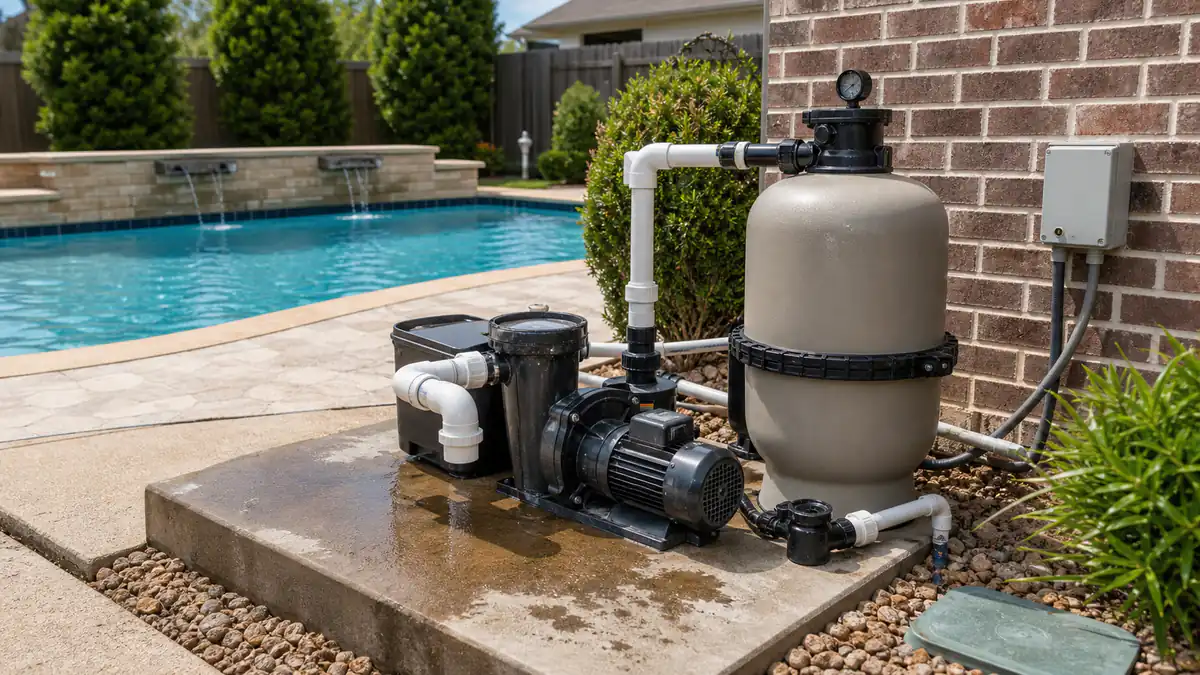
A damp patch on the concrete under the filter that is still wet at noon, a white crust on a union, or a rust streak under the pump all point to a slow leak. A drip from the seam between the pump and motor is the shaft seal, and that one should be fixed soon, because the water runs straight into the motor bearings. These pad leaks are work we repair.
The other quiet leak sign is a water bill that creeps up while the pool needs topping off more often. Set a bucket on the pool step, fill it with pool water to the pool’s level, and compare both after 24 hours; if the pool drops noticeably more, water is leaving somewhere besides evaporation. Our post on evaporation versus a pool leak walks through the full test. For leaks in the shell or underground lines we refer customers to American Leak Detection.
Quiet Signs Often Show Up Together
A pool that needs acid every week to bring pH down from 7.8 or 8.0, or one where alkalinity keeps sliding below 80 ppm, has something pushing it. Salt pools and pools with waterfalls tend to drift up in pH, and a pool topped off often with hard tap water gains calcium.
| Hidden Sign | What It May Mean | What to Do Next |
|---|---|---|
| Chlorine drops more than 1 ppm overnight | Early algae or heavy organic load | Brush, shock and retest; check the filter |
| pH needs acid every week | Aeration, salt system or high alkalinity | Test alkalinity before adding more acid |
| Pump shuts off and restarts on its own | Overheating motor or electrical fault | Book a repair visit |
If you would rather hand the weekly testing to someone else, the weekly pool service checklist shows what a visit covers.
Stains, Scale, and Rough Spots Tell a Chemical Story
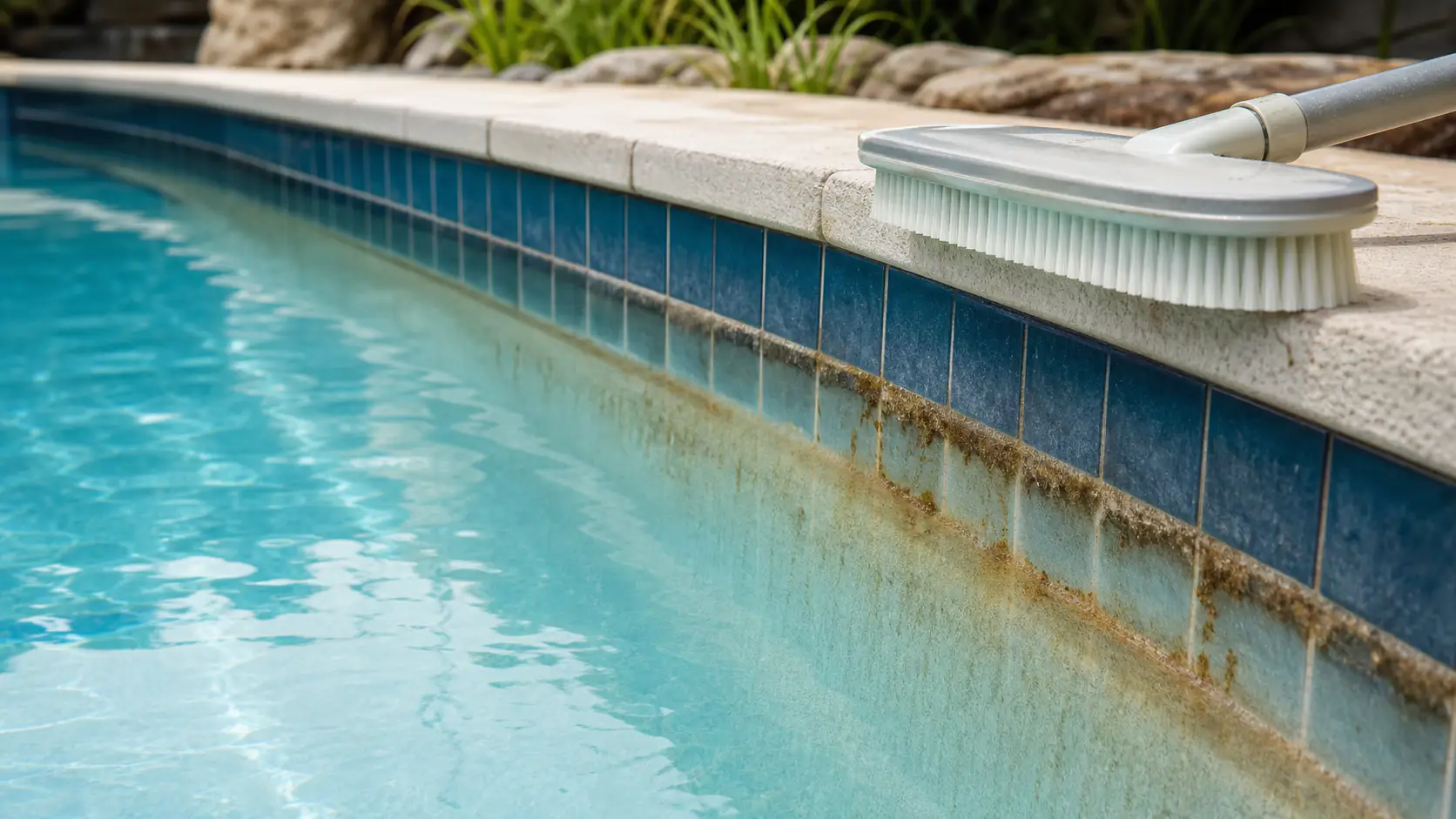
A thin white line at the waterline that you can feel with a fingernail is calcium scale. It forms when calcium hardness runs high or pH sits above 7.8, and evaporation leaves the mineral behind on the tile. On plaster, keep calcium between 200 and 400 ppm; vinyl and fiberglass run fine at 150 to 250. Our posts on calcium hardness in pool water and how to clean calcium off pool tile cover both sides.
Brown or reddish stains near the steps can be metals or leaves left too long. Bring a water sample to our pool supply store on North Navarro before buying a stain treatment, so you know which kind you have.
After Storms, Your Pool Needs More Than Skimming
The quiet sign after a storm is chlorine that will not come back up after a normal dose, because the pool is burning it on everything that blew in. Check the pad for standing water around the pump motor, and if the water stays high, lower it to the middle of the skimmer so the skimmer works again. Our post on how often to schedule pool cleaning in Victoria covers storm-season routines, and smaller pools swing faster after rain, which our above-ground pool cleaning service plans around.
When DIY Pool Care Stops Working
Bring someone in when the same reading has to be corrected every week, because that pattern means the cause has yet to be found. We offer weekly pool cleaning and maintenance, and owners who want to learn their own system can book pool orientation and training. If a repair turns out larger than expected, pool financing options can spread the cost, and older pools with worn surfaces may be ready for pool renovation and remodeling.
When you call, have your last three weeks of readings and a photo of the equipment pad ready.
Frequently Asked Questions
When should I call for pool service instead of handling it myself?
Call when the same problem comes back twice in a month, when chlorine will not hold after a normal dose, or when you see water around the pump, filter or valves.
Should I keep running the pump if it makes noise?
A pump that grinds, squeals or shuts itself off should be checked soon. Running it while the motor overheats or the seal leaks usually turns a small repair into a motor replacement.
Are pool stains always permanent?
Many are treatable once you know the cause. A water test separates metal stains from organic stains and scale, and each one takes a different treatment.
Does weekly pool service prevent every repair?
Equipment still wears out with age. Weekly testing and pad checks catch drift, leaks and failing parts earlier, which usually means smaller repairs.
