
A pool rarely fails without warning. It usually gives you small clues first: a new pump noise, water that looks a little dull, a wet patch near the equipment pad, or a cleaner that suddenly stops moving. If you are searching for pool repair Victoria TX, those clues are worth catching before a minor fix turns into a bigger bill.
Victoria’s heat, wind, storms, hard water, and long swim season push pool systems hard. These seven signs help you spot trouble early.
Pool Repair Victoria TX Starts With These Clues
Most pool problems show up in water clarity, circulation, pressure, sound, or surface changes before something breaks. A quick weekly check around the pool and equipment pad can catch leaks, blocked flow, worn parts, and chemistry issues while the fix is still manageable.
1. Clear Water That Still Feels Wrong
Clear water can still be out of balance. If swimmers complain about stinging eyes, itchy skin, a strong chlorine smell, or a slick feel on steps and walls, the chemistry deserves a closer look.
The CDC’s Healthy Swimming guidance notes that clean pool water helps reduce illness and irritation. For homeowners, the practical step is simple: test before you guess. If readings keep swinging, bring a sample for free water testing or ask about BioGuard water testing.
2. Cloudy Water That Comes Back After Shocking
Cloudy water usually points to poor filtration, low sanitiser, high pH, algae starting to grow, or tiny particles the filter is not catching. If shock clears the pool for a day and the haze returns, the root cause is still there.
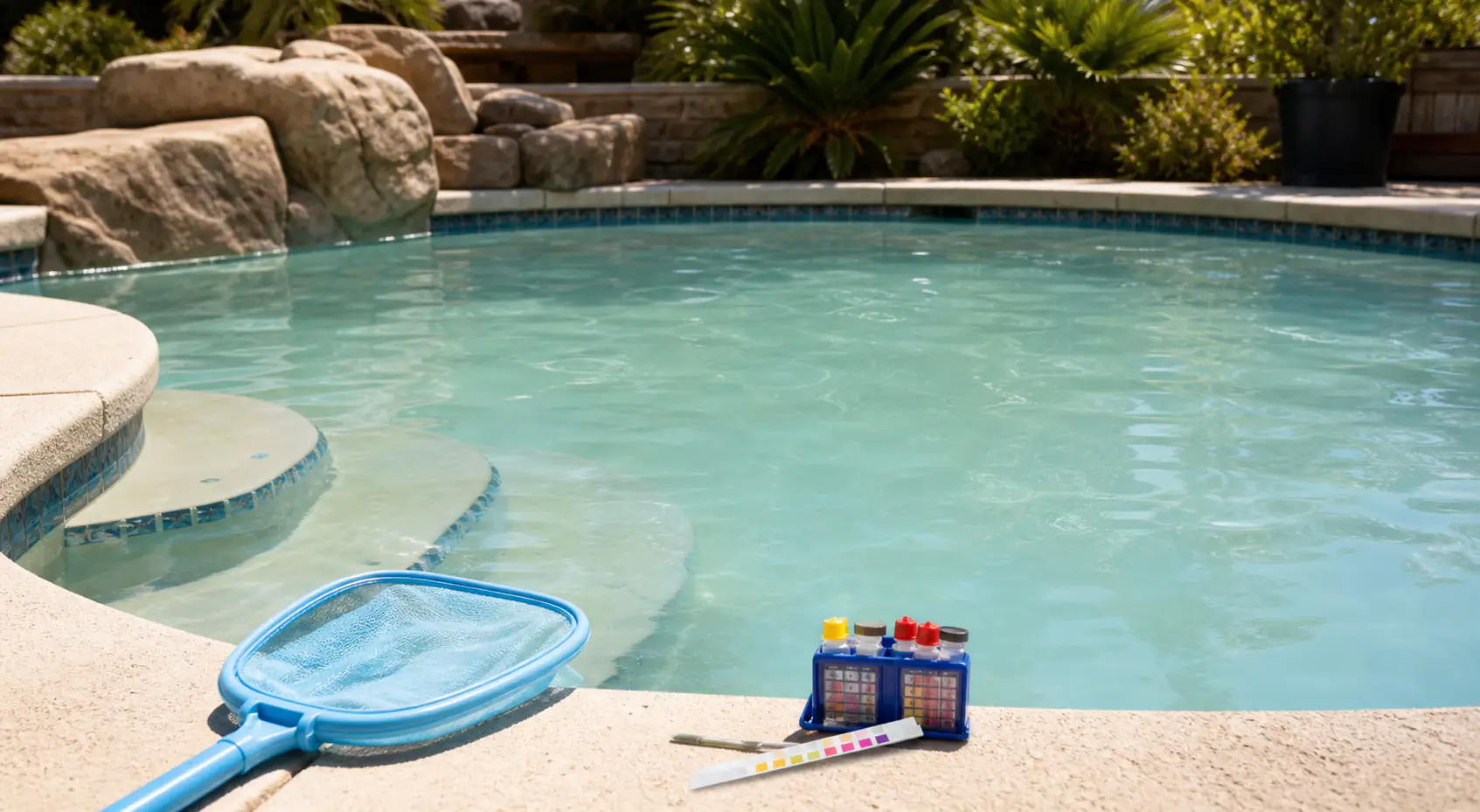
Common culprits include a dirty cartridge, old filter sand, weak circulation, blocked baskets, or a pump that is not moving enough water. For algae and colour changes, see why pool water turns green in Victoria, TX. If cloudiness keeps returning, a professional cleaning and maintenance visit can check the filter, baskets, chemistry, and run time together.
3. Weak Jets or Poor Surface Movement
Your return jets should move water with steady pressure. If the flow feels weak, bubbles appear in the return lines, or the surface looks flat, the pool may not be circulating enough water.
Poor circulation leaves dead spots where algae and debris collect. It also makes chemicals less effective because treated water is not moving evenly. Check the skimmer basket, pump basket, water level, and filter pressure first. If those look normal and the flow is still weak, book pool repair and service before the pump starts running hot.
4. A Pump That Sounds Different This Week
Pool pumps have a normal hum. Grinding, screeching, rattling, buzzing, or a louder-than-usual motor sound usually means a part is wearing out or the pump is struggling for water.
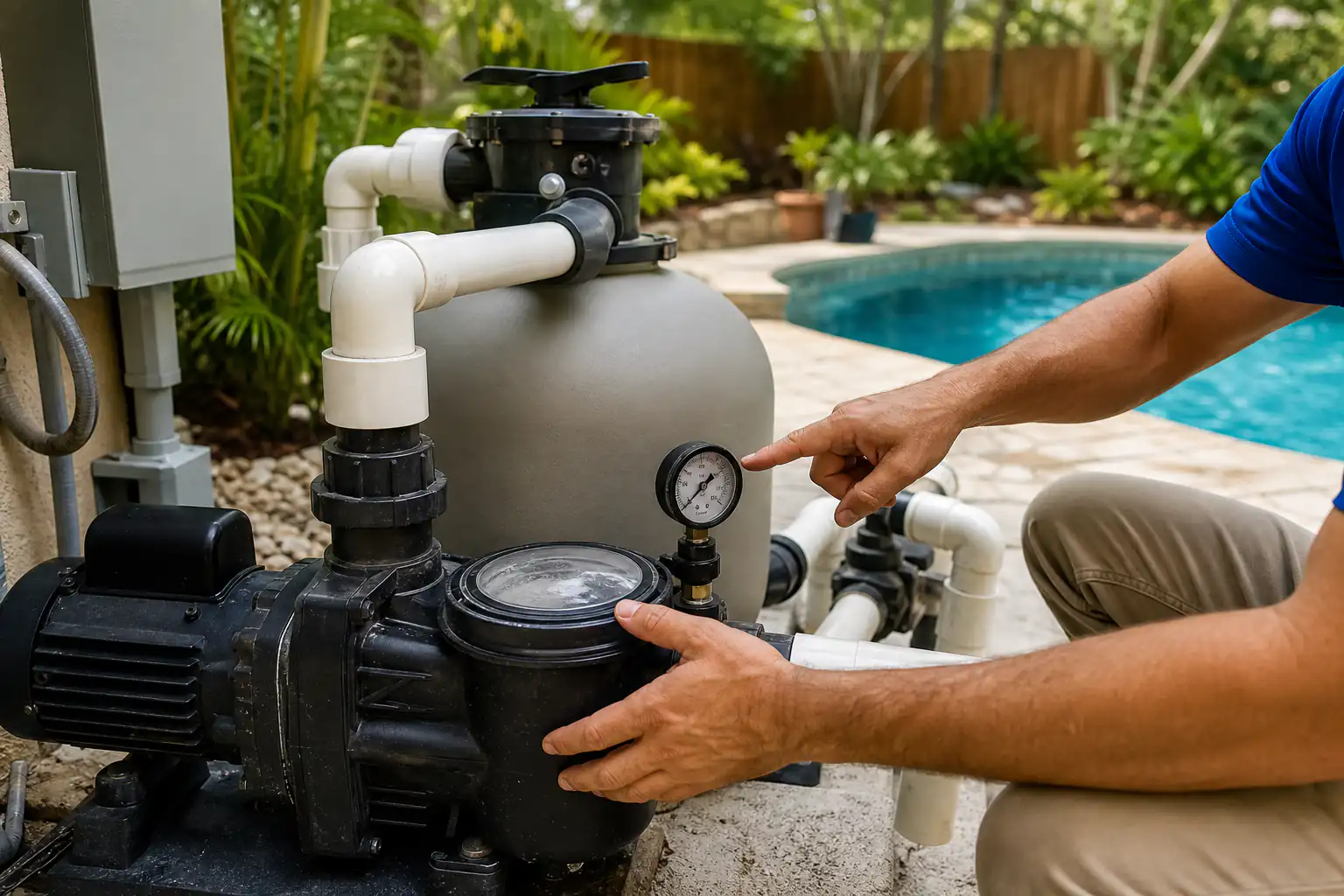
A high-pitched sound can point to bearings. A gravelly sound can point to debris in the impeller. A pump that loses prime may have an air leak, low water level, cracked lid, bad O-ring, or suction-side blockage. The article on pool equipment costs explains how neglected equipment can raise repair bills and energy use. ENERGY STAR also explains why efficient pool pumps can lower electricity use when the system is correctly sized and installed.
5. Water Level Dropping Faster Than Usual
Some evaporation is normal in hot weather. A pool that loses more than about a quarter inch per day, or needs topping off several times a week, may have a leak.
Leaks can come from plumbing, fittings, lights, skimmers, returns, equipment seals, or cracks in the shell. A wet spot near the equipment pad is a strong clue, especially if it stays damp when sprinklers have not run. The EPA’s Fix a Leak Week resources are a useful reminder that small leaks waste more water than most people expect.
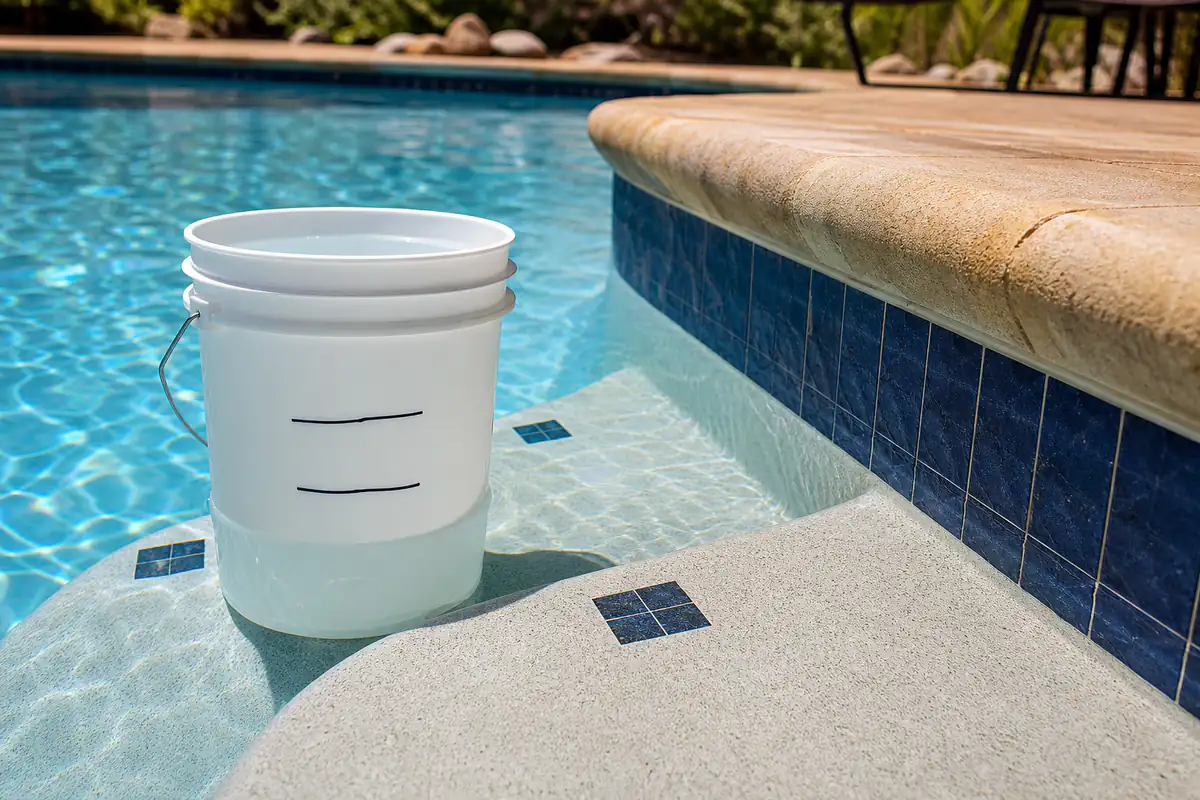
Quick Bucket Check for Possible Leaks
- Fill a bucket with pool water and set it on a step.
- Mark the water level inside the bucket and the pool level outside it.
- Wait 24 hours with the pump running as usual.
- If the pool drops more than the bucket, you may have a leak.
If the bucket test points to a leak, schedule pool maintenance and repairs. Waiting can waste water, chemicals, and pump run time. Homeowners with above-ground systems can also review local above-ground pool support.
6. Filter Pressure Keeps Climbing or Falling
Your filter pressure gauge tells a story. A rising pressure reading often means the filter is dirty or water is struggling to pass through. A very low reading can mean poor suction, a clogged basket, a pump issue, or a broken gauge.
| What the pressure gauge is telling you | What it usually points to | What to check first |
|---|---|---|
| Pressure rises fast after cleaning | Dirty filter media, restricted flow, or fine debris loading the filter | Clean the cartridge, backwash if your system allows it, and check baskets |
| Pressure stays much lower than normal | Weak suction, low water level, air leak, or pump trouble | Check water level, pump lid seal, valves, baskets, and visible bubbles |
| Pressure swings up and down often | Air entering the system, partial blockage, or a failing gauge | Watch the return jets, inspect the equipment pad, and compare readings after cleaning |
A filter that needs constant cleaning can also be undersized, aging, or loaded with fine debris. For routine care that keeps pressure readings under control, read what weekly pool service includes or compare regular options on the pool cleaning services page.
7. Stains, Scale, or Rough Pool Surfaces
Stains and rough patches are easy to dismiss because the pool still works. They can signal metal in the water, high calcium, low pH, algae growth, plaster wear, or water balance that has been off for too long.
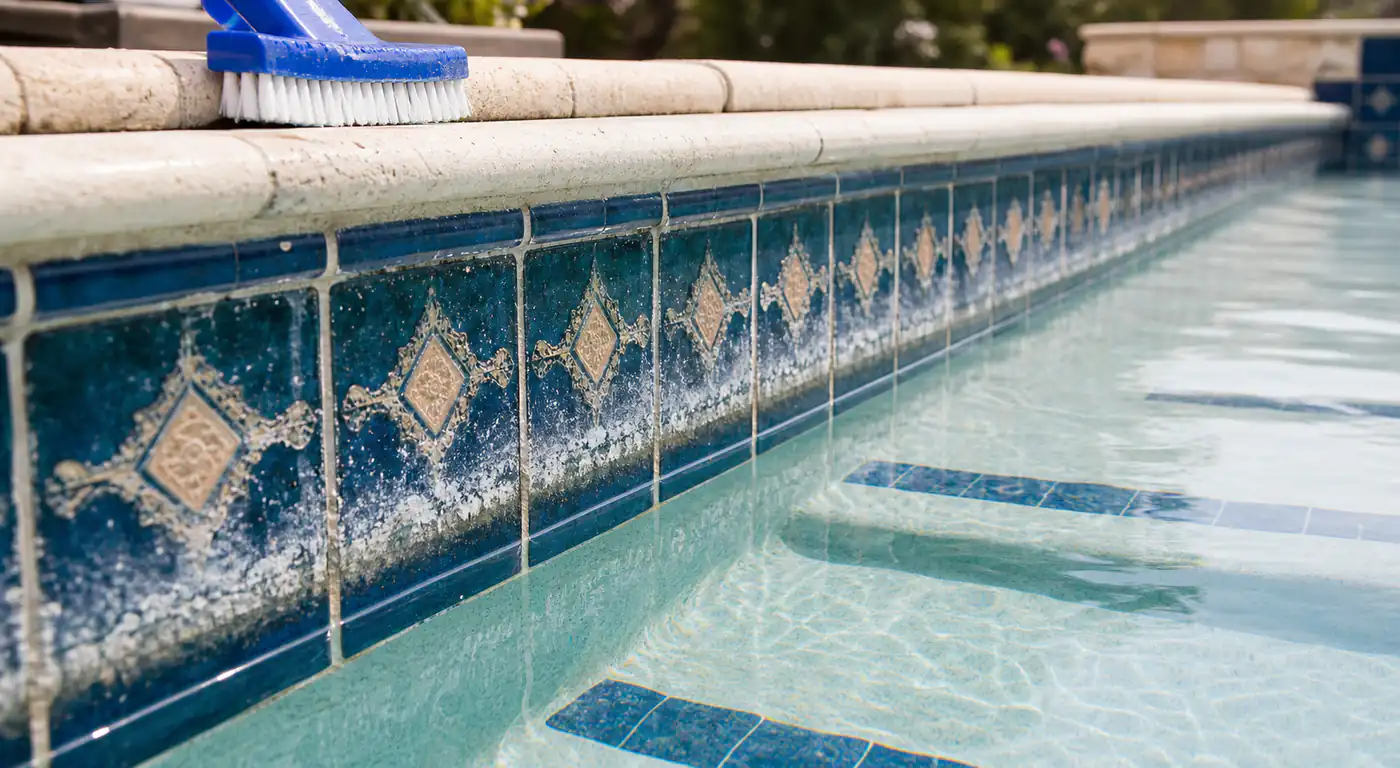
Scale can build around tile lines, ladders, heaters, salt cells, and returns. If stains spread or brushing does little, do not keep adding random chemicals. Testing comes first, then treatment. Victoria Pool Service can help with pool chemicals and supplies, water testing, surface care, and repair planning. If the surface damage is past routine treatment, the pool renovations and remodeling team can review repair paths.
When Pool Repair Victoria TX Should Be Booked Fast
Some warning signs can wait a few days for a scheduled visit. Others need faster attention because they can damage equipment, waste water, or make the pool unsafe for swimmers. Call for pool repair Victoria TX service quickly if the pump runs dry, breakers trip, water level drops fast, or cloudy water does not clear after basic cleaning and testing.
- Call soon: new pump noise, repeating air bubbles, fast pressure changes, recurring cloudy water, or a suspected leak.
- Stop using the pool: cloudy water where the main drain is not visible, electrical issues, sharp broken parts, or strong chemical irritation.
- Test before treating: stains, scale, strong chlorine smell, and algae tint should be matched with accurate water results.
If you are unsure which category your pool falls into, use the estimate calculator or contact Victoria Pool Service with photos of the water, equipment pad, pressure gauge, and any visible leak area. You can also check the Victoria Pool Service service areas page for nearby coverage.
Fast Notes for Homeowners
A pool that gets regular attention is easier to own, cheaper to run, and less likely to surprise you with a weekend breakdown. Build these checks into your routine.
- Test water weekly during swim season, and more often after storms or heavy use.
- Empty skimmer and pump baskets before they choke circulation.
- Watch the pressure gauge after every filter clean so you know your normal range.
- Listen to the pump once a week. New sounds count as data.
- Keep the water level around the middle of the skimmer opening.
- Book a service visit when the same issue returns twice.
Homeowners who prefer a set schedule can use scheduled pool maintenance or review how often Victoria, TX pools need cleaning. The U.S. Department of Energy also has practical notes on pool heating and energy use for owners watching operating costs.
Final Thoughts
Your pool is easier to fix when you catch the first clue. If the water, pump, pressure, or surface looks different than it did last week, Victoria Pool Service can inspect it, test it, and recommend the next practical step.
Frequently Asked Questions
What are the first signs I need pool repair in Victoria, TX?
Early signs include weak return jets, pump noise, air bubbles, falling water level, cloudy water, fast-changing filter pressure, stains, and rough surfaces. If the same issue returns after basic cleaning, book a repair inspection.
Can cloudy pool water mean equipment trouble?
Yes. Cloudy water can come from chemistry, weak circulation, a dirty filter, a failing pump, or poor run time. Testing the water and checking filter pressure helps narrow it down.
How do I know if my pool is leaking or evaporating?
Run a bucket test for 24 hours. If the pool level drops more than the water inside the bucket, the pool may have a leak. Wet soil near equipment or air in the lines also supports that clue.
Should I keep running a noisy pool pump?
A brief sound after cleaning baskets may settle. Grinding, screeching, rattling, or a pump that loses prime should be checked soon. Running a struggling pump can damage the motor or seals.
How often should pool water be tested in Victoria, TX?
Weekly testing works for many residential pools during normal use. Test more often after heavy rain, high swimmer load, algae treatment, or long hot stretches when chlorine demand rises.
Who should I call for pool repair Victoria TX service?
Call a local pool service company that handles cleaning, maintenance, equipment checks, water testing, and repair. Victoria Pool Service can inspect the issue and recommend the next step based on what the pool is showing.
