
Yesterday the water reached its usual tile line. Today you can see another strip of tile, and you’re reaching for the hose again. If you’re searching for “pool losing water evaporation or leak,” start with a measured comparison before assuming the summer heat explains it. A bucket test can show whether your pool is losing more water than evaporation alone would explain, while a few equipment checks help you decide what to do next.
How much summer water loss should you expect?
An uncovered pool can lose water every day, but there isn’t one normal rate for every Victoria backyard. Water temperature, humidity, wind, and surface disturbance all affect evaporation. Your pool’s measured loss under the same conditions gives you a more useful starting point than a neighbor’s refill schedule.
For a rough reference, Leslie’s discussion of pool water loss notes that hot-weather evaporation can reach about 1.5 to 2 inches per week. Treat that as context, not a pass-or-fail limit. A pool can leak while losing less, and weather can push evaporation higher.
Why two nearby pools lose different amounts
A sheltered pool in Victoria and a wind-exposed backyard near Port Lavaca won’t necessarily behave alike. Compare your own sunny, windy days with calmer days, and record whether fountains or a spa spillway were running. Warm water can also keep evaporating after sunset.
Pool size changes the gallons involved. For a rectangular 16-by-32-foot pool, a quarter-inch drop represents about 80 gallons: surface area multiplied by the depth lost, converted to gallons. That’s a geometry example, not a normal daily allowance, and the pool’s depth doesn’t enter that calculation.
Rule out water leaving during normal use
Before testing, check whether swimming, cleaning, or an automatic system explains the drop. Splash-out, filter backwashing, and vacuuming to waste remove water. A refill system can hide ongoing loss, while an overfilling pool can send replacement water straight out through its overflow.
Look at your most recent service notes. If the level dropped after filter cleaning, record that before comparing overnight readings. Our explanation of what weekly pool service includes helps you identify maintenance tasks that belong in your water-loss log.
Check an accessible waste-line outlet for unexpected discharge during normal filtration. Don’t move a multiport valve while the pump runs, cap a discharge line, or start turning unfamiliar valves. If you don’t know your equipment controls, ask your service technician for instructions. For future learning, pool orientation and equipment training is available during the off-season.
How to do a pool bucket test
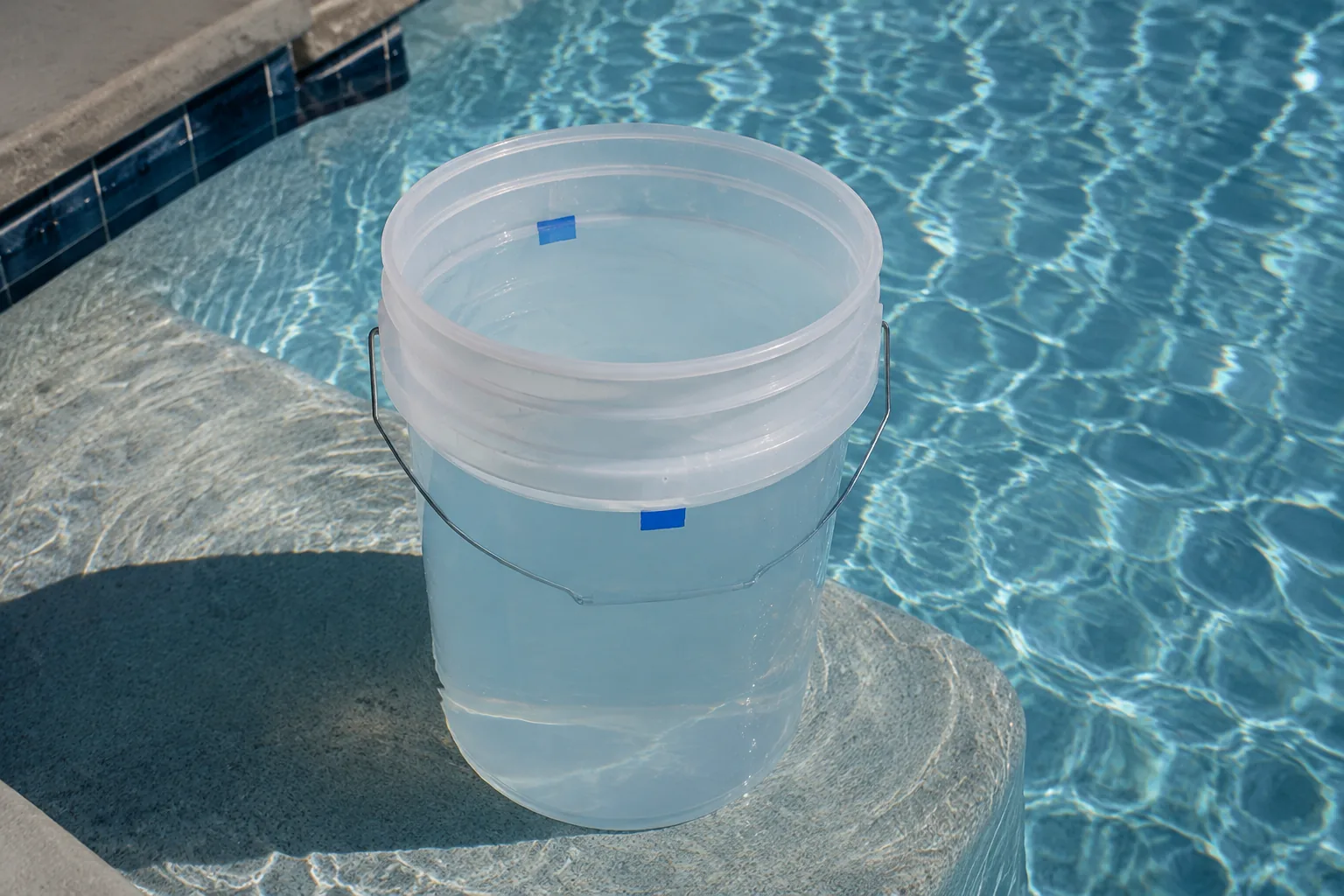
A bucket test compares the pool’s water-level drop with evaporation from a nearby container of water. If the pool drops farther, investigate additional water loss. The EPA’s residential pool water efficiency instructions provide a practical starting procedure:
- Choose a day without rain or strong wind. Keep everyone out of the pool for 24 hours.
- Turn off automatic filling, cleaners, water features, and pool circulation using the proper controls. Ask your technician first if you’re unsure how to stop and restart your system.
- Fill a sound 2.5- to 5-gallon bucket with pool water to about an inch below its rim.
- Set it securely on a submerged step or bench, with at least two-thirds underwater and its rim above the surface. The water inside should sit slightly above the pool level.
- Mark both starting water levels separately. Note the time.
- After 24 hours, measure each drop from its own mark with the same ruler.
Keep conditions consistent
Don’t top up, backwash, swim, or change the cover position during the comparison. If rain falls, the bucket shifts, or someone adds water, restart on a suitable day. Keep children away from the bucket and empty it when you’re finished.
Check the pool during the test if the loss already seems fast. Don’t leave equipment running at an unsafe water level to finish a measurement. Before restarting, confirm adequate water and follow the equipment’s priming instructions. Restore normal filtration and check water chemistry before swimming resumes.
Read the difference between the drops
Compare the amount each surface fell, even if they started at different heights. The following numbers are examples to show the calculation, not diagnostic thresholds.
| Bucket drop | Pool drop | What the result suggests |
|---|---|---|
| 1/4 inch | 1/4 inch | Evaporation explains the measured loss during this test. Keep monitoring. |
| 1/4 inch | 3/4 inch | An extra 1/2 inch left the pool. Check discharge and arrange leak assessment. |
| Unclear mark | Small apparent difference | Measurement uncertainty. Reset both marks and repeat. |
| Any amount | Rain or refill occurred | Conditions changed. Repeat before drawing a conclusion. |
Matching drops don’t rule out an intermittent leak or a leak that occurs only when equipment runs. Save photographs of both readings so you can compare repeated tests without relying on memory.
Signs that deserve a closer inspection
A repeatable difference in the bucket test is useful evidence. Visible leakage or persistent wet ground deserves attention too. Walk around the pool and equipment pad from safe, dry footing, looking for changes rather than assuming every crack or puddle proves a pool leak.
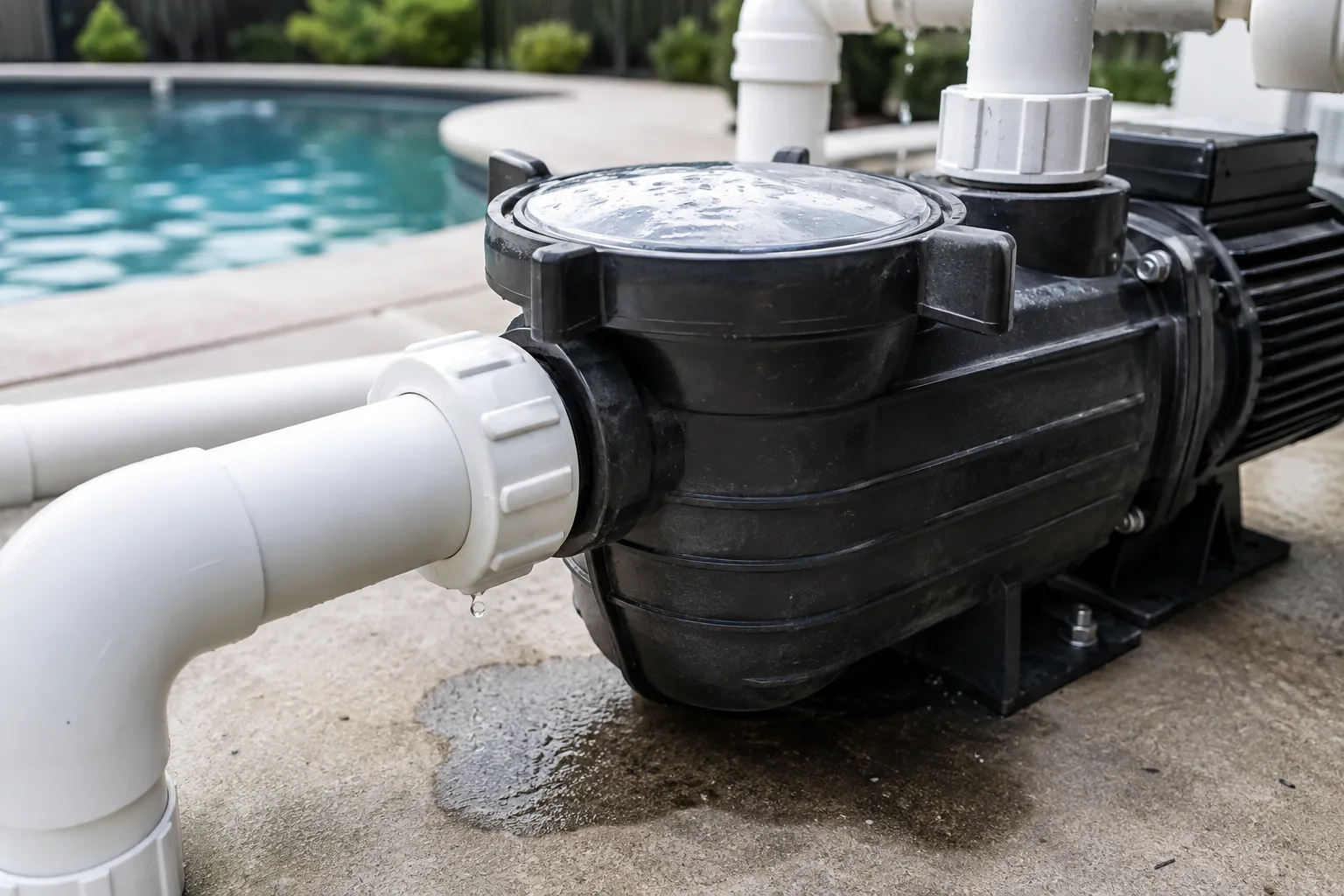
- Drips at accessible pipe unions, pump seals, or filter connections.
- A wet patch that persists after irrigation stops and surrounding surfaces dry.
- Water leaving a waste line when no cleaning cycle is running.
- Frequent autofill operation or repeated manual refills without swimming or backwashing.
- New settling, loose coping, or a crack accompanied by unexplained water loss.
Air bubbles at return jets can also accompany equipment trouble, but low water, a blocked skimmer basket, or a poorly sealed pump lid can introduce air. Our article on common pool pump problems in Victoria explains several causes worth checking before blaming underground plumbing.
Does the pump change the loss?
A technician may request another measured test with normal circulation. A larger loss while the pump runs can help direct attention toward pressurized plumbing, equipment, or waste discharge. Similar losses in both states can lead to other checks, including fittings and the pool structure.
These patterns don’t locate a leak by themselves. Wind, water features, and automatic valve settings can also change the comparison. Let the technician specify the test conditions, especially with a raised spa or automated system, and don’t dismantle equipment for a home test.
When rapid water loss needs prompt help
Several inches disappearing overnight should trigger prompt investigation. Stop using the pool if the ground is unstable or water threatens electrical equipment. If the water approaches the skimmer intake or the pump draws air, shut the system down using a safe, dry control and arrange service.
Don’t drain the pool to search for a crack. Removing water can damage some pool structures or liners. Avoid underwater light repairs, pressure testing, and attempts to plug suction outlets. A specialist can select suitable tests without asking you to expose buried pipes or empty the pool.
For Victoria homeowners, the service distinction is specific: Victoria Pool Service handles pool equipment repair and service, but its repair page states that it does not diagnose or repair inground leaks. That page recommends American Leak Detection for professional leak detection. Confirm the specialist’s service area and scope when arranging an appointment.
Reduce evaporation after checking for leaks
Covering the pool between uses can reduce evaporation. The EPA reports that a properly used pool cover can prevent up to 95 percent of evaporation, though actual savings depend on coverage and use. A solar blanket is not a safety cover, so keep your usual barriers and supervision in place.
Run decorative water features only when wanted, and review unnecessary heating with your technician. Victoria Pool Service’s pool chemicals and supplies page lists available pool-care products and accessories, including covers.
After repeated refills, check chemistry instead of guessing at chemical doses. Evaporation leaves dissolved salts and minerals behind. Leakage carries dissolved substances out with the water, and replacement water changes the balance again. In-store pool water testing can help assess those changes, but chemistry readings alone cannot diagnose a leak.
Key takeaways for your next water-level check
- Measure at the same time each day and record weather, swimming, and equipment operation.
- Compare the pool with a marked bucket before assuming summer evaporation explains the loss.
- Keep refill and backwash events in your notes. Share them during routine pool cleaning and maintenance.
- Protect equipment when water runs low and refer suspected inground leaks to a specialist.
Final thoughts
A measured bucket test gives you something useful to act on when the waterline keeps falling. For equipment concerns or help deciding which service fits your situation, call Victoria Pool Service at (361) 575-5821 with your readings and observations.
Frequently asked questions
How much water loss is normal for a pool in summer?
Hot-weather evaporation can account for roughly 1.5 to 2 inches per week in some conditions, but no single rate fits every pool. Compare your pool with a bucket under the same conditions, and investigate an unexplained increase.
How do I do a pool bucket test?
Place a filled bucket securely on a submerged step with its rim above water. Mark the bucket and pool levels separately, prevent refilling and swimming, then compare each drop after 24 hours using the procedure above.
What are signs of a pool leak?
Look for a pool dropping farther than the bucket, visible equipment drips, persistent wet ground, or unexpected waste-line discharge. Bubbles and changing chemistry are supporting observations, but neither proves a leak.
How much does pool leak detection cost?
The scope depends on pool construction, access, plumbing complexity, and the tests required. Ask the leak detection provider for a site-specific assessment and clarify whether locating the leak, repairing it, and restoring affected surfaces are separate services.
Can evaporation drain my pool overnight?
Evaporation continues at night, but it won’t normally empty a filled swimming pool overnight. A sudden large drop needs prompt investigation for leakage or unintended discharge. Protect the pump if the water level becomes too low.
