
Calcium on pool tile comes off with white vinegar, a wet pumice stone or bead blasting, depending on how thick it is and which kind of calcium it is. A few drops of vinegar on the white band at your waterline tell you which kind you have, and hard South Texas fill water means most pools here grow that band sooner or later.
Two kinds, two different jobs
Find out which kind you have before you buy anything.
Calcium carbonate is white, flaky and sits on the surface. Drip a little vinegar or muriatic acid on it, and if it fizzes and foams, this is what you have; it comes off with normal effort.
Calcium silicate is grayish white, very hard and takes months to build. Acid barely touches it and it stays quiet when you drip vinegar on it. This kind usually needs professional equipment.
Carbonate scale is by far the more common of the two on home pools, so do the vinegar test before you price out bead blasting.
Small buildup: start gentle
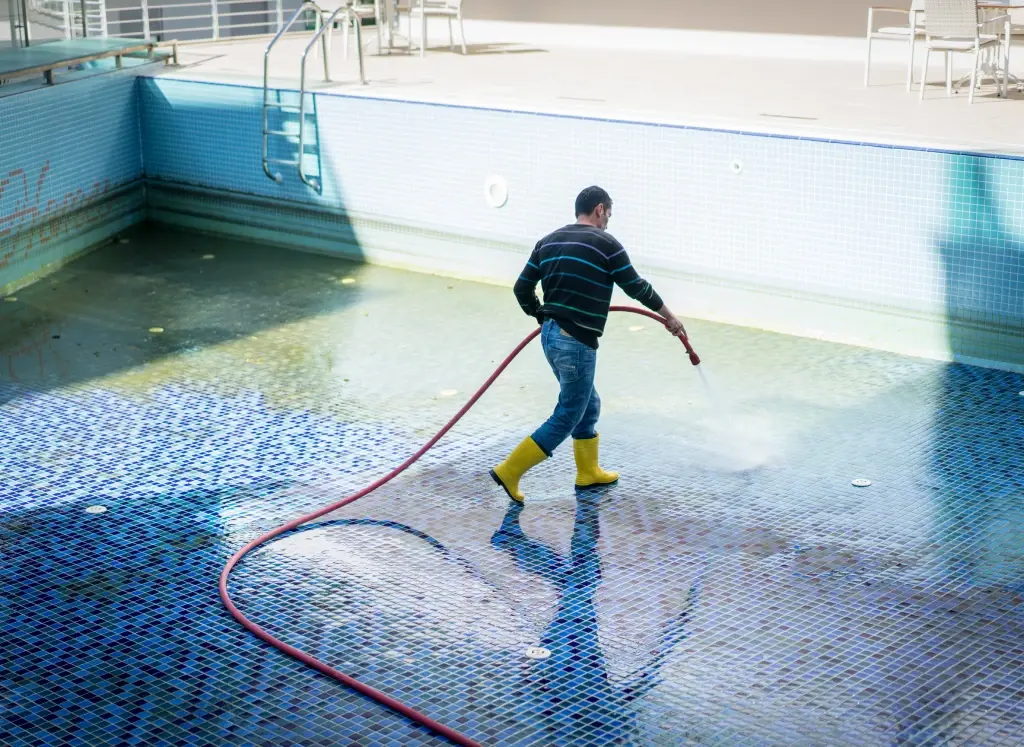
For a light film, drop the water level a few inches so the band is exposed. Spray it with white vinegar, let it sit a few minutes, then scrub with a nylon brush and rinse with a hose. Work in the early morning or on a cloudy day, because vinegar dries on hot tile in the sun before it has time to soften the scale.
Vinegar is a weak acid, which makes it the right first try: if it works, you are done in an afternoon with nothing harsh near your plaster.
Moderate buildup: pumice stone
A pumice stone cuts carbonate scale off tile. Keep the stone and the tile wet the whole time, because dry pumice scratches, and use it only on ceramic, stone or concrete. Never use pumice on fiberglass, vinyl or glass tile, where it leaves scratches you cannot polish out.
Work in small sections with light pressure and let the stone do the cutting instead of leaning on it.
Scale that shrugs off vinegar and pumice may respond to a scale remover gel made for pool tile. The gel clings to the band instead of running into the pool. Wear rubber gloves and eye protection, keep it off the plaster below the tile, rinse each section before moving on, and keep acid products well away from chlorine, since the two together release chlorine gas.
If the band is not calcium
A waterline ring that stays quiet under vinegar is not always calcium silicate. A gray or tan line that feels greasy is usually sunscreen, body oil and dust stuck at the surface, and it wipes off with a tile cleaner or degreaser made for pools. A brown or rust-colored band points to metals in the water, often from fill water or corroding equipment, and that needs a metal treatment and a test before any scrubbing.
Heavy buildup: get help
A thick crust or calcium silicate needs bead blasting, which fires a soft media at the tile under pressure and strips the scale while leaving the tile face intact.
The pressure and the media both have to be matched to the tile, and getting either wrong ruins the glaze, so this is a job for a crew with the equipment. Some crews drain the pool for it and some work with the water down a few inches; ask which before you book.
Tools and shortcuts that damage tile
Wire brushes and metal scrapers gouge grout and scratch tile permanently. A pressure washer blows grout out of the joints, and regrouting a waterline costs far more than the cleaning would have.
Pouring acid into the pool to dissolve scale crashes your pH and etches the plaster, and the band on the tile stays about the same. Keep acid on the tile itself, applied by hand.
Why it came back last time
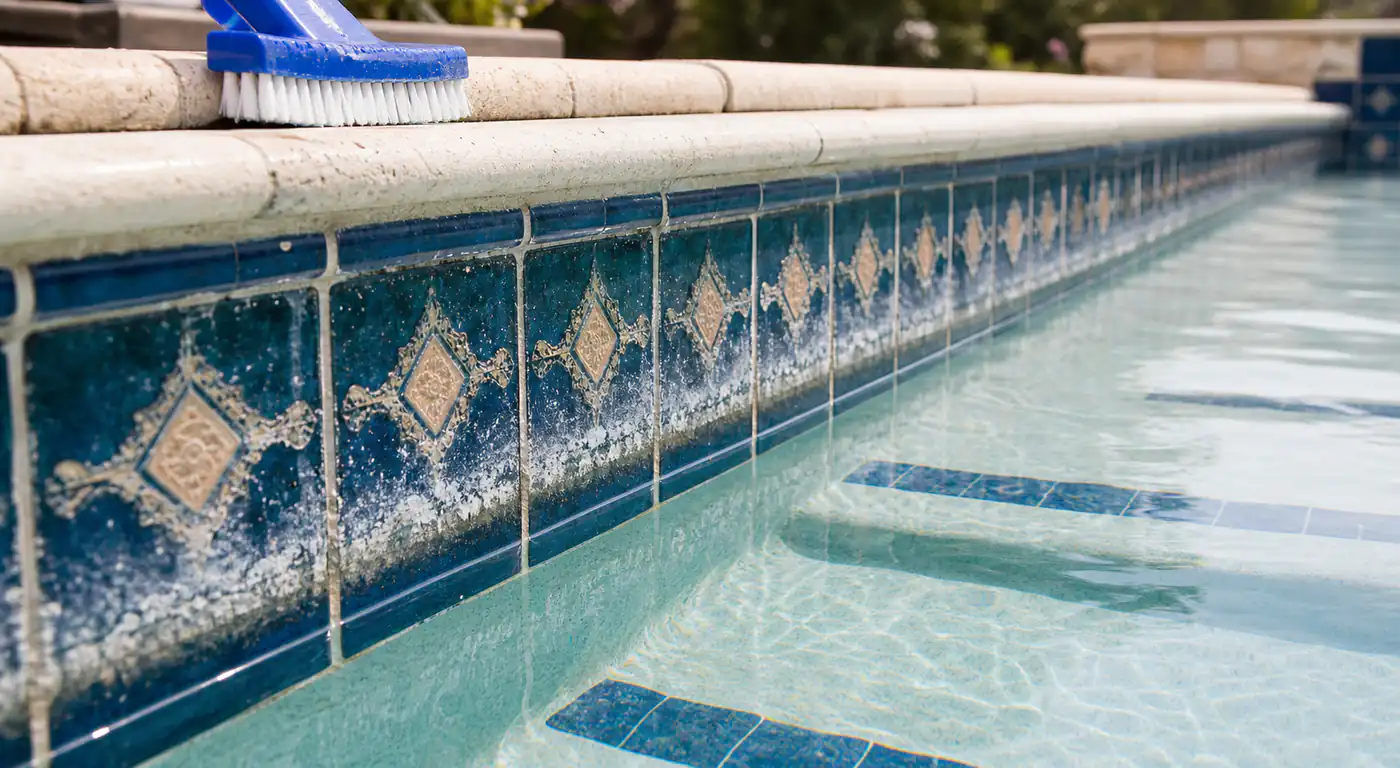
Scale forms when the water chemistry pushes calcium out of solution, so scrubbing alone buys you a month or two. Three numbers drive it: calcium hardness above 400 parts per million, pH above 7.6 and total alkalinity above 120 all push toward scaling.
Evaporation adds to it over a summer. Each top-off replaces the water that left with fresh hard water, and the calcium from both stays in the pool. On a 15,000 gallon pool, every inch of top-off is about 250 gallons of hard Victoria tap water.
We go through the whole picture in calcium hardness in pool water.
Keep the ring from returning
Hold pH at 7.4 to 7.6 and alkalinity between 80 and 120. Brush the waterline every week, because new scale is soft and wipes off before it hardens.
Watch the equipment too, since the same crust forms inside a heater and on a salt cell. It made our list of warning signs worth catching early.
Bring about a pint of pool water to the supply store for a free test, and tell us whether the band fizzed under vinegar. With your calcium, pH and alkalinity in hand, we can tell you whether the water is still scaling. Call (361) 575-5821 about anything thicker than a pumice job.
Frequently Asked Questions
What is the white stuff on my pool tile?
Calcium scale. Calcium carbonate is white and flaky and fizzes when you drip vinegar on it. Calcium silicate is grayer, much harder, and stays quiet under vinegar.
How do I remove calcium from pool tile myself?
For a light film, lower the water, spray white vinegar, let it sit, and scrub with a nylon brush. For heavier carbonate scale, use a wet pumice stone on ceramic or stone tile only.
Can I use a pumice stone on pool tile?
On ceramic, stone, or concrete, yes, as long as both the stone and the tile stay wet. Never use pumice on fiberglass, vinyl, or glass tile, because it leaves permanent scratches.
Does vinegar remove calcium from pool tile?
It removes light calcium carbonate buildup. Thick crusts and calcium silicate need pumice or bead blasting.
Why does calcium keep building up on my tile?
Your water chemistry is pushing calcium out of solution. Calcium hardness above 400 ppm, pH above 7.6, or alkalinity above 120 will all do it. Evaporation concentrates calcium further because the water leaves and the mineral stays.
Can I pressure wash calcium off pool tile?
A pressure washer blows grout out of the joints, so use vinegar, pumice or bead blasting instead. Regrouting a waterline costs far more than the cleaning would have.
How do I clean calcium off glass pool tile?
Use vinegar or a tile scale gel and a nylon brush. Glass scratches under pumice, so heavier buildup on glass is a job for a bead blasting crew using a fine, soft media.
