
Written by the Victoria Pool Service & Supply team, serving residential and commercial pool owners across Victoria, TX and nearby communities.
A pool can look perfect from the patio and still fail a basic water test. That catches a lot of Victoria homeowners off guard after a hot week, a backyard party, or a heavy rain. Clear water feels safe, but pool water safety Victoria TX depends on chemistry you cannot see: free chlorine, pH, stabilizer, alkalinity, and contaminants brought in by swimmers.
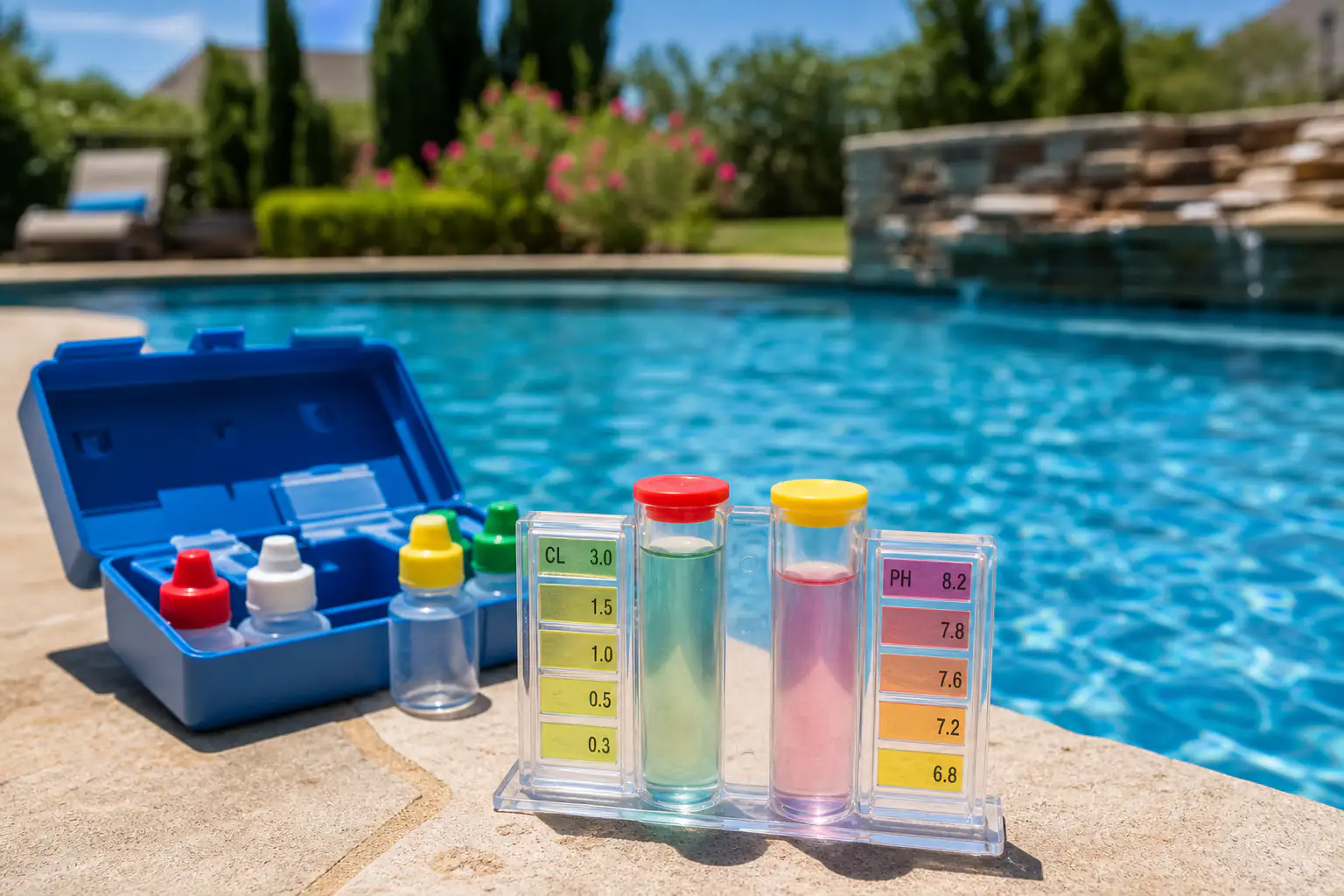
Pool Water Safety Victoria TX Starts With Chemistry, Not Color
Clear water tells you suspended dirt and algae are under control at that moment. It does not prove the sanitizer is strong enough to kill germs, or that the pH is in a swimmer-friendly range. For pool water safety Victoria TX homeowners can trust, test results matter more than appearance.
The CDC says chlorine and pH are the first defense against germs in pool water. For pools, the CDC recommends pH 7.0 to 7.8 and at least 1 ppm free chlorine. If cyanuric acid is used, the CDC recommends at least 2 ppm free chlorine.
Low sanitizer can hide in plain sight
Free chlorine gets used up when it reacts with sweat, sunscreen, urine, leaves, dirt, and body oils. Victoria heat and direct sun speed up the loss. After a weekend of swimming, a clear pool can be short on usable chlorine by Monday morning.
If you are unsure where your numbers stand, bring a sample in for free pool water testing in Victoria, TX or ask about BioGuard water testing. A store-grade test can catch readings that quick strips miss.
pH changes how hard chlorine works
Chlorine does its job best within the right pH range. As pH rises above 8.0, chlorine becomes less effective at killing germs. If pH drops too low, the water can irritate skin and eyes and become rough on equipment.
Hidden Water Chemistry Issues That Clear Water Can Hide
The most common hidden water chemistry issues do not always turn water green or cloudy right away. Some show up first as itchy skin, eye irritation, scaling, staining, fading chlorine, or a strange smell. A clear pool can still need correction before it is a good swim day.
| Hidden issue | What it can cause | Why water may still look clear |
|---|---|---|
| Low free chlorine | Less protection against germs | Filtration may still remove visible debris |
| High pH | Weak chlorine performance, scale risk | Water can stay clear before scale appears |
| High cyanuric acid | Chlorine becomes less active | Stabilizer is invisible without testing |
| High combined chlorine | Odor, red eyes, irritation | The pool may look clean but smell harsh |
| Phosphate buildup | Algae food source | Algae may not bloom until sanitizer drops |
Weekly care should include more than skimming and brushing. If you want that handled for you, see what is included with pool cleaning and maintenance service, compare it with what a weekly pool service should include, or schedule maintenance before the next heat wave.
Victoria Heat, Sun, and Heavy Use Burn Through Chlorine
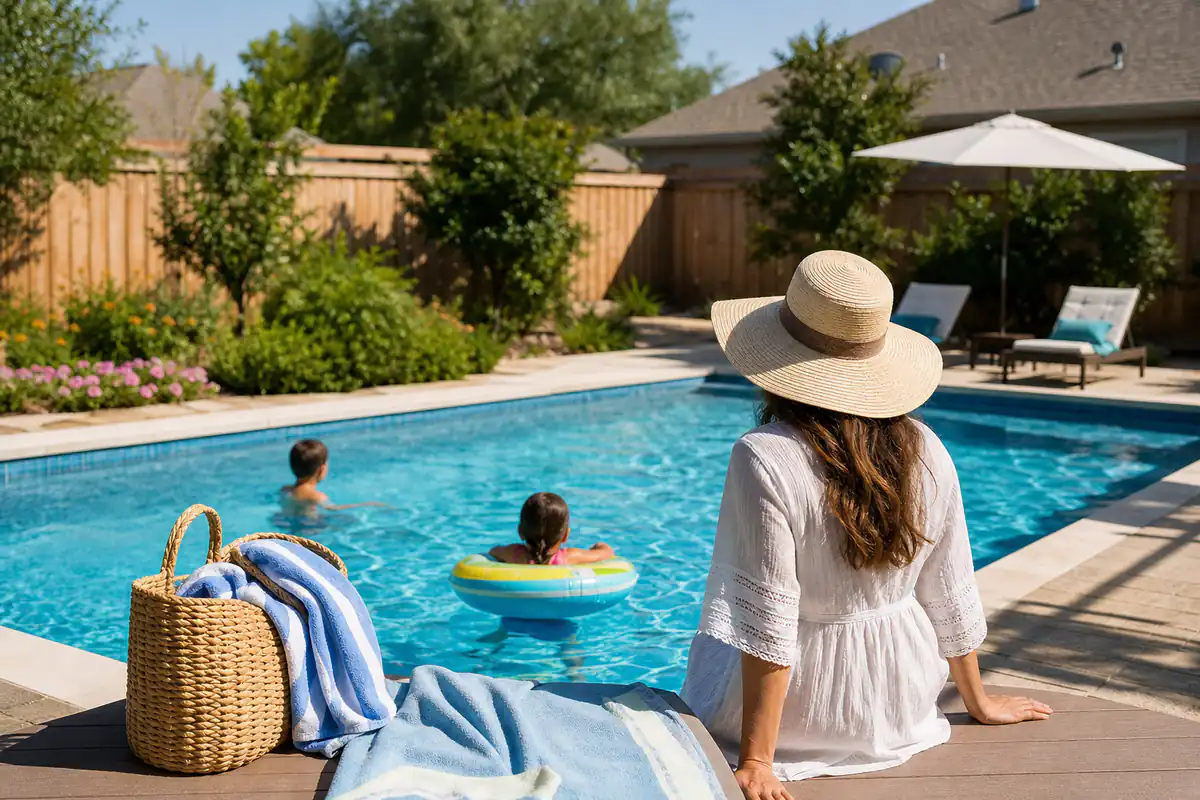
Victoria pools work hard. Long sunny days, warm water, rain, wind-blown debris, and frequent swimming all change water chemistry faster than many owners expect. Pool water safety Victoria TX homeowners can count on requires testing after conditions change, not only on a fixed calendar.
Sunlight breaks down chlorine. Stabilizer helps, but too much stabilizer creates its own problem because chlorine becomes less active. Heavy rain can dilute chemicals and shift pH.
After a storm, a party, or several days above 95 degrees, test before the next swim. If the pool starts to turn dull, green, or hazy, this related breakdown on why pool water turns green in Victoria, TX can help you narrow down the cause.
The Chlorine Smell Is Usually a Warning
A strong chemical smell does not usually mean the pool has too much clean chlorine. It often points to combined chlorine, also called chloramines, which forms when chlorine reacts with contaminants from swimmers. That smell, along with red eyes or throat irritation, means the water needs attention.
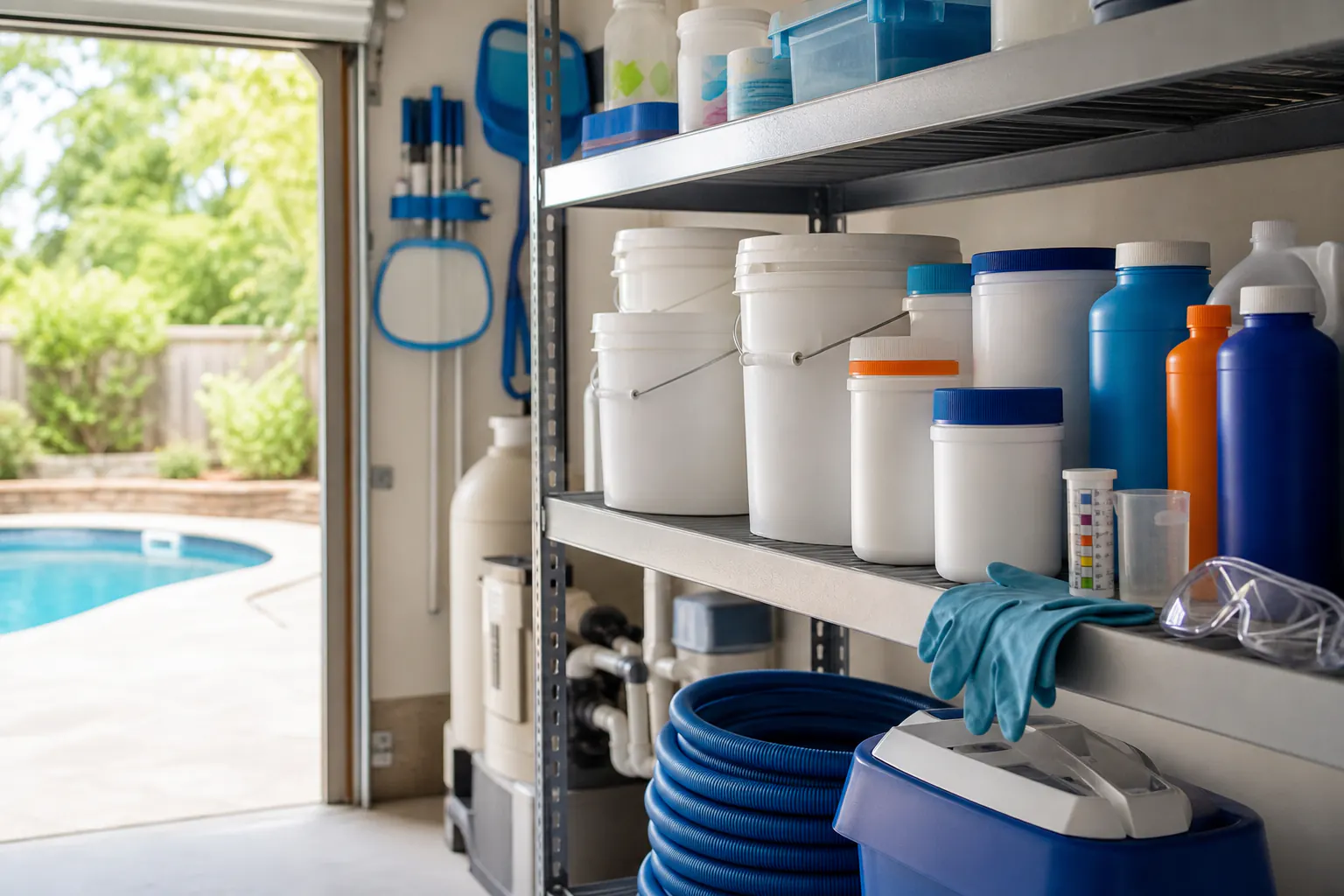
Fresh, properly balanced pool water should not blast you with odor. If it does, the pool may need oxidation, better circulation, filter attention, or a full chemistry reset. For homeowners who handle their own care, Victoria Pool Service carries pool chemicals and supplies and has a local pool supply store for treatment matched to real test results. The CDC pool chemical safety guidance is also worth following for storage and handling.
How Often Victoria Pool Owners Should Test
Residential pools should be tested several times per week during swim season, and more often after heavy use, rain, heat, or chemical treatment. The CDC recommends testing chlorine and pH at least twice per day for pools and hot tubs used by many people. Commercial operators can also review the CDC Model Aquatic Health Code for broader aquatic safety practices.
- Two to three times per week: Test free chlorine and pH during normal swim season.
- After heavy rain: Test before swimming again.
- After a party: Test the same day or next morning.
- After adding chemicals: Retest after the product has circulated as directed.
- Monthly: Check alkalinity, calcium hardness, cyanuric acid, phosphates, and metals.
New pool owner? A short pool orientation and training session can save you months of trial and error with test kits, valves, filters, and chemical labels.
Pool Water Safety Victoria TX Red Flags Before Swimming
Do not rely on color alone before letting people swim. Check the water, the equipment, and how swimmers feel after exposure. For pool water safety Victoria TX families can feel good about, pause swimming when the numbers or symptoms point to trouble.
- Free chlorine below the recommended range
- pH below 7.0 or above 7.8
- Strong chemical odor
- Burning eyes or itchy skin after short exposure
- Foam, film, or oily residue on the surface
- Cloudy water that hides the pool floor or drain
- Green dust, yellow patches, or slick steps
- Filter pressure that is unusually high or low
The CDC warns that even clean-looking water can contain germs. It also notes that Cryptosporidium can survive for more than 7 days in properly chlorinated water, which is why swimmer hygiene and contamination response matter. For drain-cover and entrapment safety, the U.S. Consumer Product Safety Commission Pool Safely program is a helpful reference.
What To Do When the Numbers Look Off
Bad test results do not always call for the same fix. Low chlorine, high pH, high stabilizer, and poor circulation can all point to different treatments. Correct the cause, then retest before swimming.
- Stop swimming until sanitizer and pH are back in range.
- Run the pump so water circulates during treatment.
- Clean baskets and check filter pressure.
- Adjust pH before making major sanitizer changes.
- Retest with a reliable kit or bring in a sample.
- Call for help if readings keep bouncing after treatment.
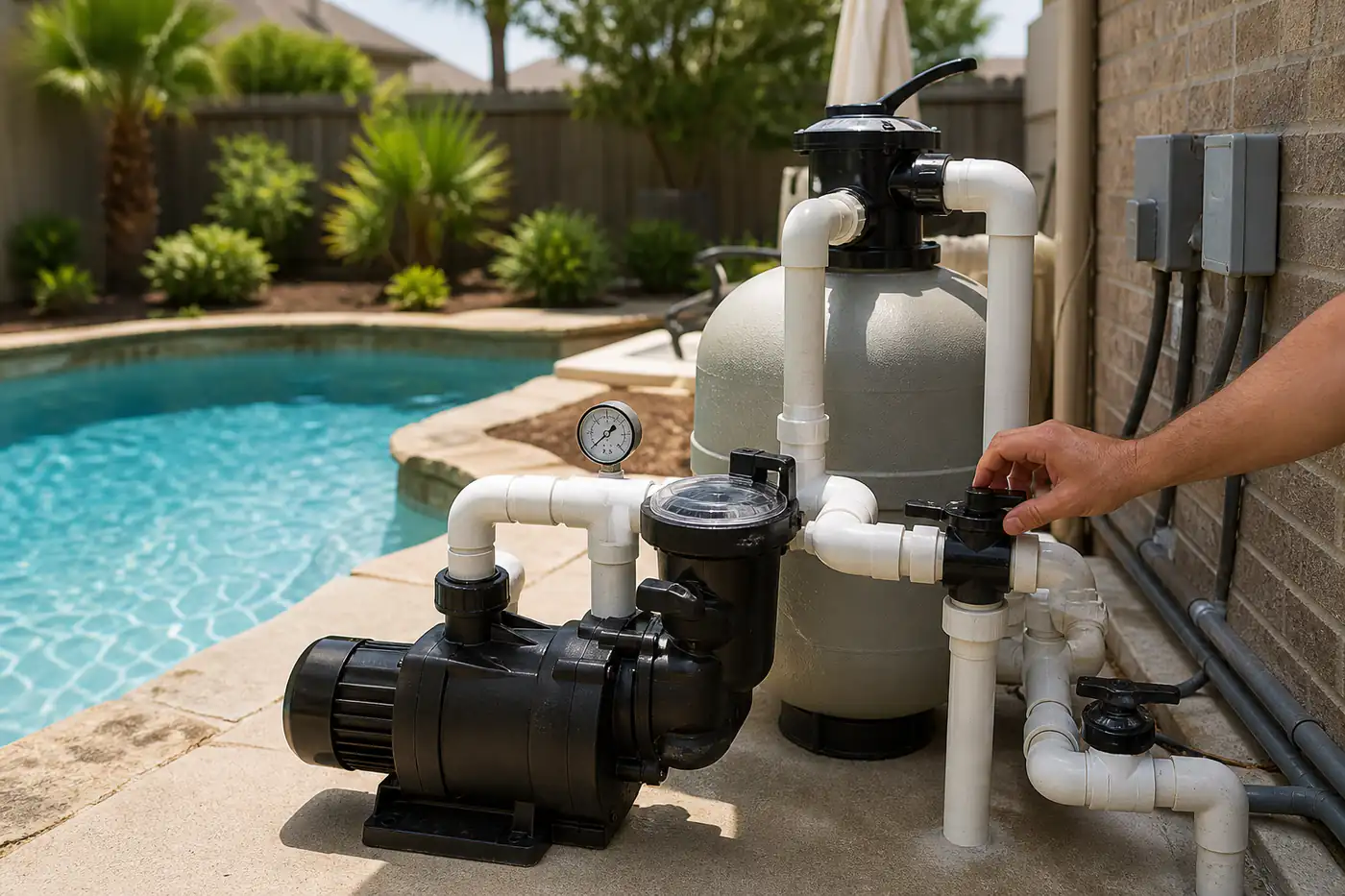
If the equipment is not circulating or filtering correctly, chemistry fixes will not hold. A pump, filter, valve, or cleaner issue can keep water unsafe even when you add the right products. Use pool repair and service or pool maintenance and repairs when equipment is part of the problem.
Quick Takeaways for Safer Clear Water
- Clear water does not prove the pool is safe to swim in.
- Free chlorine and pH are the first numbers to check.
- High pH weakens chlorine performance.
- Strong chlorine smell often points to chloramines, not clean water.
- Victoria heat, sun, rain, and heavy swimming can change chemistry fast.
- Professional testing can catch stabilizer, metals, phosphates, and balance issues that basic strips miss.
Final Thoughts
Your pool can look clear and still need chemical correction. If you want help reading the numbers, bring a sample for free testing, schedule service, check the Victoria Pool Service service areas, or use the pool service estimate calculator.
Frequently Asked Questions
Can pool water be clear and still unsafe?
Yes. Clear water can still have low sanitizer, high pH, high stabilizer, combined chlorine, or germs introduced by swimmers. Testing is the only reliable way to know whether the water is ready.
What chlorine level should my pool have?
The CDC recommends at least 1 ppm free chlorine for pools, or at least 2 ppm if cyanuric acid is being used. Hot Victoria weather or heavy use may call for a higher target.
What pH is best for pool water?
The CDC recommends pH 7.0 to 7.8. Many pool pros aim near the middle of that range because it helps swimmer comfort and keeps chlorine working well.
Why does my clear pool smell like chlorine?
A strong chlorine smell often comes from chloramines, which form when chlorine reacts with sweat, urine, body oils, and other contaminants. The pool may need oxidation, circulation, filtration, or a chemistry adjustment.
How often should I test my pool in Victoria, TX?
During swim season, test chlorine and pH two to three times per week at minimum. Test again after heavy rain, heavy swimming, high heat, or any chemical treatment.
When should I call a pool service company?
Call when readings keep changing after treatment, chlorine disappears quickly, the water smells harsh, the pool turns dull, or equipment is not circulating properly.
