
Most pool pumps last eight to twelve years, though some quit at five and a few run past fifteen. Sizing, plumbing and how often the pump ran dry decide where in that range yours lands, and most of those are in your hands.
What actually wears out
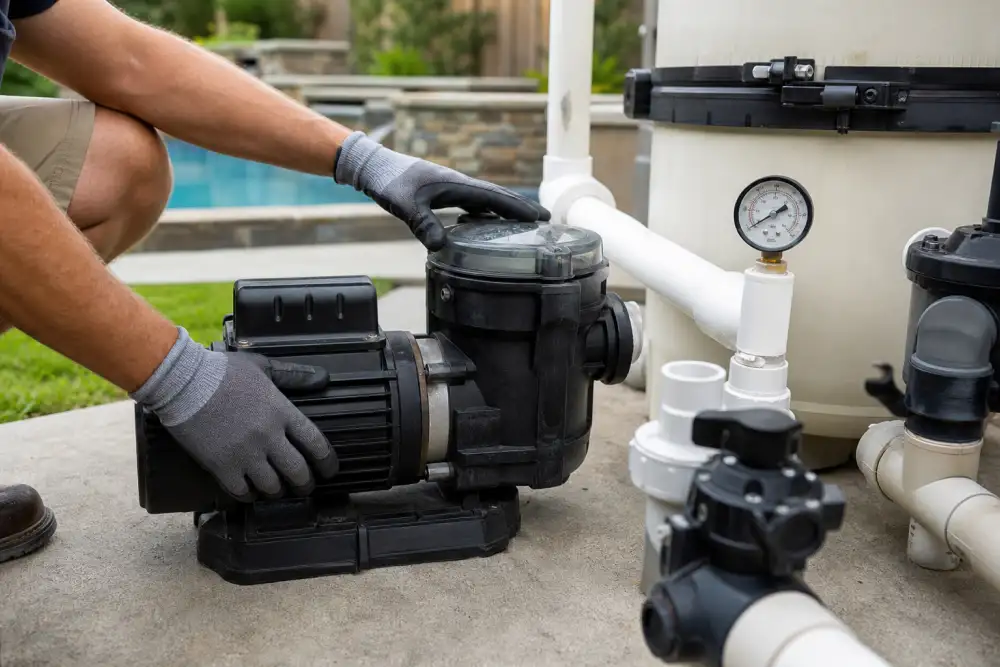
A pump has two halves: the wet end, which moves the water, and the motor that spins it. The wet end is full of inexpensive wear parts, like baskets, lids, o-rings and the shaft seal, and all of them get replaced as a matter of routine.
The motor is the expensive half. Its bearings wear, its windings overheat and its capacitor fails. A motor replacement costs far more than any wet-end part, and the price moves with horsepower, single or variable speed, and whether the motor fits your existing wet end.
Five things that kill a pump early
Running dry does the most damage. Water is what cools the shaft seal, and without it the seal can melt in minutes. Our guide on how to prime a pool pump covers what to check before you flip the switch.
Air leaks come next. A lid that sucks air or a loose union feeds air into the housing, and the pump spends its life half-gripping the water. A dirty filter or a packed skimmer basket makes it fight for every gallon in a similar way.
Sun matters too. A motor sitting in full July sun on a dark pad runs noticeably hotter than one under a shade cover, and heat is what breaks down bearing grease and winding insulation.
Water chemistry finishes the list. Low pH eats the seal and the impeller from the inside, and the products that hold pH steady are in our list of the pool chemicals you actually need.
Freezes and floods on the pad
The February 2021 freeze showed what happens to a pump that is switched off in hard cold. Water trapped in the housing freezes, expands and can crack the pump body, the drain plugs and the pipe fittings right at the pump. When lows near 32 F, run the pump continuously, because moving water keeps carrying warmer pool water through the lines.
Flooding is the other local risk. Our clay soil holds rain, and a pad in a low corner of the yard can sit in standing water after a summer storm. A motor that has been under water needs to dry out and be checked before it runs again, since switching it on wet can short the windings. If your pad floods every few years, raising it a few inches protects the motor.
The noises that mean it is close
A screech or grind at startup is worn bearings, and it only gets louder until the motor seizes. A hum with no spin usually points to the capacitor, which is an inexpensive part and a quick repair.
Water dripping from the middle of the pump is the shaft seal. Left alone, that water works its way into the motor, and a seal job becomes a motor job.
A pump that trips the breaker more than once usually has a failing motor winding or a shorted capacitor. More symptoms and their causes are in our post on common pool pump problems.
Repair or replace
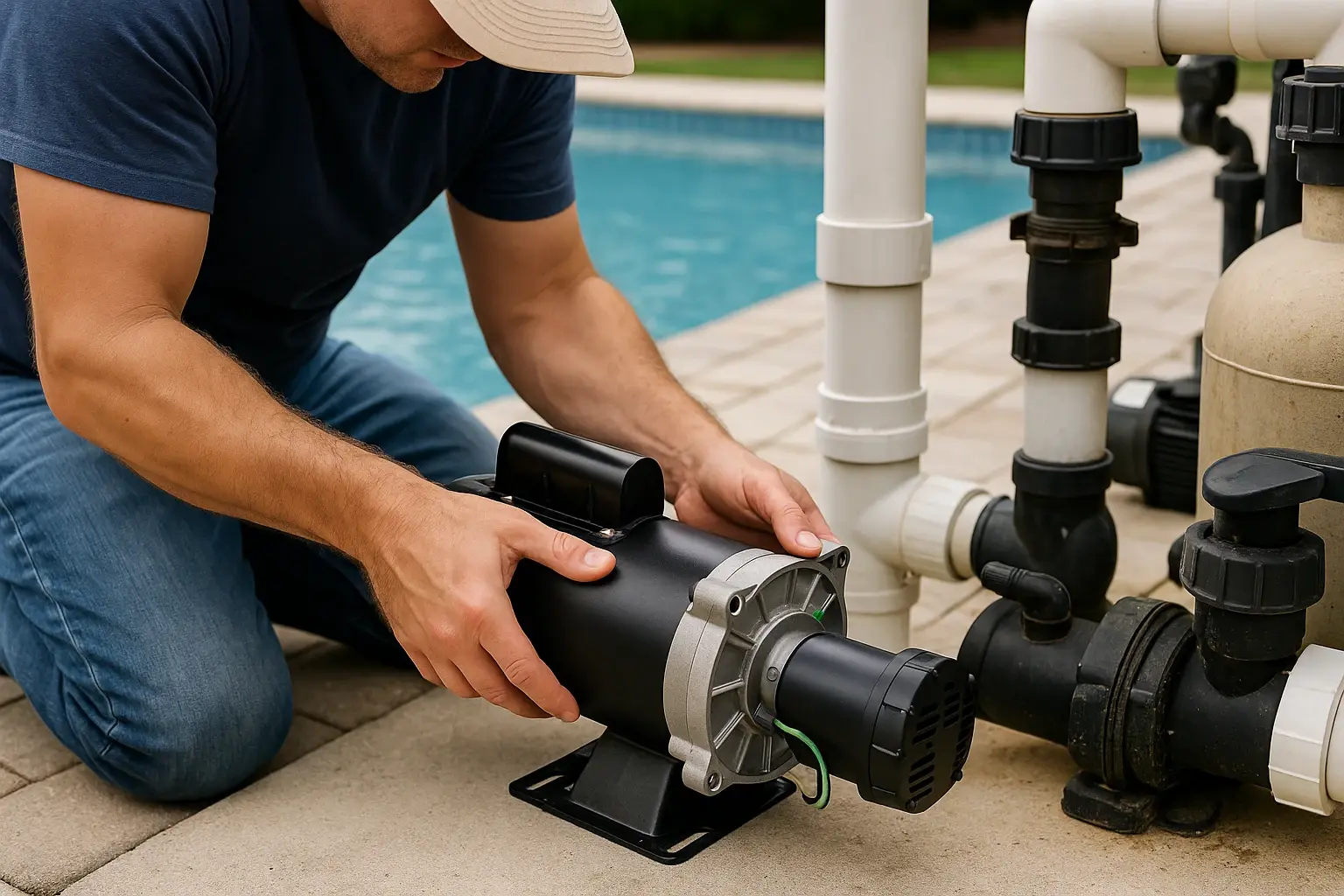
A seal, a basket or a capacitor is worth fixing on almost any pump, because the parts are inexpensive and the pump still has years left in it.
A failed motor on a pump past ten years old is a harder call. By then the wet end is tired too, and you will likely be back for the next part within a season or two.
A new pump also changes the power bill. Under the federal DOE pool pump efficiency standard, in effect since July 2021, most replacement inground pumps are now variable speed, and a variable speed pump running at low speed for long hours uses a fraction of the power of an old single speed motor. We go through what moves repair and replacement prices in pool equipment repair costs.
How to get more years out of it
Empty the baskets every week, keep the filter clean and hold pH between 7.4 and 7.6. Shade the pump if you can, and fix a leaking union the week you spot it instead of waiting for the off-season.
Run the pump long enough to turn the water over and no longer. Our post on how long to run a pool pump gives the hours.
When to call us
If your pump screeches, leaks or trips the breaker, get it looked at before it quits in the middle of July. Our pump repair technicians hold Texas RAIL licenses for the electrical side of the job.
Before you call (361) 575-5821, snap a photo of the label on the motor and note the noise it makes, and we can tell you whether yours needs a part or a replacement.
Frequently Asked Questions
How long should a pool pump last?
Eight to twelve years is normal for a well plumbed pump with balanced water. Pumps that run dry, fight a dirty filter or sit in full sun often fail closer to five or six.
Is it cheaper to replace the motor or the whole pump?
On a pump under about eight years old, a motor swap usually makes sense. Past ten years the wet end is worn too, and a new pump tends to cost less than a string of repairs.
Why is my pool pump so loud?
A grinding or screeching sound almost always means worn bearings, and that motor is near the end. A loud rattle can also be debris in the impeller, which is a much smaller fix.
Can a pool pump be repaired?
Yes. Seals, o-rings, baskets, lids, impellers and capacitors are all normal replacement parts. A failed motor on an older pump is the usual point where replacement becomes the better buy.
Does running a pump 24 hours a day wear it out faster?
It adds hours to the motor, but steady running is gentler than constant starts and stops. The bigger cost is the power bill, so match run time to turnover.
How hot should a pool pump motor get?
A running motor feels warm, and that is normal. If it is too hot to keep a hand on, smells of burning or shuts itself off, it is overheating, usually from worn bearings, a clogged basket starving it, or full afternoon sun on the pad. Turn it off and have it checked.
Will a variable speed pump last longer?
Usually yes. They run cooler and slower most of the day, which is easier on bearings and seals than a single speed motor at full tilt.
