Pool equipment repairs fall into three price bands. Small parts such as lid O-rings, shaft seals, gaskets and motor capacitors cost the least, and most of the bill is the service call. Motors, heater control boards and salt cells sit in the middle. Replacing a whole pump, filter or heater costs the most, and plumbing or electrical changes at the pad add to it. We quote after seeing the equipment or a clear photo of the pad.
Cheap and expensive failures can look alike from the patio. A pump that hums without moving water might need a capacitor or a new motor, and a heater that shuts off mid-cycle might have a dirty filter starving it of flow or a corroded heat exchanger.
Diagnosis Sets the Repair Price
Low flow alone can stop a heater firing, starve a pump and push filter pressure out of range at the same time. Swapping one part without checking flow, pressure, water balance and plumbing is how owners end up paying for the same visit twice.
We repair leaks at the equipment pad: the pump, filter, valves and unions. A leak in the pool shell or an underground line goes to American Leak Detection. For pump symptoms in more detail, read about common pool pump repair causes in Victoria.
Repair Costs by Part Type
Small parts. O-rings, lid gaskets, shaft seals, drain plugs, pressure gauges and capacitors are inexpensive parts. Labor and access set most of the price, and a part trapped behind tight old plumbing takes longer to reach.
Motors, boards and cells. A pump motor, a heater control board or igniter, and a salt cell sit in the middle band. The part itself is most of the bill, and its price depends on the brand and horsepower or model.
Full replacement. A new pump, filter or heater costs the most. Most replacement pumps are variable-speed models because of the federal DOE dedicated-purpose pool pump efficiency standard, in effect since July 2021. Repiping, a new breaker or gas line work adds to the total.
| Equipment | Common Signs | Service Category | Repair-vs-Replace Clue |
|---|---|---|---|
| Pool pump | Noise, no prime, leaks, low flow | Seal or capacitor (small); motor (middle); new pump (replacement) | Replace when age, cracks, repeat failures or a single-speed motor stack up |
| Heater | No ignition, short cycling, error codes | Sensor, igniter or board; exchanger; gas or electrical work | Replace when the heat exchanger is corroded or leaking |
Our technicians hold Texas RAIL licenses for installing and repairing pool pumps, heaters and the electrical and bonding work around them. Our pool repair and service team lays out both the repair and the replacement option before work starts.
Noisy Pumps and Weak Flow
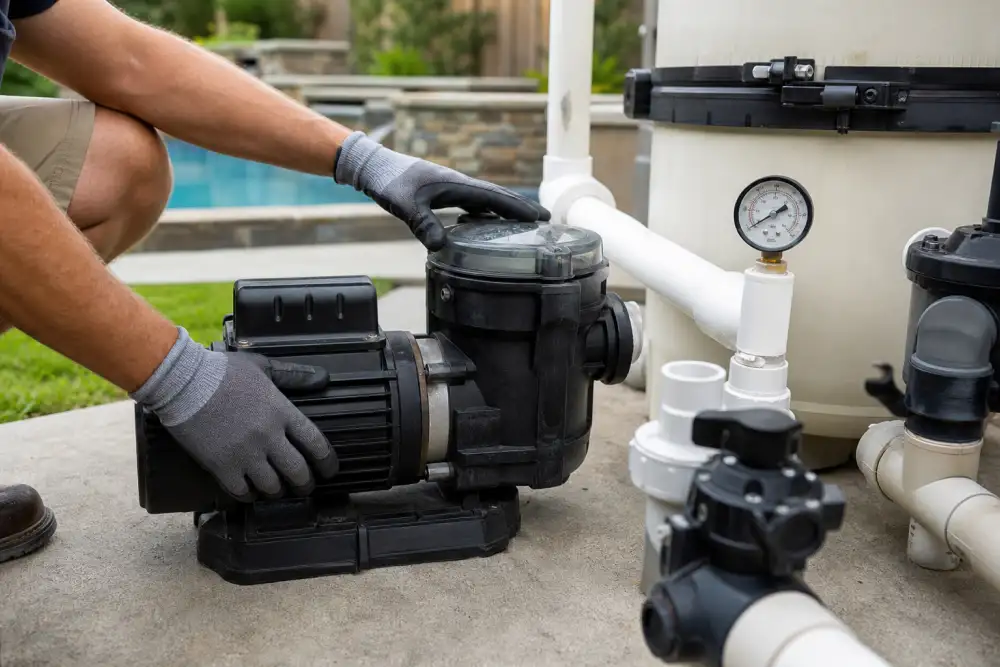
A high whine is often worn bearings. A low hum with no spin can be a failed capacitor, a jammed impeller or a dead motor, and those sit in different price bands.
Repair makes sense when the housing is sound and parts are available; a seal kit, an O-ring or a capacitor can keep a healthy pump running for years. Replacement looks better when the pump is old, cracked, loud again after a repair, or the wrong size for the pool. A variable-speed pump run at low speed for most of the day uses far less power than an old single-speed motor, and ENERGY STAR notes that certified pool pumps can use less energy than standard models.
Filters, Cloudy Water, and Pressure Warnings
Cartridge filters clog quickly in spring when oak pollen and catkins fall. Sand filters can channel, with water cutting paths through the bed so the pressure looks normal while the water stays cloudy, and that calls for a sand change. DE filters return powder to the pool when a grid tears, a mid-priced repair if the rest of the set is sound.
Scale, pH below 7.2 and very high chlorine shorten the life of cartridges, gaskets, heaters and salt cells. If the equipment looks fine but the water keeps struggling, bring a sample in for free water testing.
Heater Repair Requires More Safety Checks
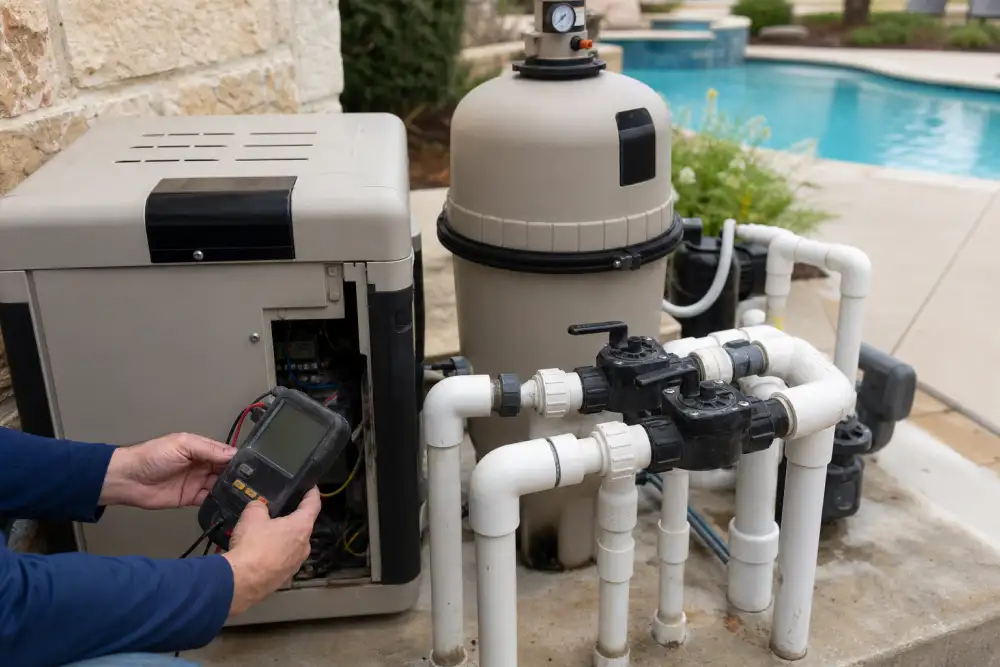
Low flow through a dirty filter is a common reason a heater will not fire, because the pressure switch keeps it off until enough water moves through it. Cleaning the filter fixes it for the price of a service call. A failed sensor or igniter is a middle-band part.
Most gas heaters have copper heat exchangers, and water held below pH 7.2 eats them from the inside. Once the exchanger leaks, replacement is the better spend.
Salt Cells, Automation, and Control Boards
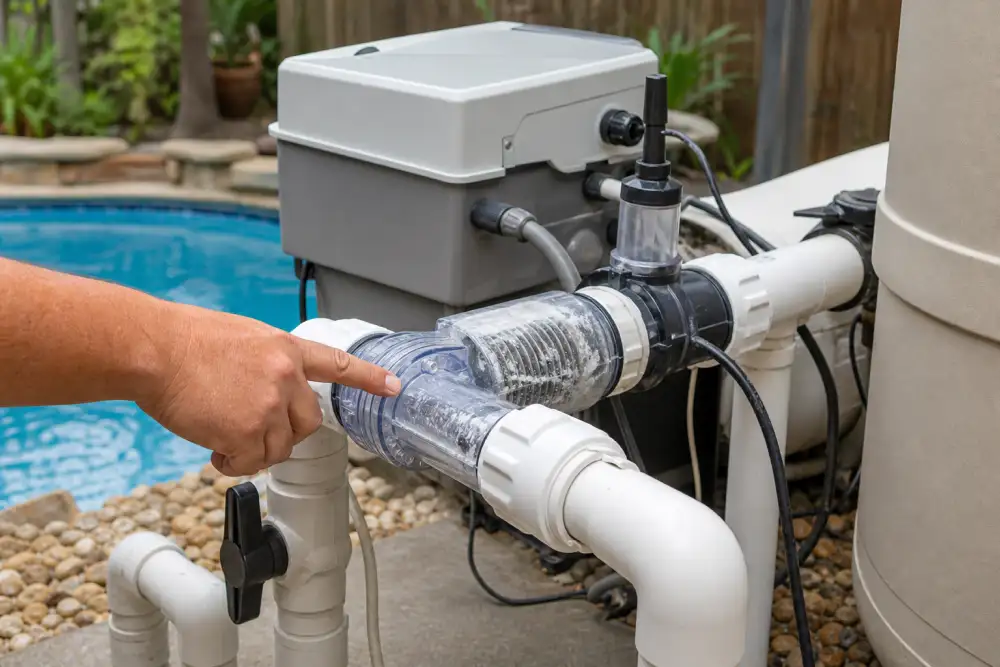
A salt alert can mean scale on the cell plates, low flow, salt outside about 2,700 to 3,400 ppm, a worn cell or a failing control board. Test salt and clean the cell before buying anything. A cell that still reads low after cleaning and a correct salt reading has reached the end of its life.
Our supply store carries pool parts, and our pool chemicals and supplies page lists what keeps water balanced enough to protect cells and heaters.
Repair or Replace: A Crossroads Checklist
A cheap part on equipment near the end of its life can still be the wrong spend.
- Check equipment age. Parts for older pumps, heaters and salt cells can be hard to find.
- Count repeat failures. A second repair in the same season points to a larger problem.
- Plan around swim season. A temporary repair can carry a pool through August, with the replacement scheduled for fall.
Routine pool cleaning and maintenance or our VIP Premium pool care plan puts a technician at the pad every week, where small leaks and noisy bearings get caught early. If a full replacement or a bigger backyard update is on the table, see pool financing and pool renovations and remodeling.
For a quote, send a photo of the equipment pad that shows the pump and heater labels and the filter gauge through our contact page, or book a diagnostic visit on the schedule maintenance page.
Frequently Asked Questions
How much does a pool pump replacement cost?
A new pump is the top price band. The total depends on horsepower, plumbing changes and electrical work at the pad. We quote after seeing the pad or a photo of it.
How often do salt cells need replacing?
Cells wear with operating hours, output setting and scale. Keeping salt at about 2,700 to 3,400 ppm and pH at 7.4 to 7.6, and cleaning the cell when scale shows, stretches its life.
Does home warranty cover pool equipment?
Some home warranty plans include pool equipment, with limits by plan, equipment age, maintenance history and failure type. Read the pool section of your plan before assuming a repair is covered.
Why is my pool heater turning on and off?
Short cycling usually comes from low flow through a dirty filter, a failing sensor, an ignition fault or internal corrosion. Clean the filter first, then have a technician check the rest.
