
Walk into any pool aisle and there are forty bottles staring back. Most owners buy too many of them and still cannot hold a clear pool.
The working list is short. Six things, plus a way to measure.
A test kit comes first
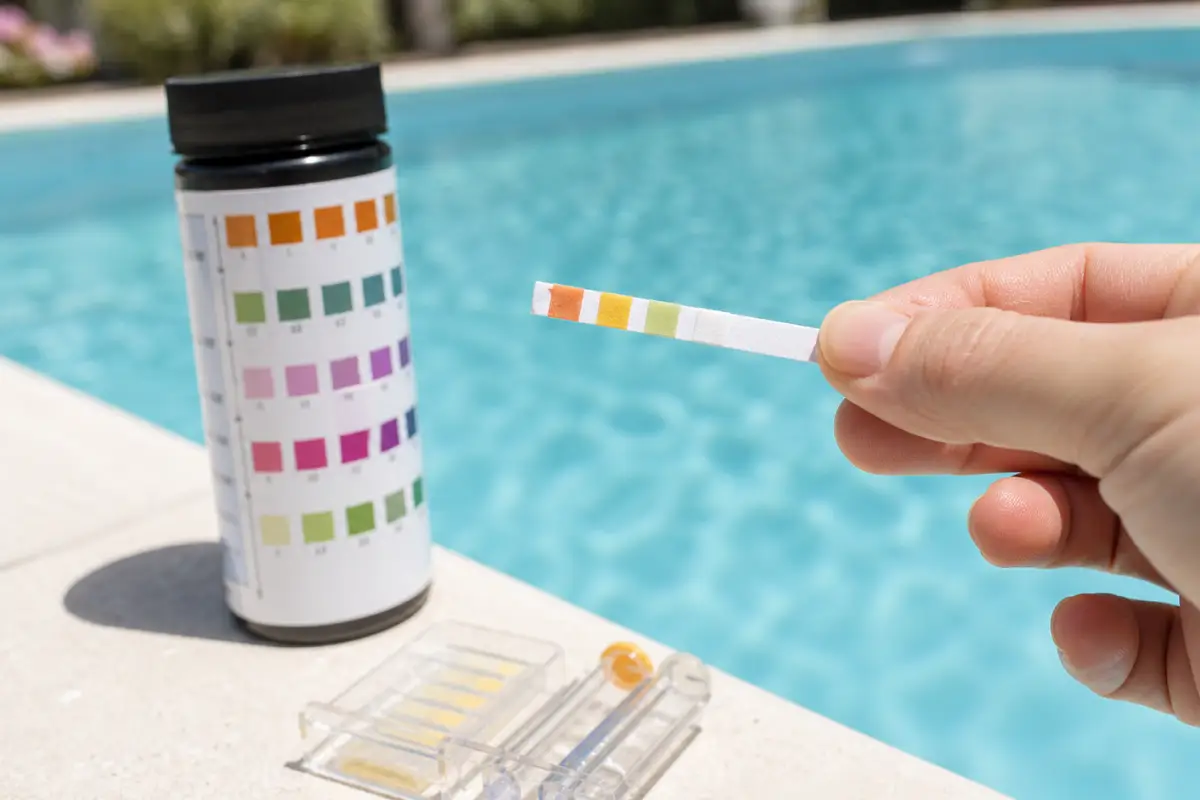
Adding chemicals without testing is how pools get wrecked. You cannot fix a number you have not read.
Test strips are fine for a quick weekly check. A liquid drop kit is more accurate and worth having for the times something is off.
Test at least once a week, and after heavy rain, a pool party, or a hot stretch.
Sanitizer, the one that does the work
Chlorine kills bacteria and algae. Nothing else on the shelf replaces it.
Target free chlorine of 1 to 3 parts per million. Below 1 and things start growing. Tablets in a floater or feeder handle daily upkeep, and liquid chlorine works when you need it to act now.
Salt pools still run on chlorine. The cell makes it from salt instead of you pouring it. We compared the two in salt water versus chlorine in Texas heat.
pH up and pH down
pH decides whether your chlorine works. Target 7.4 to 7.6.
High pH makes chlorine weak, clouds the water, and leaves scale on tile. Low pH burns eyes, corrodes metal parts, and eats plaster.
Sodium carbonate, sold as soda ash or pH increaser, brings it up. Muriatic acid or dry acid brings it down. In our area pH tends to drift up, so most owners use more acid than increaser.
Alkalinity increaser
This is the one people skip and then wonder why nothing holds.
Total alkalinity is a buffer. It keeps pH from swinging every time you add something. Target 80 to 120 parts per million.
Low alkalinity means pH bounces all over and no adjustment sticks. Fix alkalinity first, then pH. Doing it the other way around is why people chase the same numbers for weeks.
Stabilizer, in the right amount
Cyanuric acid protects chlorine from sunlight. Without it, a Texas summer day burns most of your chlorine off before dinner.
Target 30 to 50 parts per million. More is not better. High stabilizer locks chlorine up, so it reads fine on your test but barely sanitizes. The only way down is to drain and refill part of the pool.
Watch for this if you use tablets, because most tablets add stabilizer every time.
Shock
Shock is a heavy dose of chlorine that burns off the waste normal chlorine cannot keep up with. Sweat, sunscreen, and organic debris all build up.
Use it after a storm, after a crowd, after an algae bloom, and roughly every few weeks in peak season. Add it at dusk so the sun does not destroy it first.
Calcium hardness, if your water needs it
Target 200 to 400 parts per million. Too low and the water pulls calcium out of plaster and grout. Too high and you get scale on tile and inside the heater.
Victoria area fill water usually runs hard, so most local owners are managing high calcium rather than adding it.
What you can skip
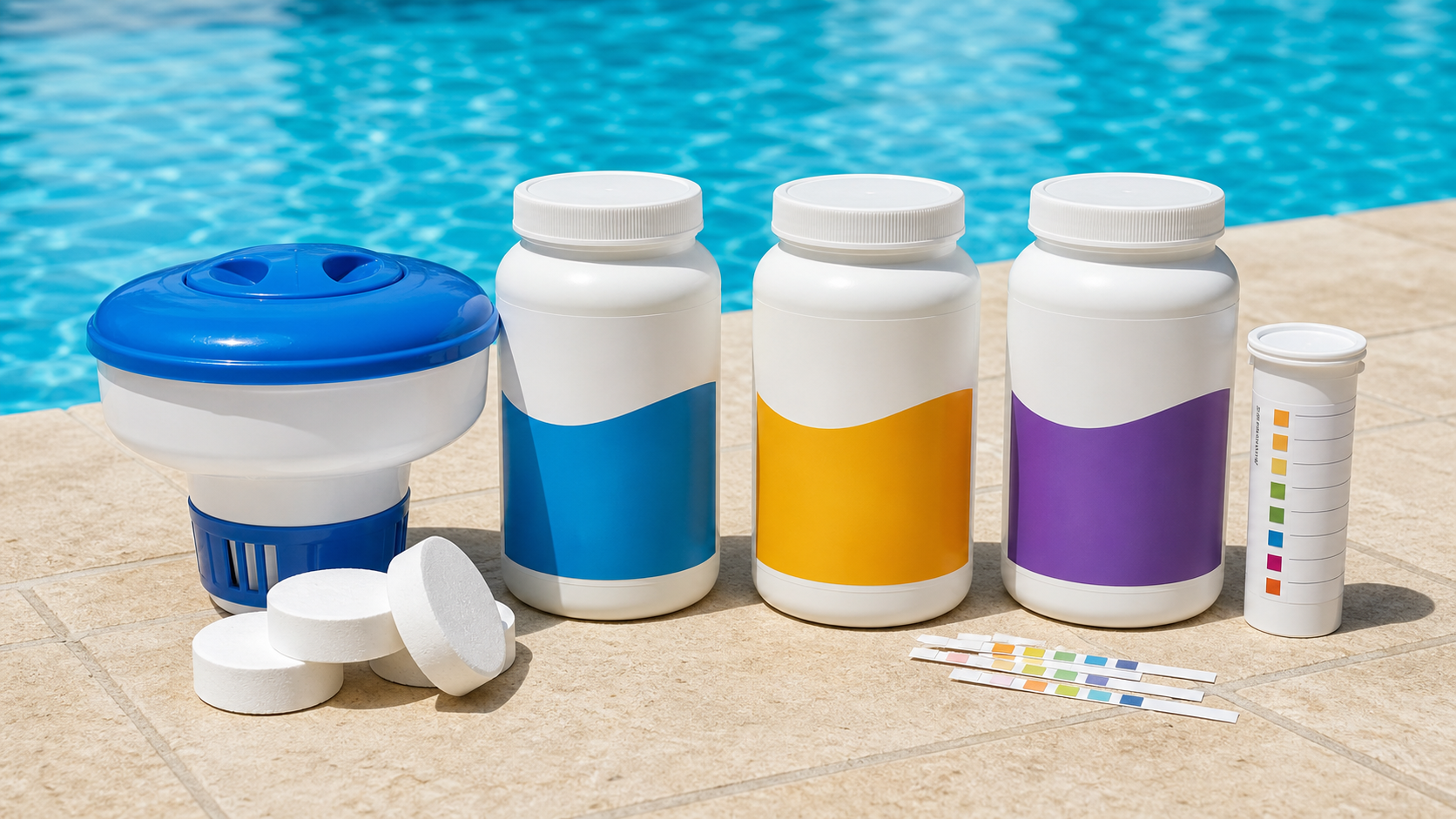
Clarifiers and flocculants are tools, not routine. Cloudy water almost always means a filter or chemistry problem, and our cloudy water checklist finds it faster than a bottle will.
Algaecide is worth keeping for prevention. It is not a rescue product once a pool is already green.
Enzyme and phosphate products help in specific cases. They do not replace chlorine.
Get your numbers first
Bring a water sample by and we will test it free at the supply store. We have been stocking and testing for Victoria pools since 1968, and we will tell you which bottles you do not need.
Call (361) 575-5821.
Frequently Asked Questions
What chemicals do I need for a pool?
A test kit, chlorine, pH increaser and decreaser, alkalinity increaser, stabilizer, and shock. Calcium hardness increaser only if your fill water is soft.
What are the ideal pool chemical levels?
Free chlorine 1 to 3 ppm, pH 7.4 to 7.6, total alkalinity 80 to 120 ppm, calcium hardness 200 to 400 ppm, and cyanuric acid 30 to 50 ppm.
Which do I adjust first, pH or alkalinity?
Alkalinity. It buffers pH, so if alkalinity is off your pH adjustments will not hold. Fix alkalinity, let it circulate, then set pH.
How often should I test my pool water?
At least once a week during swim season, and again after heavy rain, a pool party, or a run of very hot days.
Do salt water pools need chemicals?
Yes. A salt cell makes the chlorine, but you still manage pH, alkalinity, stabilizer, and calcium hardness, and you still shock the pool.
Can I have too much stabilizer in my pool?
Yes, and it is a common problem. High cyanuric acid locks chlorine up so it tests fine but stops sanitizing. The only real fix is partially draining and refilling.
