
A typical 17,000 gallon backyard pool needs about 35 gallons per minute of flow, and plenty of pools in Victoria run a pump built to move far more than that. Horsepower sounds like power, so bigger pumps get sold, and on a pool the extra mostly shows up on the electric bill.
Size by flow, then horsepower
A pump has to move your water through your pipe once or twice a day, and a small one usually can. Push more water than the pipe can carry and the extra energy turns into noise, heat and wear.
The number that matters is flow, measured in gallons per minute. Horsepower only tells you how hard the motor can push, and two pumps with the same rating can deliver very different flow on the same plumbing.
Start with your gallons
For a rectangular pool, multiply length by width by average depth, then multiply by 7.5 to get gallons. A 15 by 30 pool with an average depth of five feet holds about 17,000 gallons.
Divide that by the hours you want for one full turnover. Most pools do fine with one turnover a day, and the run times are in our guide on how long to run a pool pump.
Seventeen thousand gallons over eight hours works out to about 35 gallons per minute, which a modest variable speed pump can deliver on a low setting.
Round pools use a different multiplier. A 24 foot above ground pool filled to an average of four feet works out to 24 times 24 times 4 times 5.9, or about 13,600 gallons. Spread over eight hours, that needs about 28 gallons per minute.
Add up the other jobs the pump does
Filtration sets the floor. A spa with jets, a waterfall, a suction cleaner or an in-floor cleaning system each need their own flow, and a gas heater or salt cell lists a minimum flow on its label below which it shuts off. Size the pump for the largest of those jobs. A variable speed pump can run a higher speed only for the hour the spa or cleaner runs.
The filter sets a limit too. Its label lists a maximum flow in gallons per minute, and a pump that pushes past it drives fine dirt through the media and back into the pool.
Your pipe sets the ceiling
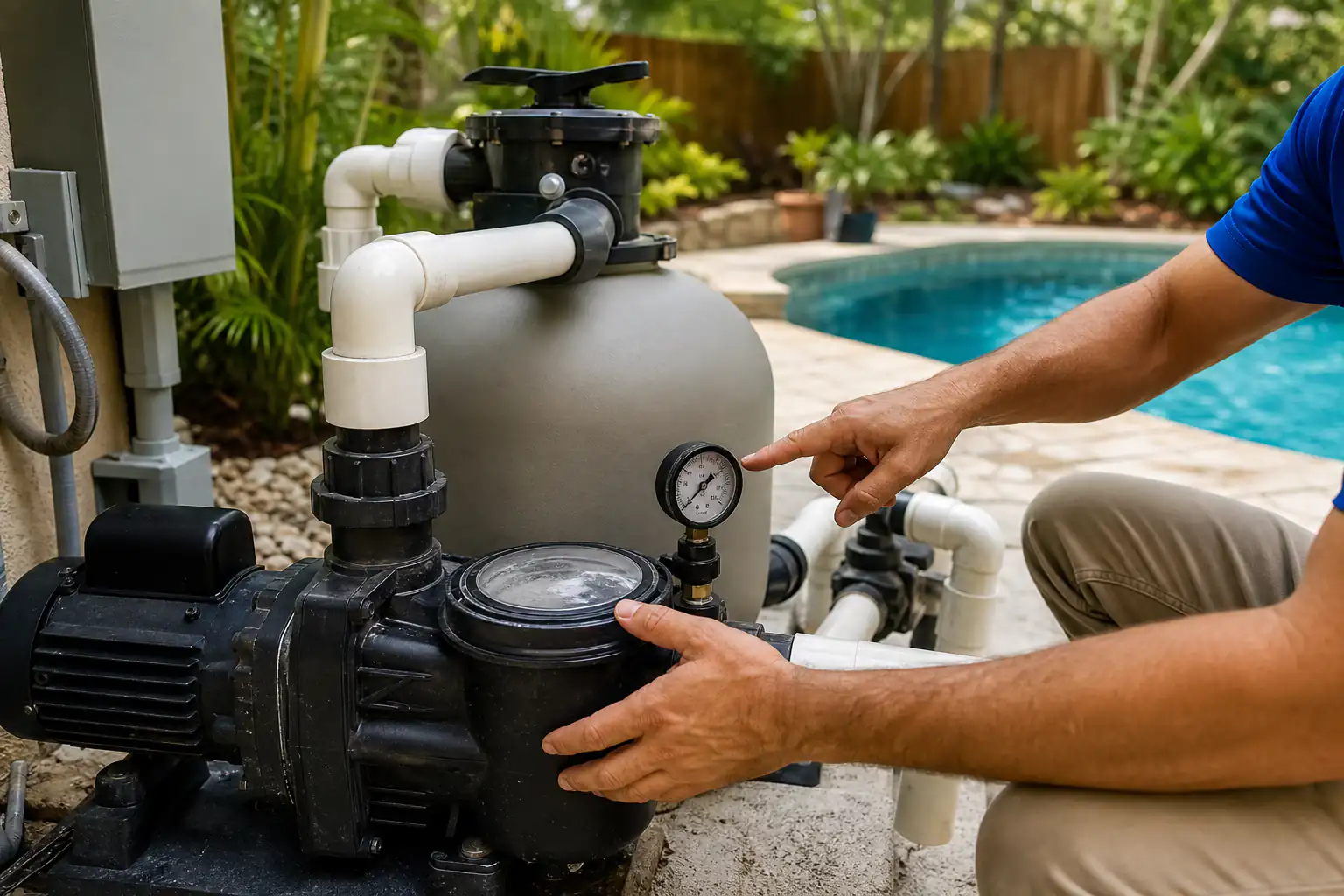
Inch and a half pipe carries about 42 gallons per minute before the water starts tearing at the walls, and two inch pipe carries about 73. A pump rated well above that on the suction side pulls harder than the pipe can feed it, starves for water and chews through seals.
So the pipe on your equipment pad caps your pump, whatever the box says. Measure it before you shop.
Every pump box also prints a flow curve, which shows how many gallons a minute it moves against more or less resistance. Long pipe runs, elbows and a dirty filter all add resistance, so the same pump moves less water on a pad far from the pool.
What an oversized pump costs you
It runs your power bill up moving water that was already clean. It also pushes water through the filter too fast to catch fine dirt, so the pool stays a little hazy, which is one cause behind cloudy pool water that chemicals alone will not clear.
The extra flow drives filter pressure up, so you backwash more often and waste more water. Our guide on how to backwash a pool filter covers what normal pressure looks like. An oversized pump also runs louder and hotter, which shortens seal and bearing life.
Why variable speed changed the math
A variable speed pump lets you pick the flow instead of living with one setting. You run it slow for most of the day, which is quiet and cheap, and speed it up to vacuum or run a cleaner.
Since July 2021 the federal DOE efficiency standard for dedicated-purpose pool pumps has applied in Texas, and it pushes most new and replacement residential pumps above a small size to variable speed. In practice it is usually the only choice. Slower water also filters better, so the pool ends up clearer on less electricity.
Let us size it with you
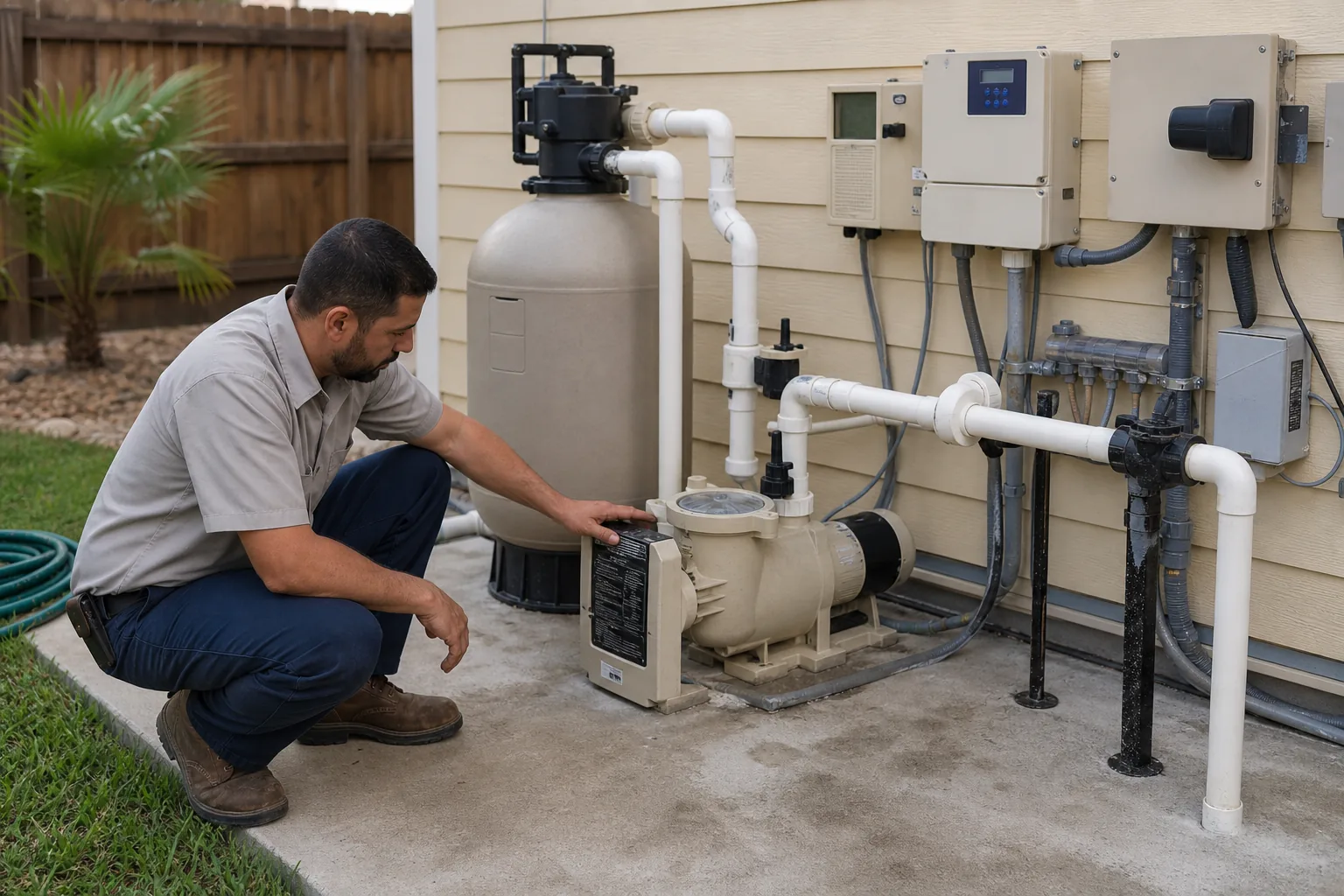
Bring us your pool’s length, width and shallow and deep depths, plus a photo of your equipment pad that shows the pipe size and the label on your current pump. We will work out your gallons, check your pipe and tell you what the pump should be.
Check the voltage on the old pump’s label before you buy. Most inground pumps run on 230 volts and many above ground pumps on 115, and the new motor has to match the circuit feeding the pad.
When it is time to install, our pump installation and repair technicians hold Texas RAIL licenses for the electrical hookup. Call (361) 575-5821 and we will walk through it.
Frequently Asked Questions
What size pool pump do I need for a 15,000 gallon pool?
Aim for roughly 30 to 35 gallons per minute, which turns the water over in about eight hours. On inch and a half pipe that is a small pump, and horsepower alone will not tell you which one.
What size pump do I need for an above ground pool?
Work out the gallons first. A 24 foot round pool at four feet average depth holds about 13,600 gallons and needs about 28 gallons per minute for an eight hour turnover.
Is a bigger pool pump better?
Usually the opposite. An oversized pump costs more to run, pushes water through the filter too fast to clean it well, raises filter pressure and wears out sooner.
How do I calculate my pool volume?
For a rectangle, multiply length by width by average depth, then multiply by 7.5. For a round pool, multiply diameter by diameter by average depth, then by 5.9.
Does pipe size limit my pump?
Yes, and it is the limit most people miss. Inch and a half pipe carries about 42 gallons per minute and two inch carries about 73. A pump rated well past that will cavitate and eat seals.
Do I have to buy a variable speed pump in Texas?
For most new and replacement residential pool pumps above a small size, yes. The rule is the federal DOE pool pump efficiency standard, in effect since July 2021, and it applies in Texas. Variable speed pumps also cut power use sharply.
Can I put a bigger pump on my existing plumbing?
Only if the pipe can carry the flow. Dropping a large pump onto inch and a half pipe strains the whole system, so have the pad checked before you buy.
