
Backwash a sand or DE filter when its pressure gauge reads 8 to 10 PSI above its clean reading. That gauge, more than the calendar, tells you when, and the job itself takes about five minutes. Hazy water and weak flow at the return jets are the usual signs a filter has reached that point, and plenty of owners add chlorine when the filter is what needs attention.
Read the pressure gauge
Look at the pressure gauge on top of the filter and write down the number right after the filter has been cleaned. That is your clean pressure, and most home pools sit somewhere between 10 and 20 PSI clean. Backwash when the gauge reads 8 to 10 PSI above that number, so a filter that read 18 clean and reads 28 today is due now.
Check the gauge after every heavy rain and during the spring weeks when the live oaks drop pollen. A storm that washes dirt in from the yard can push a filter from clean to due in a few days.
Cartridge filters don’t backwash
Check your filter type first. A cartridge filter has no backwash valve, so you open the tank and rinse the cartridge by hand instead. Sand and DE filters are the ones with a valve. A handle with settings printed around it is a multiport valve, and a lever that slides up and down is a push-pull valve.
Turn the pump off first
Turn the pump off before every valve change, then move the valve, then turn the pump back on. Inside a multiport valve sits a soft rubber gasket called the spider gasket, and turning the handle while water is pushing through it tears the gasket. The gasket is an inexpensive part, but replacing it means pulling the valve apart.
The steps in order
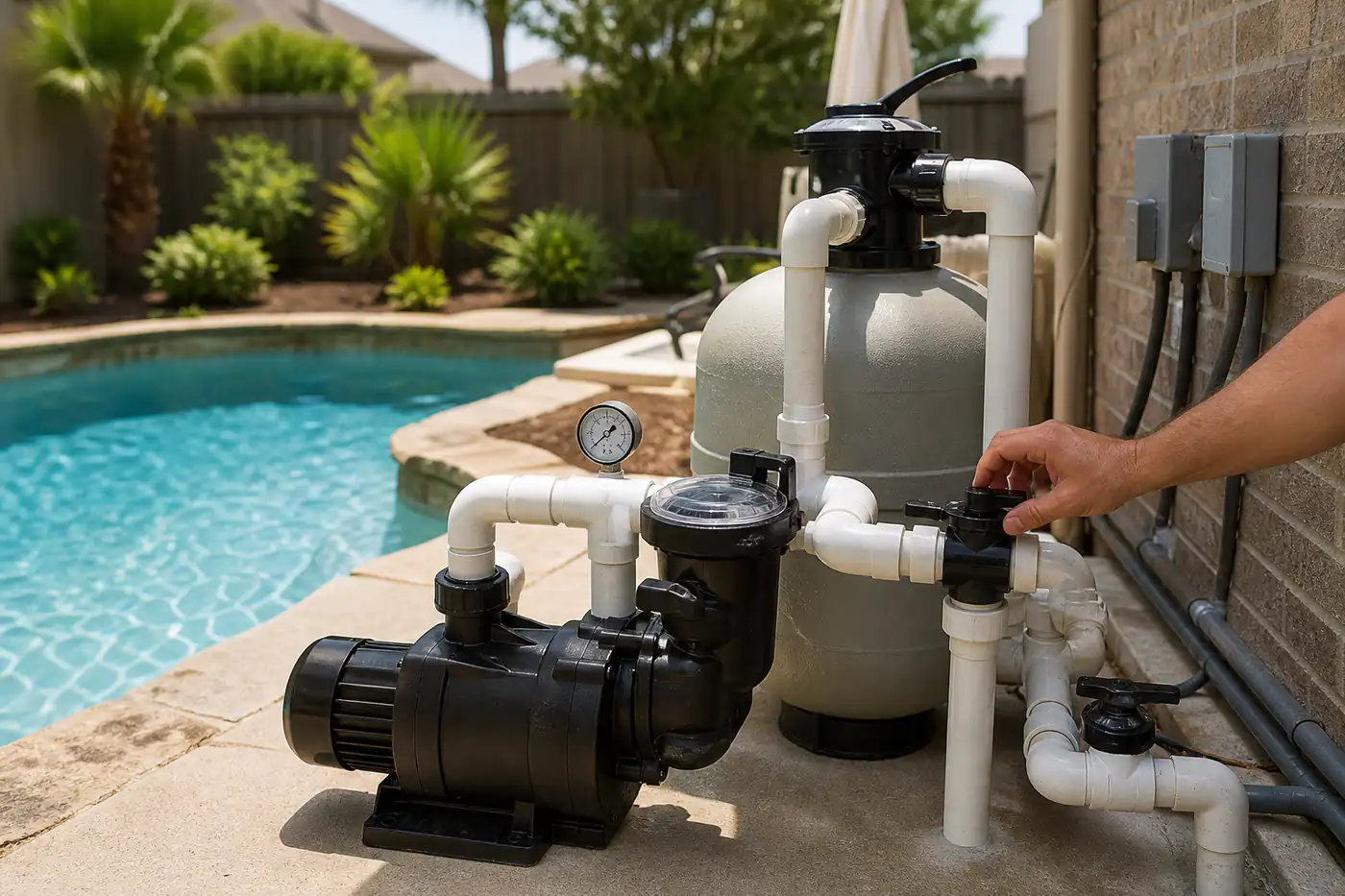
Roll out the backwash hose and point it where the water can drain away from the house, since a backwash sends a few hundred gallons out of the pool. Check the city’s rules before you run it into the street or a storm drain.
With the pump off, set the valve to BACKWASH and turn the pump on. Watch the sight glass, the small clear window on the valve. The water runs brown at first and clears in two to three minutes for most home filters, and that is when you stop.
Turn the pump off, set the valve to RINSE and run it for about 30 seconds to settle the sand bed back in place. Then pump off, valve to FILTER, pump on. The gauge should now read close to your clean number.
Top the water back up
A backwash drops the water level a few inches. Refill until the water sits at the middle of the skimmer opening, because a low level lets the pump suck air and run dry, which can ruin the shaft seal. If the pool keeps losing more water than your backwashing explains, our post on telling evaporation from a leak walks through the bucket test.
Victoria fill water runs hard, so each refill after a backwash adds a little calcium. On a pool backwashed every few weeks through a long summer, test calcium hardness in the fall.
Backwashing too often
A sand filter with a little dirt in it catches finer particles than freshly backwashed sand, because the trapped dirt narrows the gaps between the grains. Backwashing every week out of habit keeps resetting the filter to its least effective state and wastes water, so let the gauge decide.
DE filters need one extra step. The backwash flushes out the DE powder along with the dirt, so after each one you add fresh DE through the skimmer with the pump running, in the amount printed on the filter tank. Skip it and the grids run bare and clog with dirt.
When the gauge will not come down
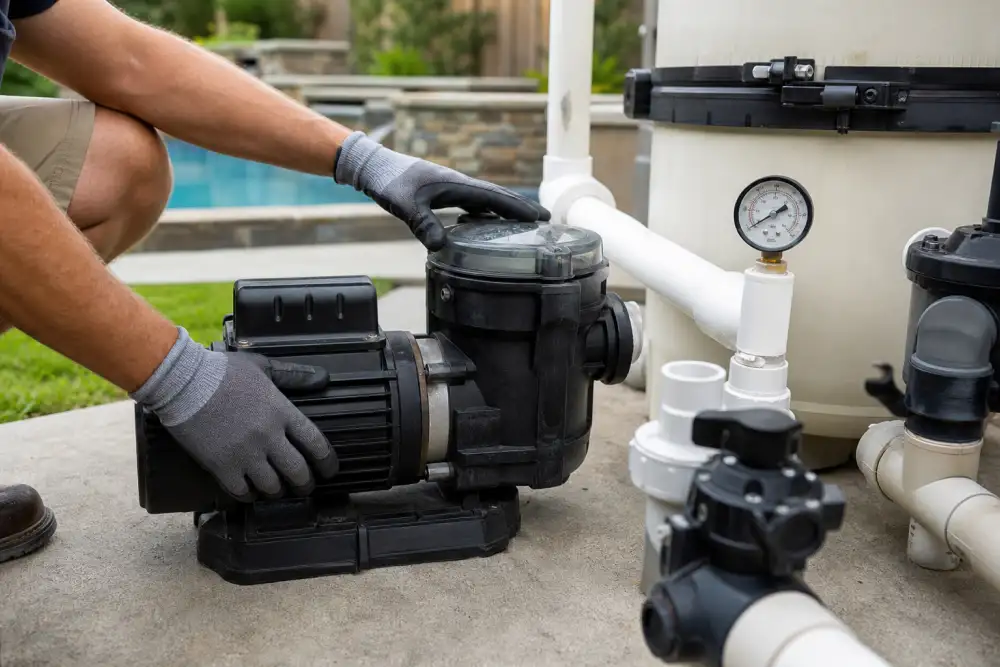
If you backwashed and the pressure barely moved, look at these:
- Sand that is packed hard or worn out, which usually happens after five to seven years.
- Oils and sunscreen gumming the sand, which only a chemical filter cleaner will cut.
- A torn DE grid, which shows up as powder blowing back into the pool.
- A valve leaking water out the waste line even in FILTER position.
Pressure that falls on its own is a different problem: something upstream of the filter is starving it of water, usually a clogged pump basket or a skimmer full of leaves. Both patterns appear on our list of pool repair warning signs, and our repair crew can replace sand, grids and valve gaskets.
Where it fits in your routine
Backwashing is one job on a longer list that also includes skimming, brushing, testing and vacuuming. Our breakdown of what a weekly pool service includes lays out the order we work in.
If the gauge reading has you stuck, write down the clean number and today’s number and call us at (361) 575-5821. Those two figures usually tell us whether you need a backwash, new sand or a look at the pump.
Frequently Asked Questions
How often should I backwash my pool filter?
Go by the pressure gauge. Backwash when it reads 8 to 10 PSI above the pressure you saw when the filter was last cleaned. For many pools that comes out to somewhere between two weeks and a month.
How long do you run a backwash?
Two to three minutes for most home filters. Watch the sight glass on the valve and stop when the water runs clear, then rinse for about 30 seconds.
Can you backwash a cartridge filter?
A cartridge filter has no backwash valve. Shut the pump off, open the tank, pull the cartridge and hose it down.
Why is my filter pressure still high after backwashing?
The sand may be packed, worn out or coated with body oils. Sand usually needs replacing every five to seven years, and oil buildup needs a chemical filter cleaner.
Do I add DE powder after every backwash?
Yes. A DE filter loses its powder in the backwash. Add the amount your filter calls for through the skimmer with the pump running so the grids stay coated.
Can you backwash a pool while people are in it?
Backwashing adds no chemicals, so the water stays safe to swim in. It is still easier with the pool empty of swimmers, because you switch the pump off for each valve change and the level drops a few inches. On a DE filter, wait until everyone is out before adding fresh powder at the skimmer.
Does backwashing lower the water level?
It does, usually by a few inches. Refill until the water sits at the middle of the skimmer opening so the pump keeps a steady supply of water.
