
A pool skimmer is the square opening cut into the pool wall at the waterline, and it is one of the two places your pump pulls water from. Its job is to catch leaves, pollen, bugs, sunscreen film and hair while they still float, because most debris sits on the surface for a while before it sinks. Whatever the skimmer misses drops to the floor, where it stains, feeds algae and has to be vacuumed.
Where it sits in the system
Your pump pulls from the skimmer and from the main drain at the bottom. Water runs from the skimmer to the pump, then through the filter, then through the heater or salt cell if you have one, and back into the pool through the return jets. A skimmer that is clogged or starved of water slows everything after it.
How a skimmer works
The pump creates suction in the pipe at the bottom of the skimmer, and that pull draws the top inch or two of pool water through the opening. Water speeds up as it rushes past the weir flap and drags floating leaves and bugs in with it. The basket holds the debris while the water continues on to the pump. On most inground pools a valve at the equipment pad splits the pump’s pull between the skimmer and the main drain, so turning it toward the skimmer gives the surface more pull in leaf season.
What is inside it
Open the lid on the deck and you are looking at four parts.
- The weir, the hinged flap in the opening. It floats up and down with the water and creates a thin fast layer that pulls debris in. It also keeps the debris from washing back out when the pump stops.
- The basket, which catches everything before it reaches the pump.
- The throat, the opening at the bottom leading to the pump line.
- The equalizer line, a second port on some pools that lets the skimmer pull from deeper in the pool if the level drops too far.
Some skimmers also hold a float valve that shuts the line off when water gets too low.
Keep the water at mid-skimmer
A skimmer only works in a narrow band, with the water sitting around halfway up the opening.
When the level is too low, the weir cannot float, the skimmer gulps air, the pump loses prime and the shaft seal starts to overheat. When it is too high, water runs over the weir instead of under it and debris drifts past the opening without getting caught.
Backwashing drops the level, so top the pool back up afterward, which we cover in how to backwash a pool filter.
Empty the basket before it fills
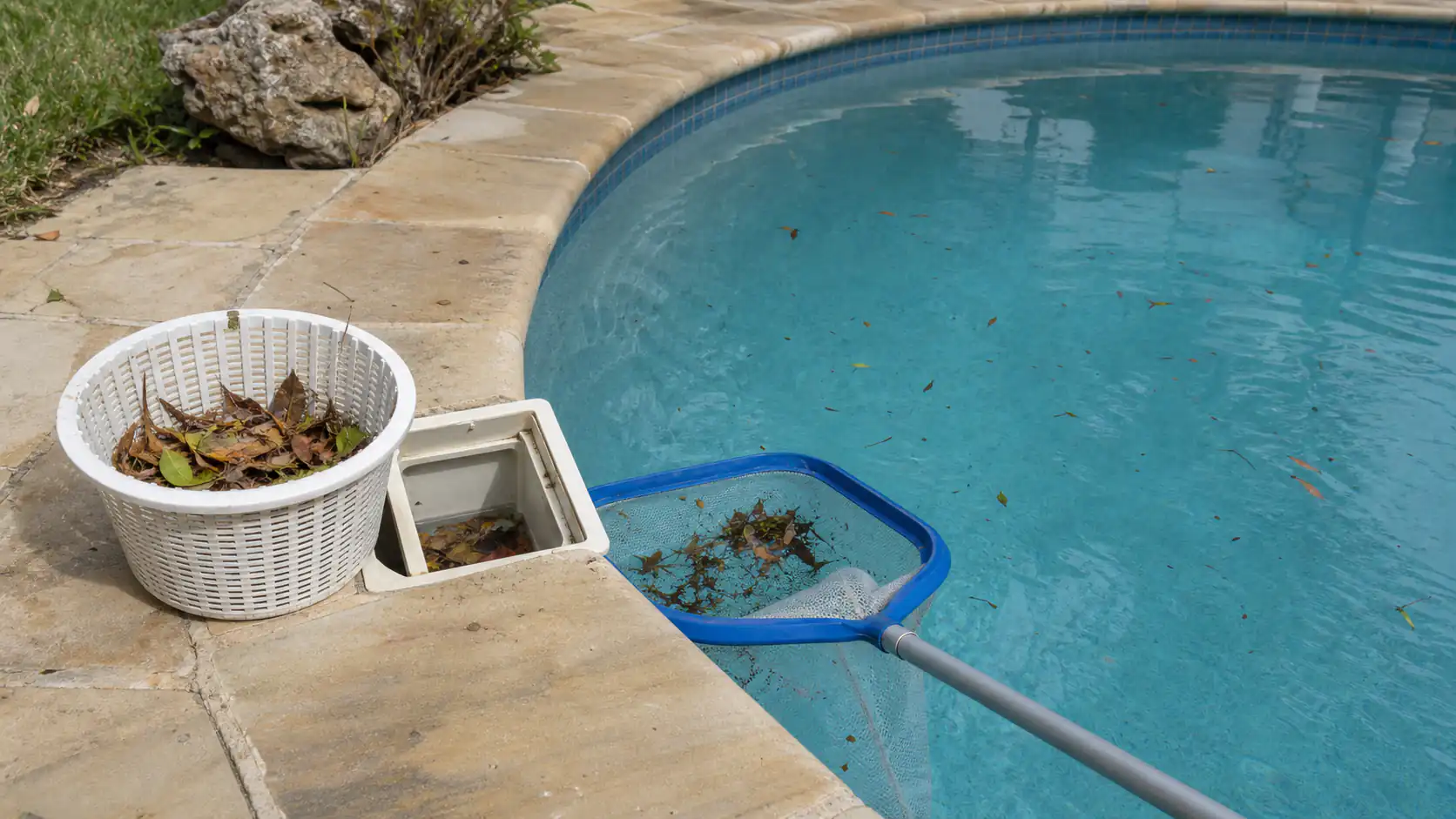
Check the basket at least once a week, and every few days when the oaks are dropping leaves or pollen is heavy.
A packed basket starves the pump. The motor works harder, the flow drops and the filter gets less water than it needs. When a pump seems weak, check the skimmer basket first, since a basket full of oak leaves can look a lot like a failing motor.
Pull the basket out instead of reaching into the throat with your hand. Rinse it and look it over, because cracks and missing chunks let debris through to the pump basket and eventually the impeller.
Things that go wrong
A missing or broken weir is the most common failure. The skimmer still pulls water without it, but it catches far less, and debris washes back out every time the pump cycles off. Weirs are cheap and clip in.
A cracked skimmer body is the expensive one. Ground movement and freeze damage both crack them, and the crack leaks water straight into the soil. If your pool loses water down to the skimmer mouth and then holds, look there first; our guide on finding a pool leak shows how to confirm it.
A clogged throat is usually a stick or a wad of leaves jammed below the basket. Flow drops, the pump strains and the pressure gauge reads lower than usual.
Get more out of it
Point one return jet slightly toward the skimmer so the current carries surface debris to the opening instead of letting it settle in a corner. Run the pump during the day, when people swim and the wind blows things in, which ties into how long to run your pool pump.
Use a skimmer sock over the basket during pollen season. It catches the fine material before it reaches the filter and stretches the time between filter cleanings by weeks.
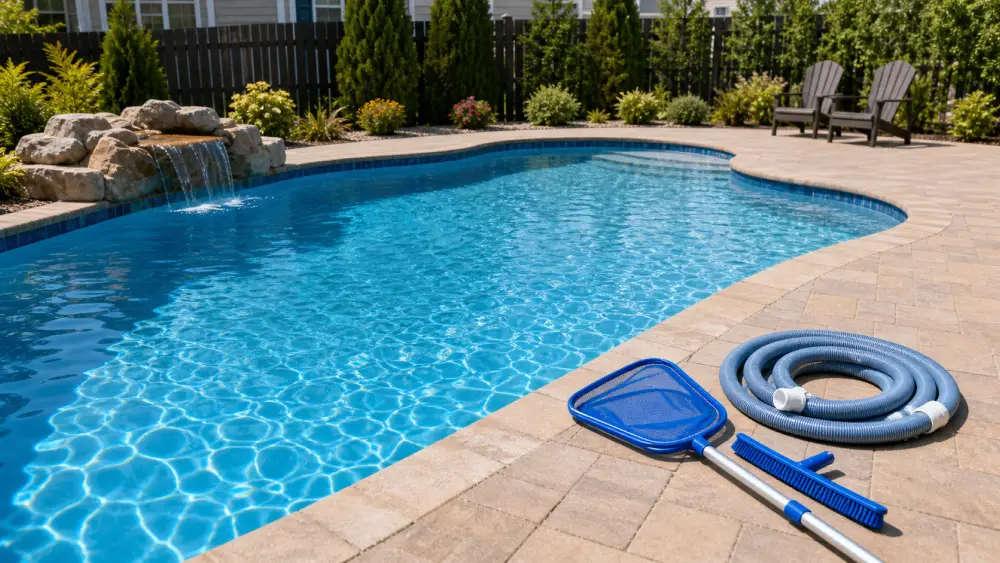
Skimming by hand still helps, and our techs net the surface on every visit; our list of what a weekly service includes starts there.
Weirs, baskets and lids come in many sizes, so bring the old part or a photo of the skimmer opening with the lid off to the supply store and we will match it. Questions about a skimmer that keeps losing prime can go to (361) 575-5821.
Frequently Asked Questions
What does a pool skimmer do?
It pulls water off the top of the pool and catches floating debris in a basket before that debris sinks. The water then continues to the pump and the filter.
Where should the water level be for the skimmer to work?
About halfway up the skimmer opening. Too low and the skimmer pulls air and the pump loses prime. Too high and water flows over the weir flap instead of under it, so debris drifts past.
How often should I empty the skimmer basket?
At least once a week, and more often during leaf or pollen season. A full basket cuts the flow to the pump and makes the whole system work harder.
What is the flap in my pool skimmer called?
The weir. It floats with the water line and speeds up the thin top layer so debris gets pulled in. It also stops debris from washing back out when the pump shuts off.
Why is my skimmer not pulling water?
Usually a low pool water level, a packed basket, or something jammed in the throat below the basket. A closed skimmer valve at the equipment pad will do it too.
Should the pool skimmer be on all the time?
The skimmer works whenever the pump runs, so keep its valve open for every run. Close it only when the water drops below the opening, such as during a partial drain, so the pump keeps pulling water from the main drain.
Can a pool skimmer leak?
Yes. The seam where the skimmer meets the pool wall is a common leak point, and freeze or ground movement can crack the body. If your water drops to the skimmer mouth and then holds, that is the likely spot.
