
You topped the pool off Sunday. By Thursday the water is down again. The hose is becoming part of your routine.
Every pool loses some water to evaporation. The question is how much, and whether the rest is going somewhere it should not.
Start with the bucket test
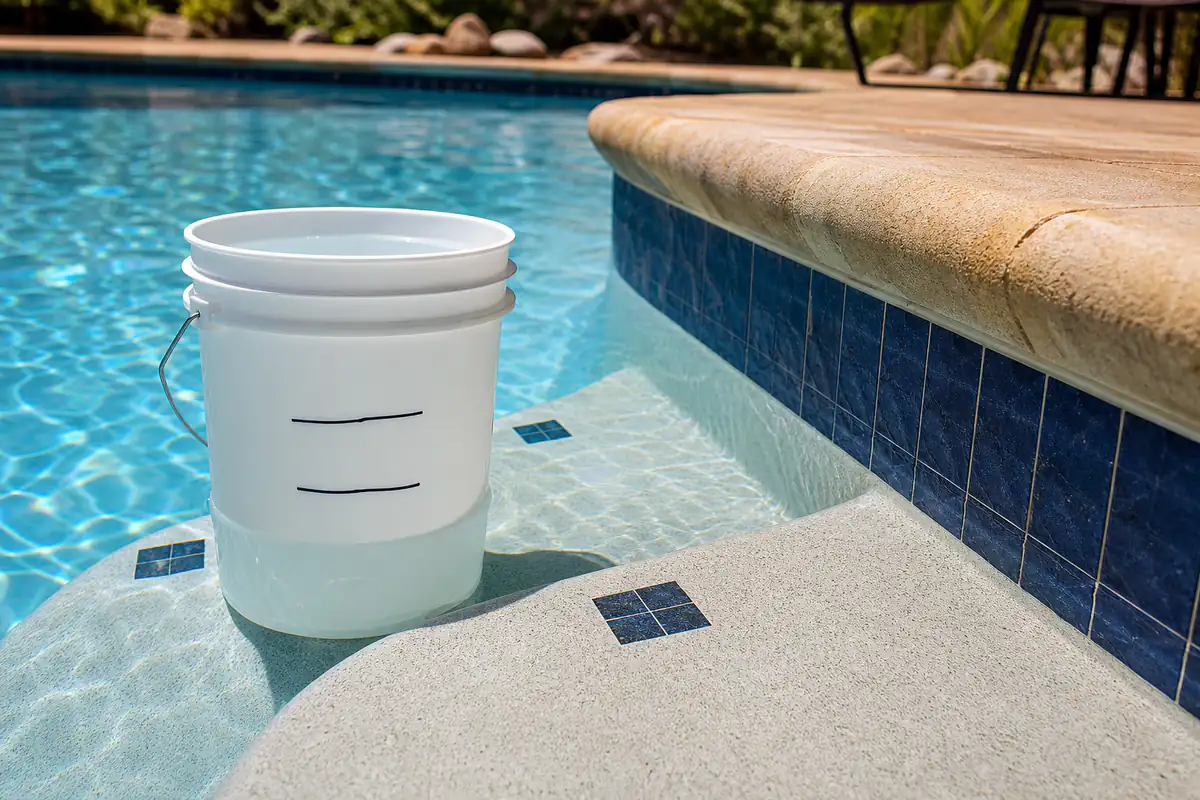
This separates evaporation from a real leak, and it costs nothing.
Set a five gallon bucket on the second step of the pool. Fill the bucket with pool water until the inside level matches the pool level outside it.
Mark both levels with tape. Leave the pump running normally. Do not swim and do not add water.
Come back in 24 hours. Evaporation pulls both levels down by the same amount. If the pool dropped more than the bucket, you have a leak.
Skip this test if rain is coming. We go deeper on the whole comparison in evaporation versus a leak.
Find out if it leaks with the pump on or off
This single step saves the most time, and almost nobody does it.
Run the bucket test twice. Once with the pump running all day. Once with the pump off all day.
Leaks faster with the pump running means pressure side plumbing, usually the return lines. Leaks faster with the pump off means suction side plumbing, the skimmer and main drain lines. Leaks the same either way means the shell, the liner, or a fitting.
Now you know which third of the pool to search.
Let the water find it for you
Stop adding water and watch where the level stops.
If it settles at the skimmer mouth, the leak is at the skimmer. If it stops at the light, look at the light niche. If it stops a few inches down and holds there for days, the leak is at that line.
A pool that drains all the way to the main drain is telling you the leak is deep.
Dye test the suspect
Once you have a spot, confirm it. Turn the pump off and wait 20 minutes for the water to go still.
Get in with leak dye or a few drops of dark food coloring. Squeeze a little right next to the crack, the light ring, the skimmer throat, or the return fitting.
Watch the dye. Still water means it just hangs there. A leak pulls it in like a thread being tugged.
Check these spots in order.
- The seam where the skimmer meets the pool wall.
- Around each return jet fitting.
- The pool light ring and the conduit behind it.
- Cracks in plaster or tears near vinyl liner seams.
- The main drain cover and its seal.
Look outside the pool too
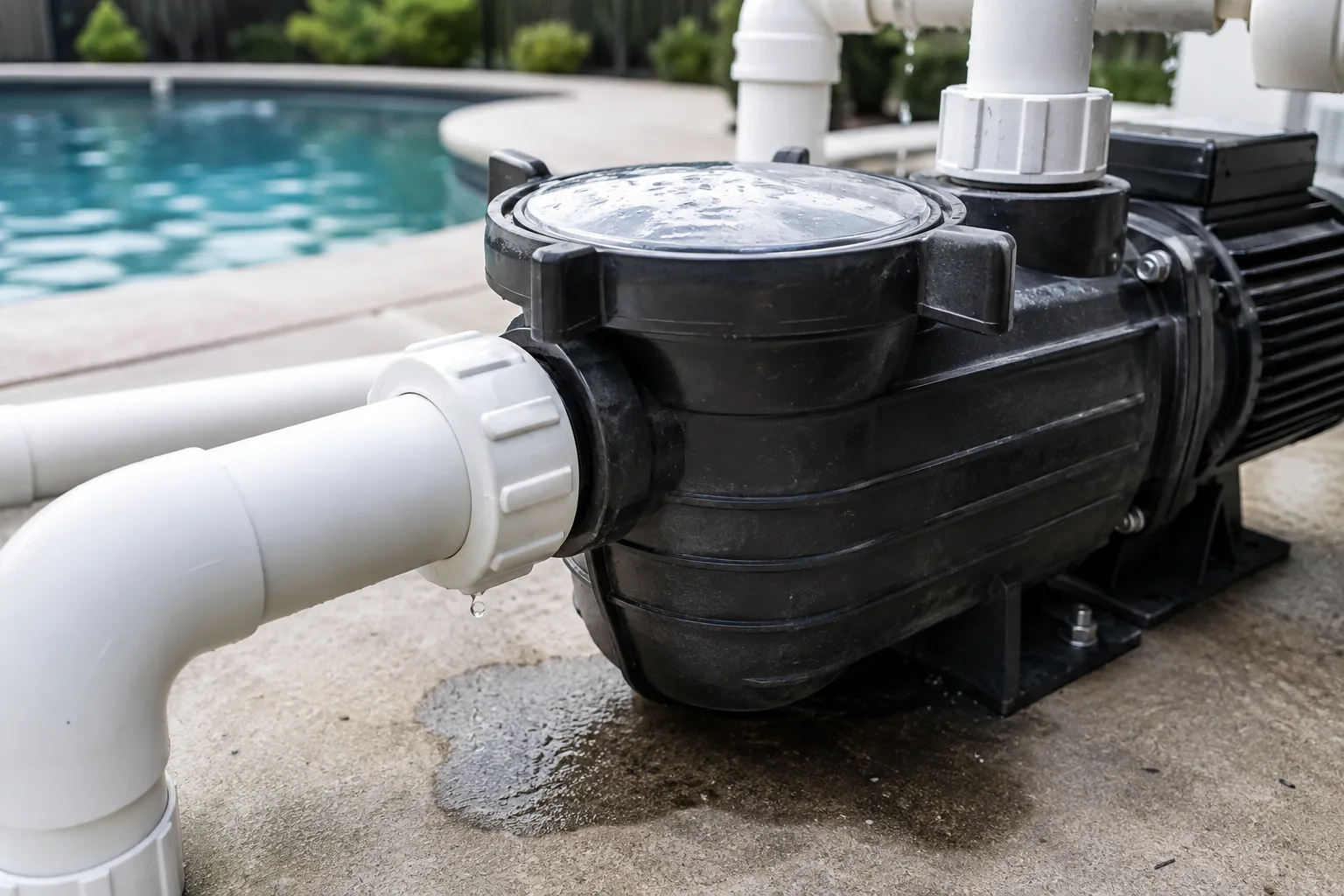
Walk the yard. Soggy ground that never dries, grass greener in one strip, or a sunken spot near the equipment usually means an underground line.
Check the equipment pad while the pump runs. Look at every union, the filter clamp, the pump lid, and the valve stems. Wet concrete under a fitting is a leak even if you never see it drip.
And check the backwash line. A leaking multiport valve sends water out the waste pipe all day long.
How much is normal
A quarter inch a day is normal evaporation in a hot South Texas week. An inch a day is not.
Half an inch a day on a typical pool runs into hundreds of gallons every week. That is water, chlorine, and heat all going out together.
When to hand it over
Call someone if the level drops with the pump off and you cannot find a spot by dye. Call if the ground is wet and the pool keeps dropping. Call if the pool goes below the skimmer, because from there the pump runs dry.
Underground plumbing leaks need listening gear and pressure testing. There is no homeowner version of that.
A leak is also on our list of pool warning signs for a reason. Water under a deck moves soil, and soil is what holds your deck up.
We have been finding leaks in Victoria since 1968. Call (361) 575-5821 and tell us what the bucket test showed.
Frequently Asked Questions
How do I know if my pool has a leak?
Run the bucket test. Float a marked bucket of pool water on the step for 24 hours with the pump running as usual. If the pool level drops more than the bucket level, water is leaving somewhere other than the surface.
How much water loss is normal for a pool?
About a quarter inch a day is normal evaporation during a hot South Texas week. Half an inch or more a day usually points at a leak.
Does it matter if the pool leaks faster with the pump on or off?
It matters a lot. Faster with the pump running points at the pressure side, meaning the return lines. Faster with the pump off points at the suction side, meaning the skimmer and main drain lines. The same either way points at the shell or a fitting.
How do you dye test a pool leak?
Shut the pump off and wait about 20 minutes for the water to go still. Release leak dye or dark food coloring right beside the suspect spot. If the dye gets pulled in like a thread, you found the leak.
Can I use food coloring instead of leak dye?
Yes, dark food coloring works for a homeowner test. The important part is still water, so the pump has to be off long enough for the currents to settle.
Is a leaking pool an emergency?
A slow shell leak is not. An underground plumbing leak can be, because moving water washes out the soil supporting your deck and equipment pad. Wet ground that never dries is worth a call.
