
Pool filter sand lasts five to seven years in most home filters. New sand has sharp edges that catch fine dirt, and years of water tumbling the grains wears those edges round until the filter passes most of what it used to hold. The usual symptom is a filter that climbs back to high pressure within a week of a backwash while the water stays slightly hazy.
Signs the sand is finished
Look for more than one of these before you commit to the job.
- The filter has run five to seven years on the same sand.
- Pressure climbs back within days of a backwash.
- Water stays hazy even when the chemistry tests fine.
- Backwash water never runs fully clear.
- You pull out clumps instead of loose grains.
Sand that is clumped but only two or three years old may need a chemical soak instead, so try that first. The soak is covered in our guide on cleaning a pool filter.
Buy the right sand and the right amount
Use pool filter sand, which is graded to a specific grain size, usually number 20 silica. Play sand from the hardware store is too fine and blows straight through the laterals into your pool.
The amount is printed on the filter label or in the manual. Weigh it out, because too much sand blocks the top of the tank and too little lets water channel past. Some filters also call for a layer of pea gravel underneath, and the label says so if yours does.
A filter labeled for 300 pounds, for example, takes six 50-pound bags. Silica sand gives off fine dust when it pours, so open the bags outdoors, keep your face out of the cloud, and wear a dust mask if you are pouring several bags.
Empty it out
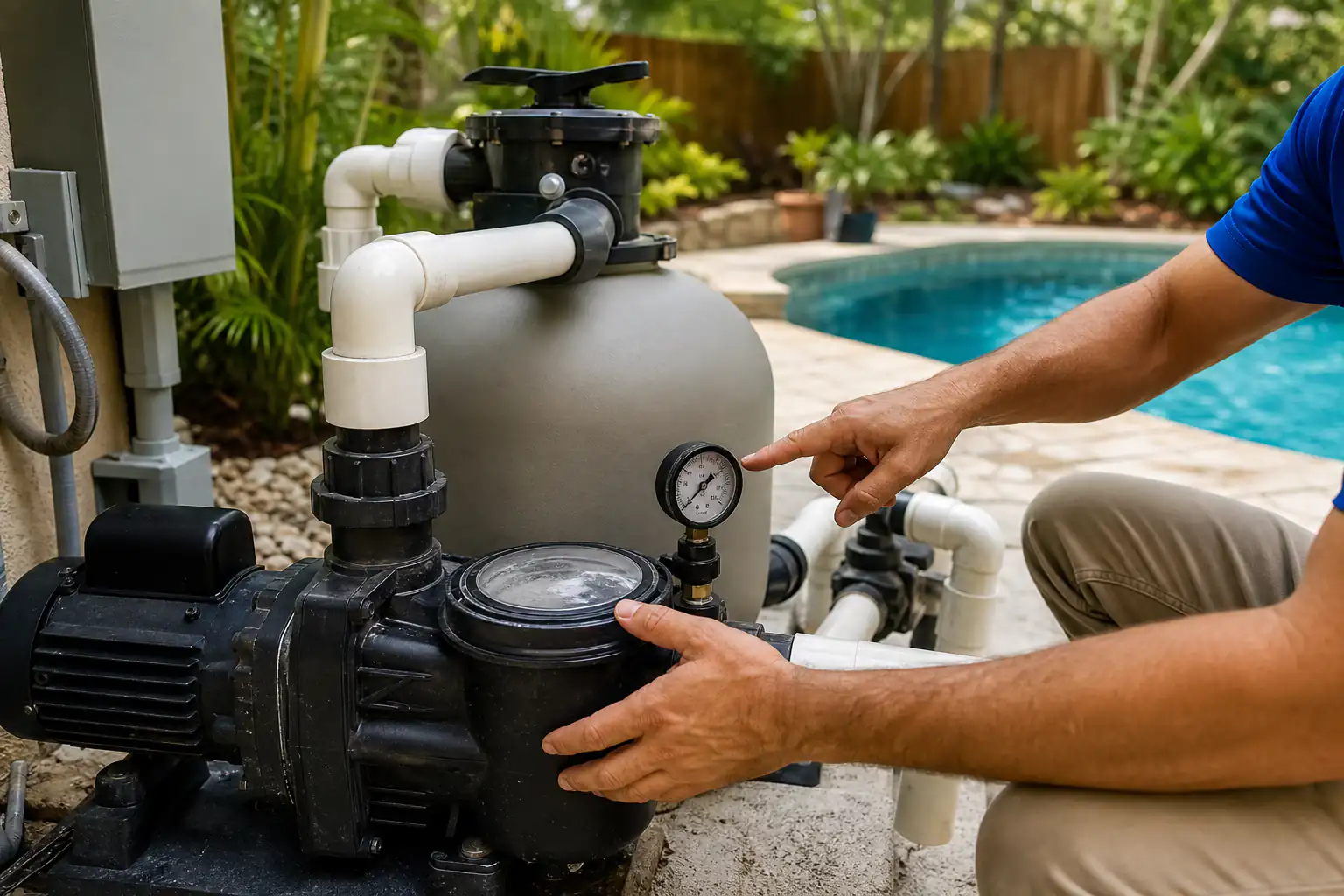
Turn the pump off at the breaker. Close the valves on both sides of the filter, or drop the water below the filter inlet, then pull the drain plug at the bottom of the tank and let it drain, which takes a while.
Take the multiport valve off the top: loosen the collar, lift the valve straight up and set it aside where nothing will land on it. Tape or cap the standpipe, the pipe running down the middle, because sand that falls down it goes into the laterals and then into your pool.
Scoop the old sand out with a plastic cup or a wet vacuum, and slow down near the bottom. The laterals down there are brittle plastic fingers that a shovel will crack.
Wet sand is far heavier than dry, so empty a wet vacuum’s canister when it is a third full or it will be too heavy to lift. Old sand holds years of trapped dirt and some chlorine. Spread it thin on a bare patch away from garden beds or bag it for the trash, and keep it out of the street gutter.
Check the laterals while it is open
With the tank empty, look at every lateral. A crack, split or missing slot sends sand into the pool from the first day the filter runs, and once the new sand is in you cannot see them. Replace a cracked lateral now while you can reach it.
Fill it
Rinse the tank out and fill it about a third of the way with water first, which cushions the laterals from the falling sand.
Keep the standpipe covered and centered. Pour the sand in slowly and level it by hand as you go. Then uncover the standpipe, clean the o-ring and lubricate it with silicone, set the valve back on and tighten the collar.
Rinse before you filter
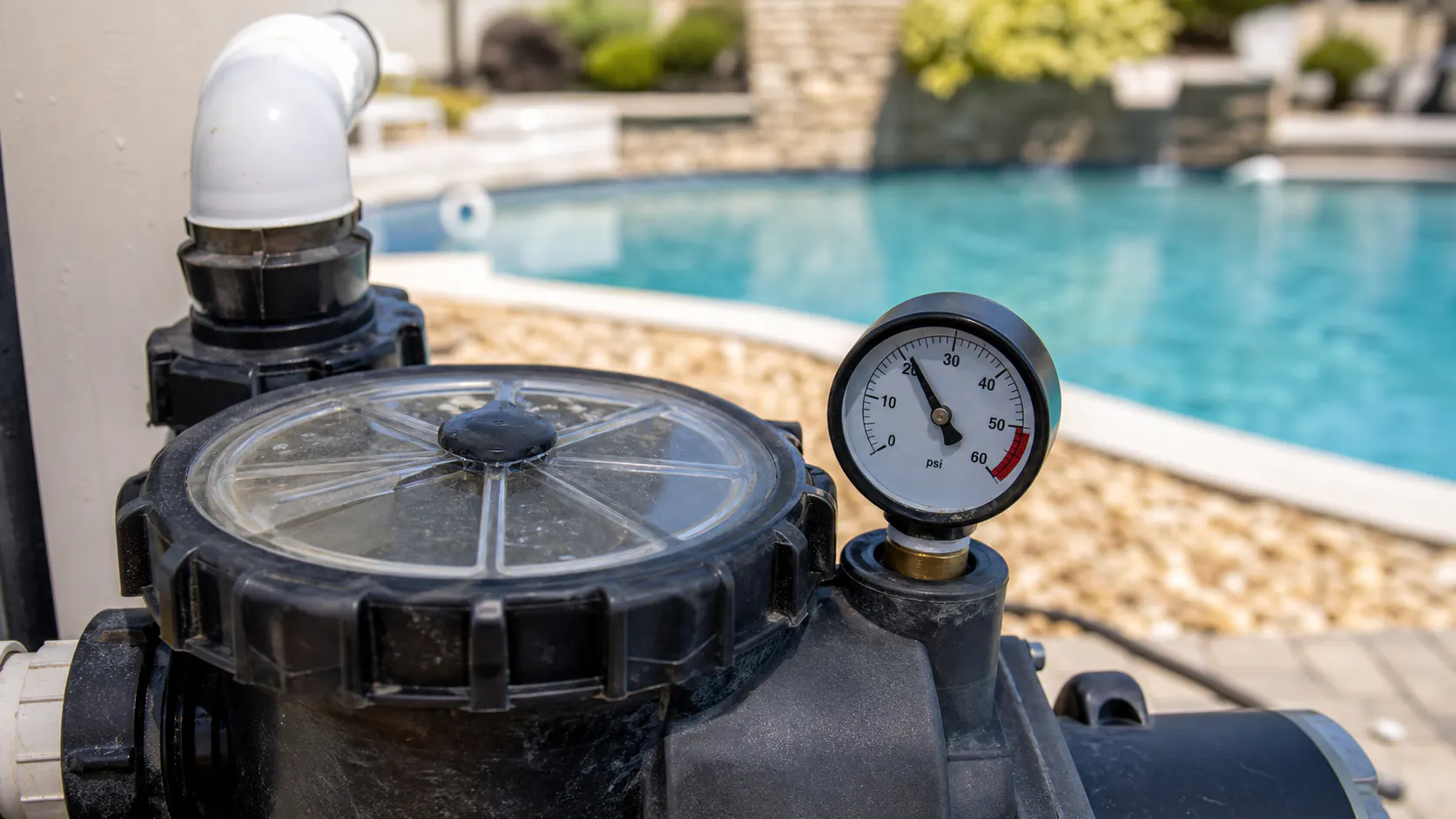
New sand carries fine dust, so backwash and rinse it before you switch to FILTER. Set the valve to BACKWASH and run the pump two minutes, then RINSE for one minute, and repeat until the sight glass runs clear.
Once it is on FILTER, write the pressure down. That reading is your clean baseline for the next several years, and our guide on backwashing a pool filter uses it to tell you when to backwash.
The first week on new sand
Check the gauge every day for the first week. Sharp new sand catches finer dirt than the old bed did, so pressure can rise sooner than you are used to while it pulls the leftover haze out of the water. Look at the floor the morning after the change, too. A thin line of sand under the returns means a lateral cracked or the standpipe moved during the fill, and the tank has to come open again.
When to call
Stop and call us if the valve is stuck to the tank, if a lateral is cracked and you cannot find the part, or if sand is already blowing into the pool.
A tank that is cracked or rusted through is better replaced than refilled. Our page on pool equipment repair versus replacement costs covers where that line sits.
We stock #20 silica and replacement laterals at the supply store on Navarro. Bring the filter’s make and model, or a photo of its label, and we will send you home with the right weight of sand. If you would rather we do the change, call (361) 575-5821.
Frequently Asked Questions
How often should pool filter sand be changed?
Every five to seven years for most home pools. Heavy use, hard water and frequent algae blooms shorten that.
What kind of sand goes in a pool filter?
Pool filter sand, usually number 20 silica. Play sand and builders sand are too fine and pass through the laterals into your pool.
How much sand does my pool filter need?
The amount is printed on the filter label or listed in the manual, so weigh it out. Too much blocks the top of the tank and too little lets water channel past the sand.
Why is sand blowing into my pool?
Usually a cracked or broken lateral at the bottom of the tank, or a standpipe that was left uncovered during the fill. A damaged standpipe o-ring can do it too.
Do I need to backwash after changing the sand?
Yes. New sand carries fine dust. Backwash two minutes, rinse one minute, and repeat until the sight glass runs clear before you switch to filter.
Can I use glass media instead of sand?
Many sand filters accept recycled glass media, and it filters finer and lasts longer. Check that your filter manufacturer approves it, and use the amount they list for glass rather than the sand weight.
How long does it take to change pool filter sand?
Plan on an afternoon. Draining the tank and scooping out wet sand take most of the time.
