
White plaster lasts seven to twelve years, quartz twelve to twenty, and pebble twenty or more. Those figures assume the water was looked after, and poor chemistry can cut any of them roughly in half.
What the surface actually is
Plaster is a thin coat of cement and marble dust troweled over the concrete shell, usually about half an inch thick. It is a wear layer, and every season of chemistry and brushing takes a little more off it.
Quartz finishes add crushed quartz for hardness. Pebble finishes use small stones and last longest, at the cost of a rougher feel underfoot.
What eats it early
Low pH does the most damage. Water below 7.2 pulls calcium out of the surface and leaves it etched and pitted, and low calcium hardness does the same thing from a different angle: soft water takes the calcium it wants from your plaster. The targets for both ends are in our guide to calcium hardness in pool water.
High calcium goes the other way and leaves scale, which is covered in how to clean calcium off pool tile.
Water temperature shifts the balance through the year. Warm July water drops calcium out as scale more readily, and cold January water pulls calcium from plaster more readily, so a pool with pH and hardness at the low end of their ranges etches fastest in winter. Victoria fill water is hard, which protects plaster from that side, though every top-off adds a little more calcium toward the scale end.
Repeat acid washing burns through a surface faster than anything else, since each wash dissolves a slice of plaster. How often is too often is in how to acid wash a pool.
Black algae also takes its toll. It roots into the plaster, and every round of hard brushing to get it out leaves the surface a little rougher.
Signs it is near the end
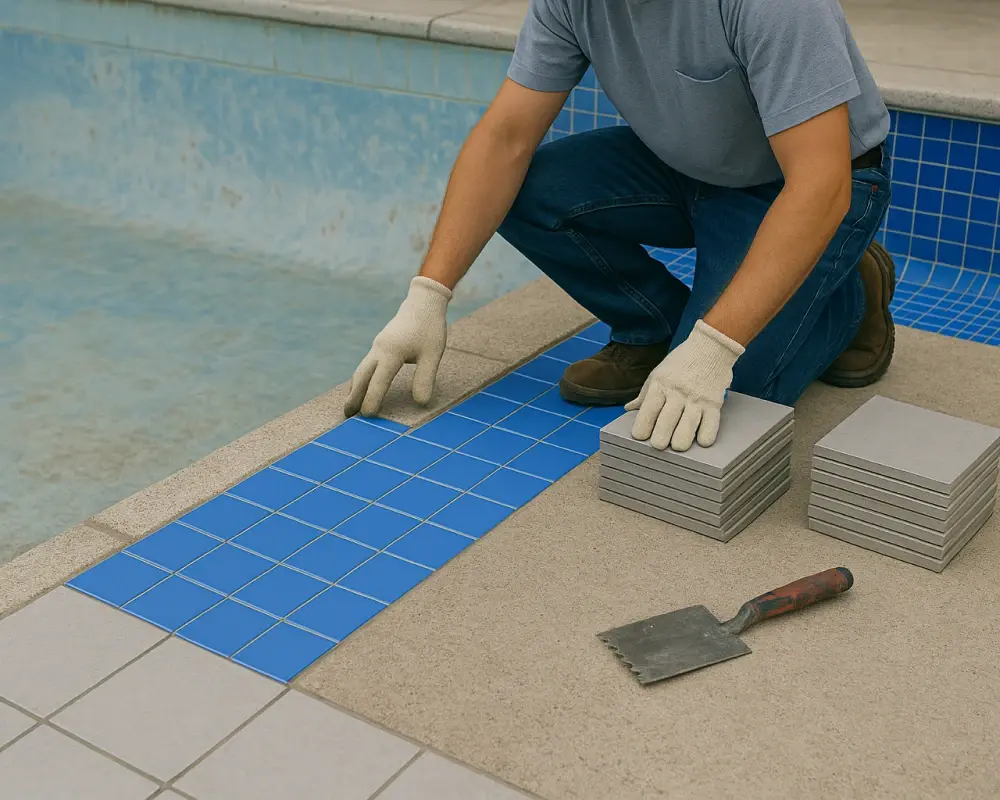
Start with touch. Run your palm along the wall a foot below the waterline; plaster in good shape feels smooth, and plaster that feels like sandpaper has lost its top layer. A chalky film left on your palm means the surface is dissolving into the water.
Then look at the steps and benches, where swimmers’ feet wear the plaster hardest. Flaking spots usually show up there first. Gray or dark patches where the material underneath shows through mean the plaster has worn thin, and cracks that grow longer from one season to the next mean the surface is letting go.
Plaster wear and water loss are separate questions. If the level is dropping faster than evaporation explains, run the bucket test in how to find a pool leak before blaming the surface.
What stains and spots tell you
Some marks point to trouble under the surface. Rust-colored spots that come back after treatment can mean steel in the shell sitting close to the surface and rusting through. Blue-green or gray stains near the returns usually come from copper, often from a gas heater whose exchanger is corroding in low-pH water. White crusty bumps along a crack mean water is moving through the shell and leaving calcium behind as it goes.
Brown stains in the shape of leaves are surface marks from live oak and pecan debris left on the floor, and they usually lift with chlorine and a brush. How to treat each kind is in how to remove pool stains without draining.
Rough plaster costs you money
A rough surface gives algae somewhere to grip, so you spend more on chemicals every month fighting blooms in the same corners each summer. It also scrapes feet and swimsuits and holds stains that used to rinse off. At that point the surface is part of the problem, and what moves the price of fixing it is in our post on pool resurfacing cost.
How to get the full life out of it
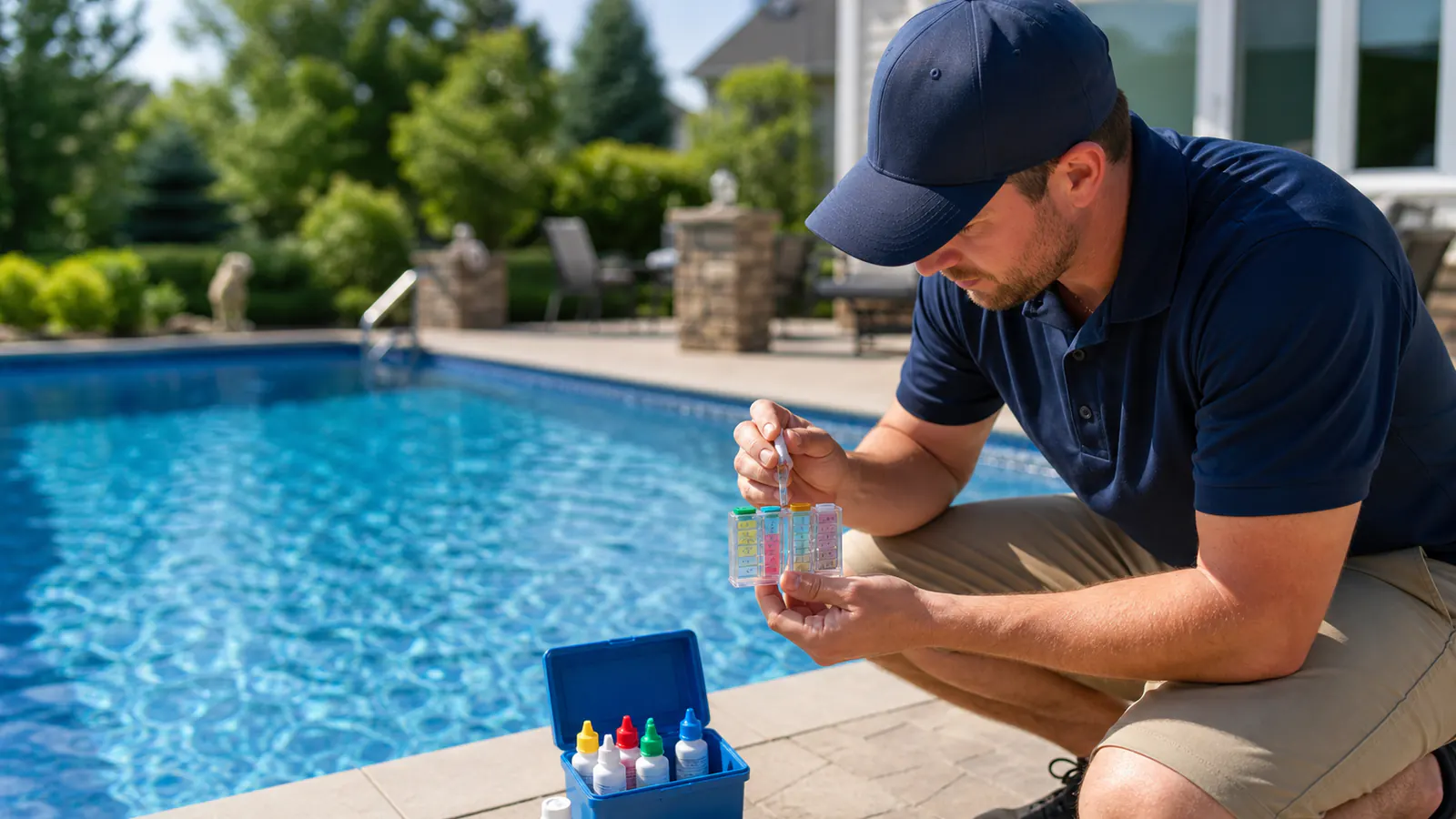
Hold pH at 7.4 to 7.6 and calcium hardness at 200 to 400 ppm, and test every two weeks through the summer. Brush the walls weekly so algae gets no chance to root.
The first year sets the pattern for new plaster. Fresh plaster keeps pushing pH up for several weeks, so plan on testing and adding acid every few days at first, and hold that schedule until pH stops climbing between tests.
Drain only when a job calls for it, and keep the walls wet while the pool is empty, because plaster that dries in the sun can crack. The clay soil around Victoria holds a high water table after heavy rain, and groundwater pressing on a half-empty shell can shift or crack it, so schedule any job that needs the pool drained for a dry spell. Bring a sample in for free water testing every few weeks to catch drift early.
Not sure how much is left
Send us a photo of the wall and steps in good daylight, or book a visit, and we will tell you roughly how many seasons the surface has left. Call (361) 575-5821 to set it up.
Frequently Asked Questions
How long does pool plaster last?
White plaster typically lasts seven to twelve years, quartz twelve to twenty, and pebble twenty or more. Poor water chemistry can cut any of those roughly in half.
How do I know if my pool needs replastering?
Rough, sandpaper-like walls, a chalky film on your palm, flaking on the steps and benches, and gray patches where the plaster has worn thin all point toward a resurface.
What damages pool plaster fastest?
Low pH and low calcium hardness, because soft acidic water pulls calcium out of the surface. Repeat acid washing and untreated black algae do the rest.
Is rough pool plaster a problem?
Yes. It scrapes feet, holds stains and gives algae somewhere to root, so you spend more on chemicals every month fighting blooms in the same spots.
Can pool plaster be patched instead of replaced?
Small spots can be patched, though the patch will rarely match in color. If roughness or thin spots cover most of the pool, a full resurface is the better buy.
Does a salt pool wear plaster out faster?
The salt itself does little harm. Salt pools tend to drift toward high pH, and that drift causes scale and surface trouble if nobody corrects it.
Can I replaster a pool myself?
Small chips can be filled with an underwater patch kit. A full replaster is a crew job, because the whole shell has to be troweled in one continuous session before the mix sets, and uneven troweling shows as streaks for the life of the surface.
