
An acid wash makes stained, dull plaster look new by dissolving a thin layer off the surface, stain and all. It works, but every wash spends plaster your pool cannot grow back, so the useful questions are how much plaster you have left and whether a gentler treatment would lift the stain first.
Understand what you are spending
New pool plaster is usually about half an inch thick, and each acid wash takes a slice of it. Over its whole life a pool can take a handful of washes. Wash too often and you reach the rough stone underneath, and at that point you are paying to resurface the pool instead of cleaning it.
So wash rarely. Many pools go five to ten years between washes, and plenty go their whole life without one.
Try the gentler options first
Most stains come out with less aggressive work, so climb this ladder before you drain anything:
- Brush hard and shock the pool, which handles organic stains from leaves and algae.
- Use a stain treatment matched to the stain type. Metal stains need a different product from organic ones.
- Try a no-drain acid treatment, where diluted acid goes into the full pool over several days.
- Try a chlorine wash, which uses strong chlorine in place of acid and leaves the plaster thickness alone.
If the stain lifts at any rung, you kept a layer of plaster. A stain that keeps returning alongside rough or flaking spots is a different matter, and it belongs with the warning signs that a pool needs repair.
Draining is the risky part
Draining is where most of the risk sits. An empty pool is a large hollow shell in the ground, and water in the soil pushes up on it. With no water weight holding it down, a shell can lift, crack or float partway out of the ground.
Coastal and low-lying yards carry the most risk, because heavy rain raises the water table within a day or two. Many pools have a hydrostatic relief valve in the main drain built for this, and it has to be opened as the water comes out. If yours has no valve, or the valve is clogged, draining becomes dangerous. The steps and the warning signs are in our guide on how to drain a pool safely.
Vinyl liner pools are their own case. A drained liner can shrink and wrinkle and often will not refit, so draining a vinyl pool is a job for a pro and is usually done along with a liner replacement.
What the job looks like
The pool drains first, to a legal discharge point, so check the city’s rules before sending water to the street or a storm drain. From then on the walls have to stay wet, because plaster that dries in the sun can crack.
The crew applies diluted acid section by section from the bottom up, works it in with a brush, and rinses each section within about 30 seconds of applying it. Acid left on longer cuts deeper than anyone wanted.
Before any of the rinse water gets pumped out, soda ash goes in to neutralize the acid, since raw acid cannot go into a storm drain or a yard. The pool then refills right away and every reading gets set from scratch: pH 7.4 to 7.6, alkalinity 80 to 120 ppm and calcium hardness 200 to 400 ppm for plaster.
Protect yourself from the acid
Muriatic acid gives off fumes that burn lungs and eyes, so the job calls for a respirator, goggles, acid-rated gloves and rubber boots. Always add acid to water and never water to acid, because the reverse can make the mix spit back at you.
Between the fumes, the 30-second timing and the neutralizing step, an acid wash is a poor first DIY project. If you want someone to look at the surface before you decide, our pool repair service can tell you what the stain is and how much plaster you have to work with.
When an acid wash is the right call
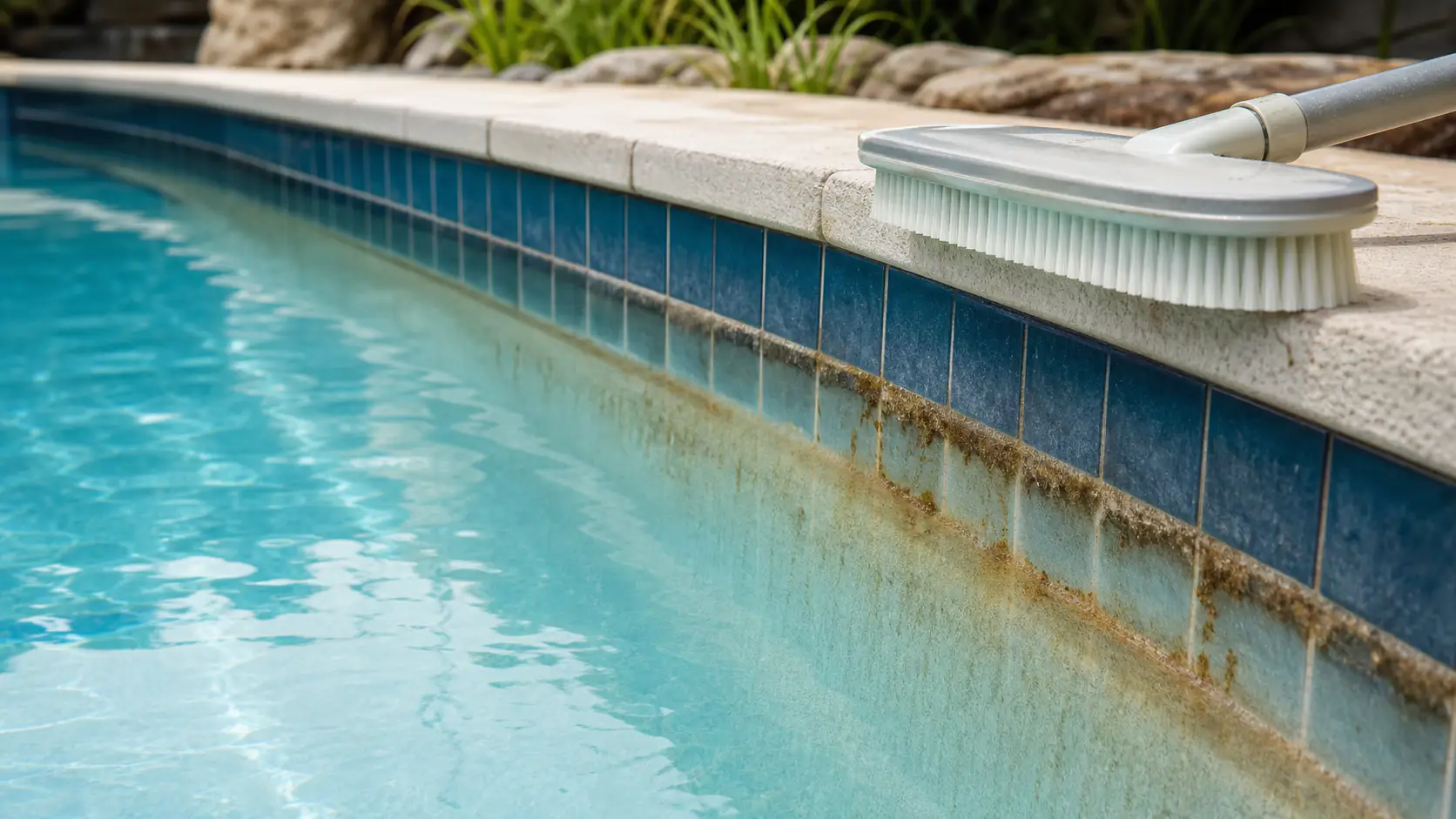
An acid wash makes sense when the whole pool is stained and dull, when a pool sat empty for years and went black, or when algae has rooted deep into the plaster. Skip it on thin or cracking plaster, on vinyl or fiberglass, and for one small stain.
If your pool needs an acid wash every two years, the water chemistry is staining it faster than it should. Low pH etches plaster and high calcium leaves scale, and both are cheaper to prevent than to scrub off. The products that keep those numbers steady are in our list of the pool chemicals you actually need.
Get a look before you drain
Take close photos of the worst stains and one wide shot of the whole pool, and bring them to the store at 4801 N Navarro St with a pint of pool water for a free test. We will tell you whether the stain calls for an acid wash or a cheaper fix will do. You can also call (361) 575-5821 before anyone pulls the plug.
Frequently Asked Questions
What does acid washing a pool do?
It dissolves a thin layer of plaster off the pool surface, taking the stained layer with it. The pool looks like it has new plaster because the layer you see is fresh plaster from underneath.
How often can you acid wash a pool?
Rarely. Plaster is about half an inch thick when new and each wash removes some of it, so a pool only has a handful of washes in its life. Many go five to ten years between them.
Is it safe to drain a pool for an acid wash?
Draining is the riskiest part of the job. Groundwater pressure can lift or crack an empty shell, and that risk is highest in low-lying and coastal yards after rain. The hydrostatic relief valve has to be opened. Vinyl pools are usually drained only during a liner replacement, because the liner can shrink and fail to refit.
Can I acid wash a pool myself?
We advise against it. Muriatic acid fumes damage lungs and eyes, each section has to be rinsed within about 30 seconds, and the runoff has to be neutralized with soda ash before disposal. Draining adds the groundwater risk on top of that.
What is a no drain acid wash?
Diluted acid is added to a full pool over several days to lift light staining. It is gentler on the plaster and avoids the risk of draining, though it only handles light stains.
Will an acid wash fix a green pool?
Only if the pool is already drained and stained from long neglect. A green pool that still holds water should be cleared with chlorine and filtration first, which almost always costs less.
