When total alkalinity drops under 80 parts per million, pH loses its anchor. One rainstorm can pull it down to 7.0, the next chlorine dose can push it to 8.0, and whatever you add to correct it drifts back within a day. Baking soda is the fix, and the dose is simple arithmetic once you know your gallons.
What low alkalinity looks like
The giveaway is a pH that reads 7.0 one day and 7.9 two days later. Low alkalinity usually drags pH low as well, so the water can etch plaster, leave green streaks near copper fittings and start corroding ladders and rails.
Swimmers may complain about stinging eyes even when chlorine reads normal.
A chlorine pool under 80 ppm needs correcting, and under 60 needs it this week. Salt pools are often run at 60 to 80 on purpose, so check which target your pool uses before you add anything.
Baking soda is the answer
Sodium bicarbonate is baking soda, and it is the same chemical the pool store sells as alkalinity increaser, so buy whichever costs less per pound. It raises alkalinity a lot and pH only a little, which is the combination you want here.
Soda ash is a different product, used when pH is low and alkalinity is already fine. We cover it in how to raise pH in pool water.
How much to add
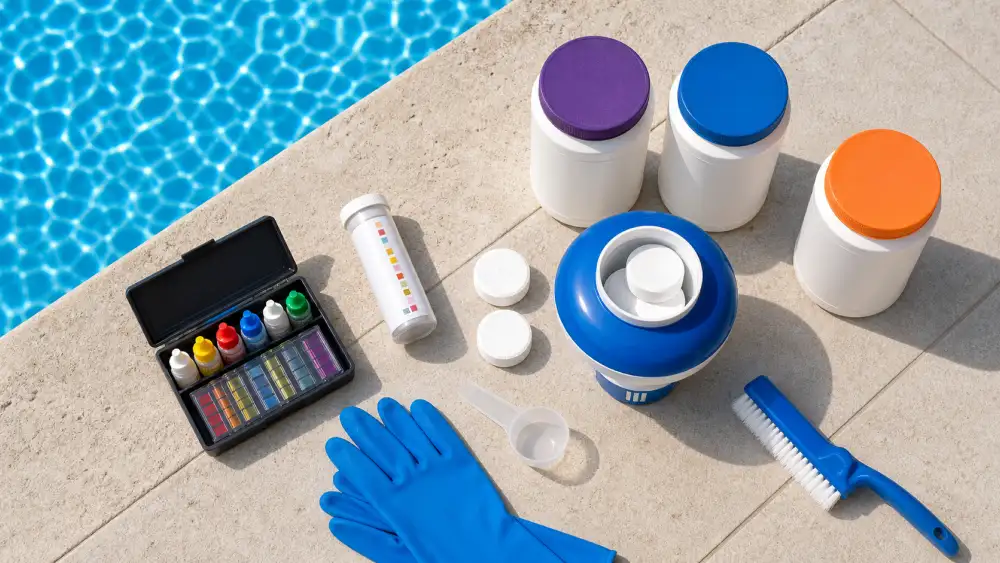
One and a half pounds per 10,000 gallons raises alkalinity by about 10 parts per million.
Take a 20,000 gallon pool sitting at 60 that needs to reach 100. That is 1.5 pounds, times two for the gallons, times four for the 40 ppm, so about 12 pounds in total.
Split anything over four pounds into separate doses a day apart, which for that example means three doses of about four pounds. Big single doses can cloud the water, and splitting lets you retest and stop short if the number climbs faster than expected.
For a rectangle, gallons are length times width times average depth times 7.5. For a round pool, use diameter times diameter times average depth times 5.9.
A smaller job works the same way. A 15,000 gallon pool at 70 that needs to reach 100 takes 1.5 pounds, times 1.5 for the gallons, times 3 for the 30 ppm, or about 6.75 pounds. That goes in as two doses of about 3.4 pounds on consecutive days.
How to add it
With the pump running, broadcast the powder in a wide arc across the deep end. Keep it out of the skimmer and avoid dumping it in one pile, then brush the floor so nothing settles.
Retest after about six hours, and give it a full day before deciding you need more.
Check calcium before a big dose
Victoria fill water is hard, so calcium hardness in pools here often runs high. Raising alkalinity lifts pH a little along with it, and high calcium plus high alkalinity plus pH near 8.0 is the combination that turns water milky and lays scale along the tile. If hardness reads over 400 ppm, stop at 80 to 90 alkalinity instead of 100 and watch pH for the next two days. The hardness targets and how to bring calcium down are in calcium hardness in pool water.
Fix alkalinity before pH
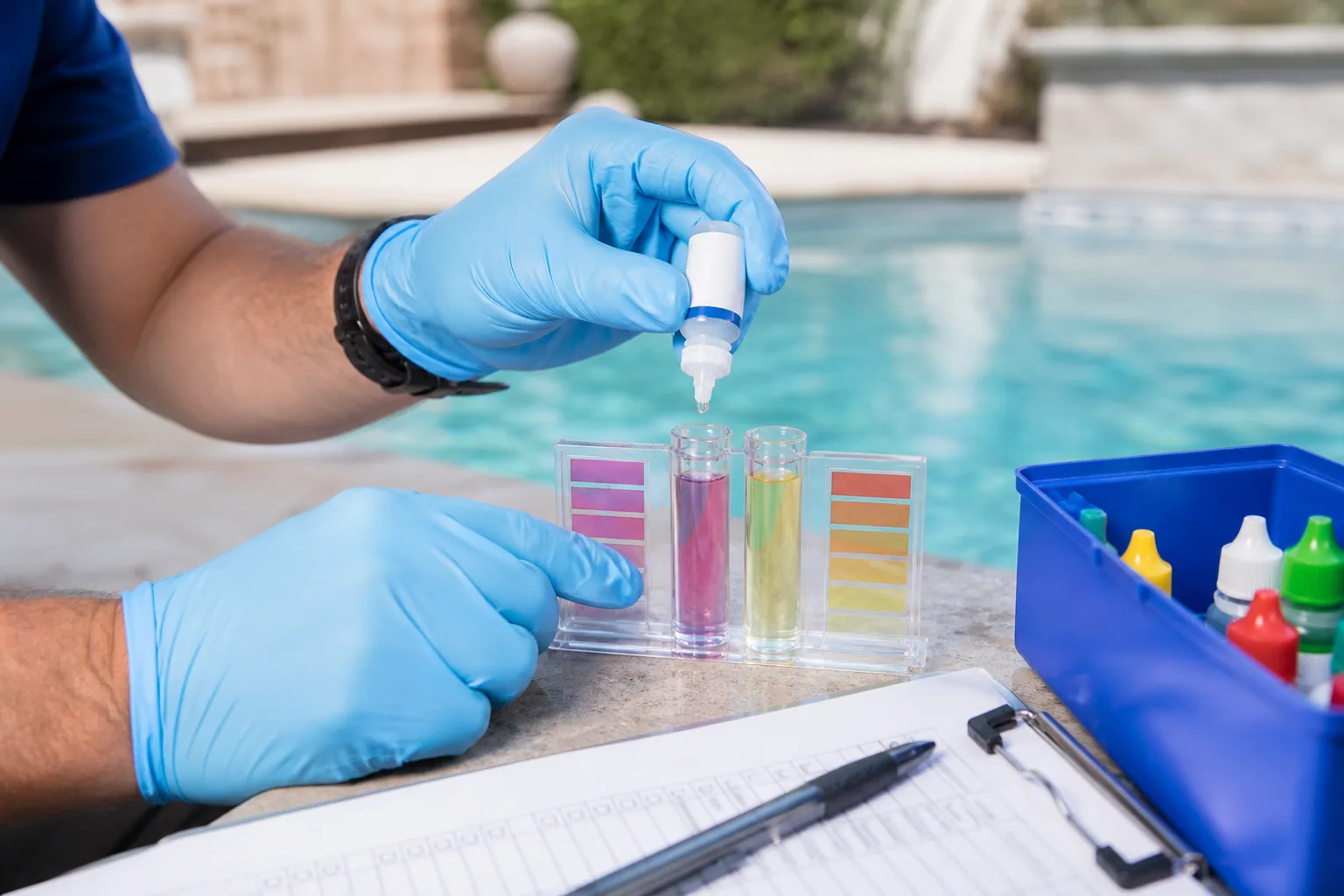
Fix alkalinity first, because pH drifts back within a day if you correct it while alkalinity is low. Get alkalinity to 80 or above, let it circulate for a day, then adjust pH to 7.4 to 7.6.
The full order and every target are in what pool chemicals you actually need.
If the reading will not move
Recheck your gallons first. A pool you counted at four feet average that is really five holds a quarter more water than you dosed for, so every dose comes up short by that margin. If the reading barely rises, look at the date on your test reagents, because old alkalinity reagent reads low. A pool still running on tablets keeps pulling alkalinity down between doses, so switch routine chlorine to liquid while you rebuild it.
If pH climbs above 7.8 after the last dose, bring it back with small amounts of muriatic acid, about 12 to 16 fluid ounces per 10,000 gallons for each 0.2 drop when alkalinity is near 100. Pour it slowly in front of a return with the pump running. Acid takes a little alkalinity with it, so retest both numbers the next day.
Why it dropped
Heavy rain is the big cause here, since a Gulf storm can dump several inches into a pool in an afternoon and dilute everything in it. The cleanup list is in preparing a pool for a hurricane.
Acid is the other cause, whether it comes from overdoing muriatic acid or from chlorine tablets, which are acidic. A pool running on tablets alone drifts down over a season.
Bring a pint of pool water and your gallons for free water testing, and we will weigh out the dose and tell you how to split it.
Frequently Asked Questions
What raises alkalinity in a pool?
Sodium bicarbonate, which is ordinary baking soda. The pool store version sold as alkalinity increaser is the same chemical, so buy whichever costs less per pound.
How much baking soda raises pool alkalinity?
About one and a half pounds per 10,000 gallons raises alkalinity by 10 parts per million. A 20,000 gallon pool going from 60 to 100 needs about 12 pounds, split into doses of four pounds or less a day apart.
Will baking soda raise pH too?
A little. That small pH effect is why it suits low alkalinity. If pH is low and alkalinity is already fine, soda ash is the better product.
Should I fix alkalinity or pH first?
Alkalinity first. It holds pH steady, so a pH correction made while alkalinity is low drifts back within a day.
Why did my pool alkalinity drop?
Heavy rain dilutes it, and chlorine tablets are acidic, so a pool running on tablets alone drifts down across a season. Adding too much acid does it too.
How long after adding baking soda can I swim?
About six hours with the pump running. Wait a full day before retesting, since the reading keeps moving until it is fully mixed.
How do I raise pH and alkalinity in my pool at the same time?
Raise alkalinity first with baking soda, which lifts pH slightly on its way up. If pH still reads under 7.4 a day later, add soda ash, about 6 ounces per 10,000 gallons for each 0.2 rise, and retest before adding more.
