
Your pool gets cold in November and sits unused until April. A heater buys those months back.
The price tag is only half the story. A cheap heater to install can be the expensive one by February.
Two kinds, two different bills
A gas heater burns natural gas or propane and makes its own heat. It warms a pool fast, in hours rather than days, and it works on the coldest night of the year.
A heat pump does not make heat. It moves heat out of the air and into the water, like an air conditioner running backward. It is slower and much cheaper to run.
The catch is temperature. A heat pump loses efficiency as the air drops, and below roughly 50 degrees it struggles. Victoria gets nights like that from December through February.
What decides the install price
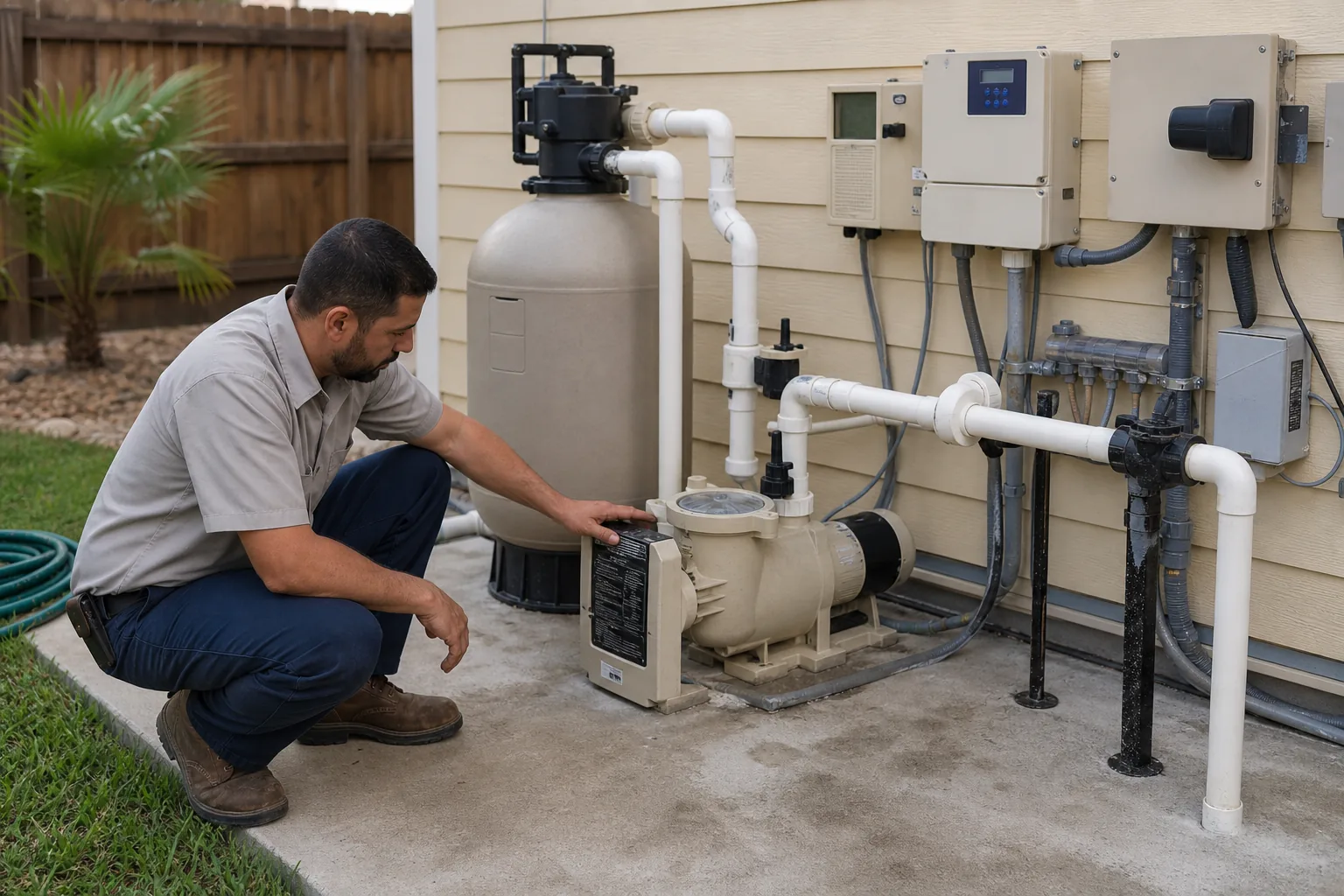
Ask three companies and you will get three numbers, because these things change the job.
- Pool size in gallons, which sets the heater size.
- Gas line size and distance, since many homes need a larger line run.
- Electrical service, because a heat pump usually needs its own dedicated circuit.
- Propane versus natural gas, which changes both the equipment and the fuel cost.
- Pad space and plumbing changes to fit the unit in.
- Permits and inspection, which vary by city.
The gas line is the one that catches people. Say the installer can reach your pad with existing pipe. That is a very different quote from 60 feet of new line trenched across a yard.
Size it right or pay twice
Heater output is measured in BTUs for gas and in BTUs or tons for heat pumps. Undersize it and the heater runs constantly and never catches up. Oversize it and you paid for capacity you never use.
Sizing depends on three things: pool surface area, target water temperature, and whether you use a cover.
The cover is the one most owners ignore. Heat leaves through the surface. A cover shuts that door.
If you are running a heater with no cover, you are heating the sky.
Running cost is the number to ask about
Installers quote the install. Ask them for the monthly run cost at your target temperature, for your pool, in your climate.
Gas costs more per hour of heat but only runs when you want it. Heat pumps cost much less per hour but need many more hours to get there.
That points at a simple rule. If you swim on short notice a few times a month, gas fits. If you want the pool warm all season and you plan ahead, a heat pump usually wins on total cost.
What it buys you in Victoria
Our pool season already runs long here. We wrote about how long pool season really lasts in Victoria.
A heater mostly adds the shoulder months. March and November become usable. A heated pool on a cool day is a swim, not a plunge.
Full winter swimming is possible with gas. It is not cheap.
Do not forget the rest of the pad
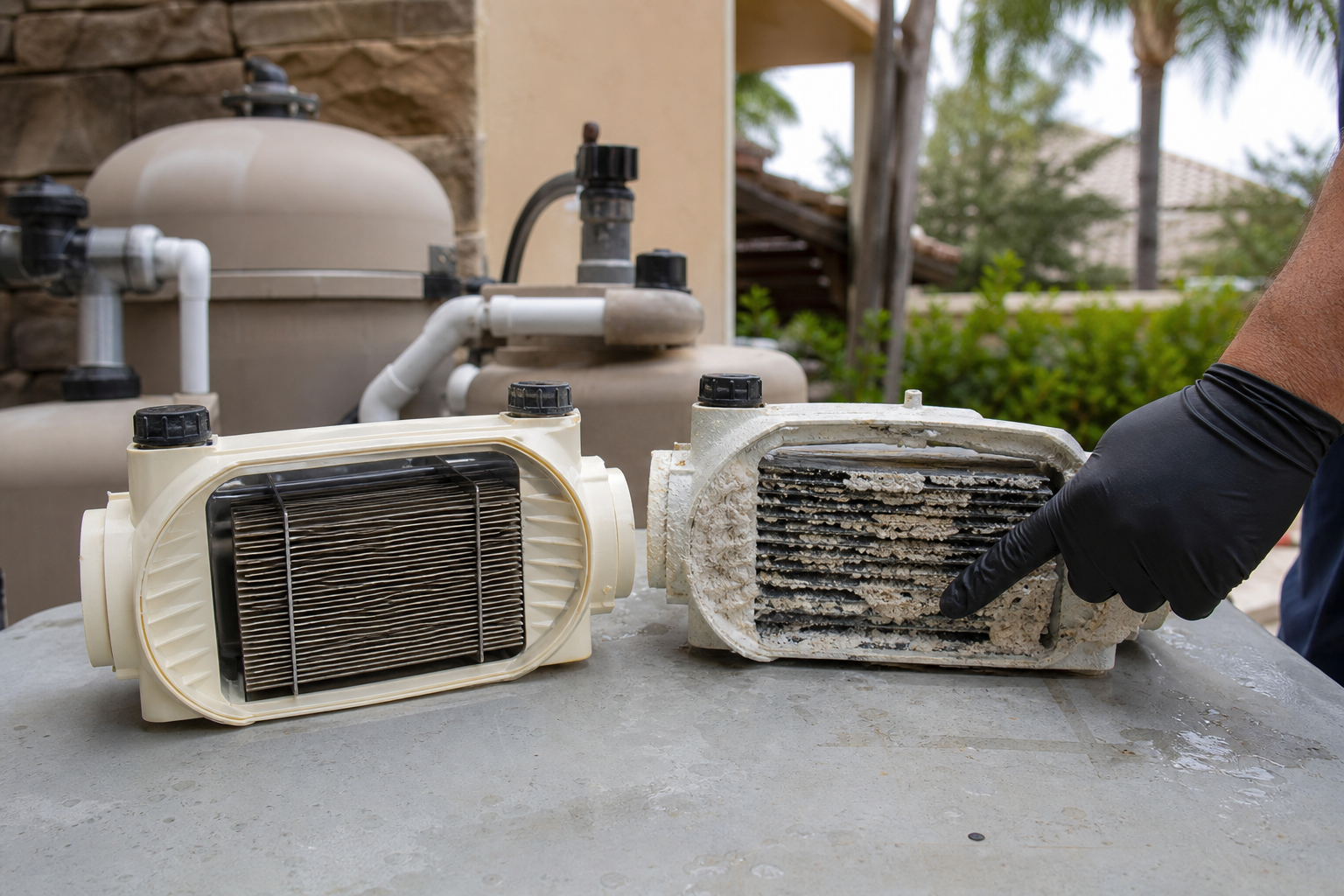
A heater is one more piece of equipment sharing water with your pump and filter. Bad water chemistry eats a heat exchanger from the inside, and high calcium scales it shut.
That means a heater raises the cost of neglect. Our page on repair versus replace shows how equipment costs stack up once you have more of it.
Freezes matter too. Heaters need the same protection as the rest of the pad, which we cover in storm and weather prep.
Get a number for your pool
A quote on your pad is worth more than any price range in an article. The gas line and the electrical are the variables.
We have been sizing and installing pool equipment in Victoria since 1968. Call (361) 575-5821 and we will come look at your pad and give you both numbers, install and run.
Frequently Asked Questions
Is a gas heater or a heat pump cheaper to run?
A heat pump is much cheaper per hour of heat because it moves heat instead of making it. Gas costs more per hour but heats far faster, so it runs for less time. Which one is cheaper for you depends on whether you heat on short notice or keep the pool warm all season.
What size pool heater do I need?
Sizing comes from your pool surface area, the water temperature you want, and whether you use a cover. Undersized heaters run constantly and never reach target. Get the size from someone who measures your pool rather than guessing from gallons alone.
Does a pool heater work in winter in South Texas?
A gas heater does, on any night of the year. A heat pump loses efficiency as the air cools and struggles below about 50 degrees, which Victoria sees from December through February.
Do I need a pool cover with a heater?
You should have one. Most heat leaves through the water surface, so a cover cuts your run time and your fuel bill more than any other single change.
Will a new gas line add to the cost?
Often, yes. Many homes do not have a gas line sized for a pool heater, and running a new one across the yard can be a large part of the quote. Ask about it before you compare prices.
Can bad water chemistry damage a pool heater?
Yes. Low pH corrodes the heat exchanger and high calcium scales it closed. Keeping the water balanced is cheaper than replacing a heat exchanger.
