
A cool front rolls through Victoria, the water temperature drops, and the pool sits quiet for a few weeks. It can feel like the season has ended. Yet the water, pump, filter, and exposed plumbing keep working whether anyone swims or not. For most local homes, pool season in Victoria, TX shifts into a lower-use phase rather than ending with a full shutdown.
Victoria’s humid subtropical climate gives pool owners long stretches of warm weather, mild winter afternoons, falling leaves, and occasional freezes. That mix calls for year-round care with seasonal changes in circulation, cleaning, and water testing. The practical plan is to reduce work when conditions allow while keeping the water sanitary and the equipment ready for the next warm spell.
Pool Season in Victoria, TX Changes Instead of Ending
Most Victoria pools stay open and full through fall and winter. Owners often swim less, but the pool still collects leaves, dust, pollen, rainwater, and organic debris. Algae can return during a warm stretch, and unbalanced water can stain surfaces or shorten equipment life even when the water looks clear.
Victoria also sits close enough to the Gulf for winter weather to change quickly. One week may bring comfortable afternoons. The next may bring a freeze watch. The University of Houston-Victoria notes that the Coastal Bend can experience periodic winter weather and cold temperatures, despite the area’s reputation for heat.
| Season | What changes around the pool | Best service focus |
|---|---|---|
| Spring | Pollen, warming water, heavier use | Test water, clean the filter, inspect equipment |
| Summer | Heat, evaporation, storms, frequent swimming | Maintain steady sanitation, circulation, and cleaning |
| Fall | Leaves, acorns, cooler water, lower use | Remove debris, adjust pump schedule, watch chemistry |
| Winter | Mild spells mixed with freeze risk | Keep water balanced and prepare exposed equipment |
Why a Victoria Pool Still Needs Winter Service
Winter service keeps water chemistry within a safe range, removes debris before it stains, and gives the equipment regular attention. Cooler water usually slows algae growth and chlorine demand, but it doesn’t stop either one. A few neglected weeks can turn a clean pool into a spring cleanup project.
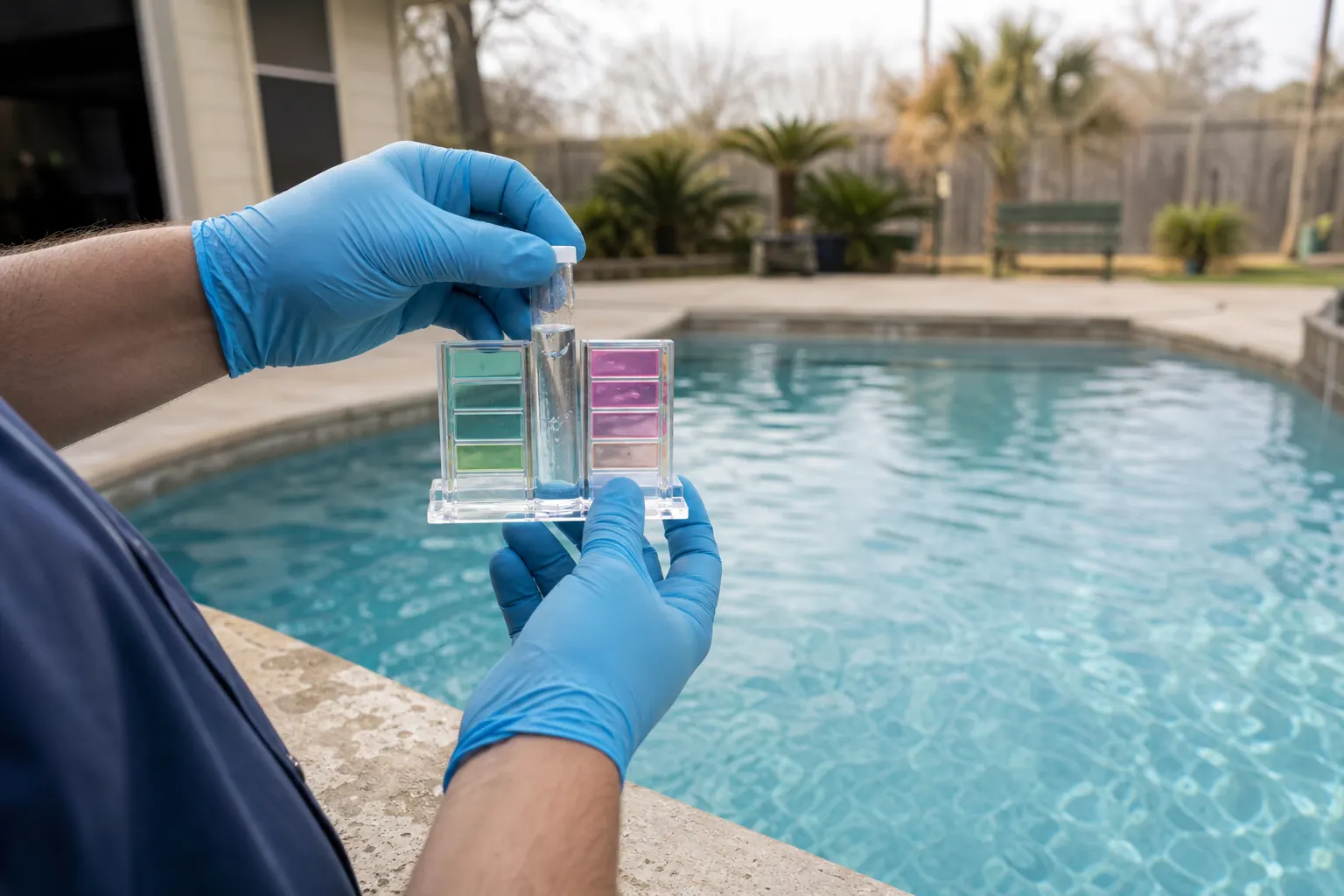
Clear water can still be out of balance
Cold water often looks clean because algae grows more slowly. Appearance alone doesn’t show pH, sanitizer level, total alkalinity, calcium hardness, or salt concentration. Poor balance can encourage scale, etching, metal staining, cloudy water, or wear on heaters and salt cells.
Test results should drive chemical changes. Victoria Pool Service offers free in-store water testing for owners who handle routine care themselves. Owners who prefer help at home can use the company’s pool cleaning and maintenance service.
Fall debris keeps moving after swimming slows down
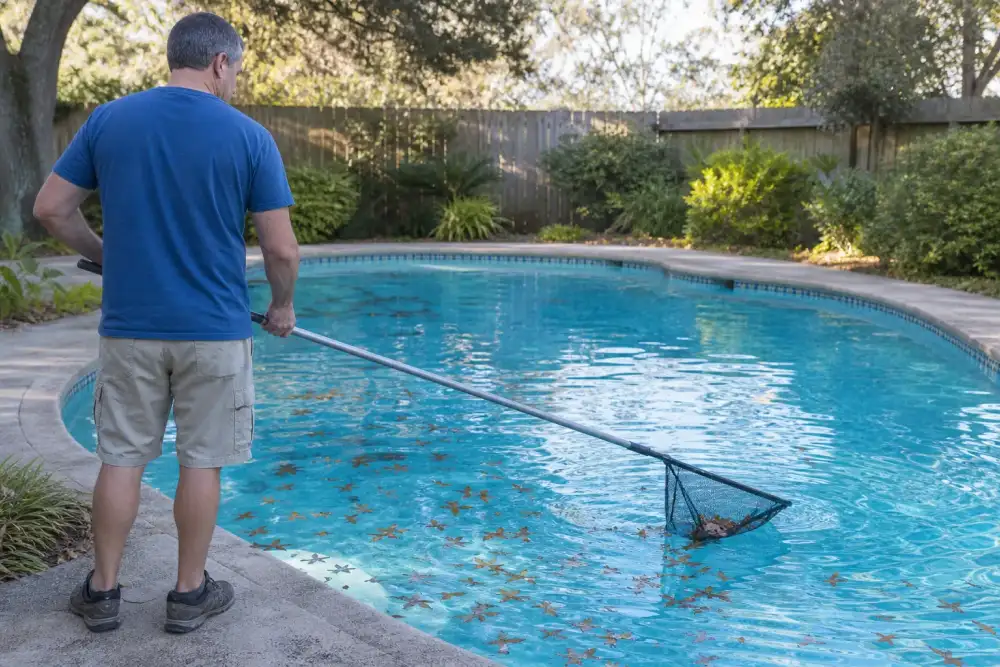
Live oak leaves, acorns, grass clippings, insects, and windblown dirt don’t follow a swim calendar. Debris left in the pool consumes sanitizer and can mark a plaster or vinyl surface. Packed skimmer baskets also restrict flow and make the pump work harder.
Skim the surface, empty baskets, brush steps and walls, and vacuum as conditions call for it. A cleaner pool also makes it easier to spot early problems such as weak return flow, air in the pump basket, or a falling water level. The company’s article on hidden signs that a pool needs attention covers clues that owners often overlook.
How Long Should the Pump Run After Summer?
There is no safe calendar date for turning a Victoria pool pump off for the season. The correct schedule depends on pool volume, pump speed, filter condition, water temperature, debris load, sanitizer system, and recent weather. Many pools can run fewer hours in cooler months, but they still need enough circulation for filtration and chemical distribution.
Variable-speed pumps add another factor because a longer low-speed cycle can move water with less power than a short high-speed cycle. Watch the pool rather than copying a neighbor’s timer. Cloudiness, surface film, weak skimming, or falling sanitizer readings tell you the schedule needs attention.
Use these checks before reducing run time
- Confirm the pump primes and the filter pressure sits in its normal range.
- Test sanitizer and pH after the shorter schedule has run for several days.
- Check skimmer action at the selected speed.
- Account for water features, cleaners, heaters, and salt systems that have their own flow needs.
- Recheck the timer after storms, heavy leaf fall, warm spells, or a change in bather load.
If the pump becomes noisy, loses prime, leaks, or trips a breaker, stop guessing. Review these common causes of pool pump trouble and schedule an inspection before a small flow issue damages other equipment.
Pool Season in Victoria, TX Still Includes Freeze Prep
Victoria doesn’t get the long, sustained freezes that drive full pool closures farther north. It does get occasional cold snaps that can damage pumps, filters, heaters, valves, and exposed PVC. Water expands as it freezes, so trapped water inside equipment can crack expensive parts.
Check local forecasts through the National Weather Service forecast for Victoria. NOAA’s U.S. Climate Normals also provide long-term temperature and freeze data by station. A watch gives you time to inspect the pad before freezing air arrives.
Before a freeze, inspect the whole water path
- Confirm freeze protection settings. Automation only helps if the sensor works, the controller has power, and every required circuit is assigned correctly.
- Keep water moving during freezing conditions. Follow the equipment maker’s directions and a local technician’s advice for your plumbing layout.
- Open valves to the correct position. Spas, cleaners, water features, and separate pumps can leave isolated lines exposed.
- Plan for a power outage. Know where the breakers and equipment drain plugs are. Don’t remove plugs from running equipment.
- Inspect after the cold passes. Look for leaks, split fittings, unusual pressure, or a pump that no longer primes.
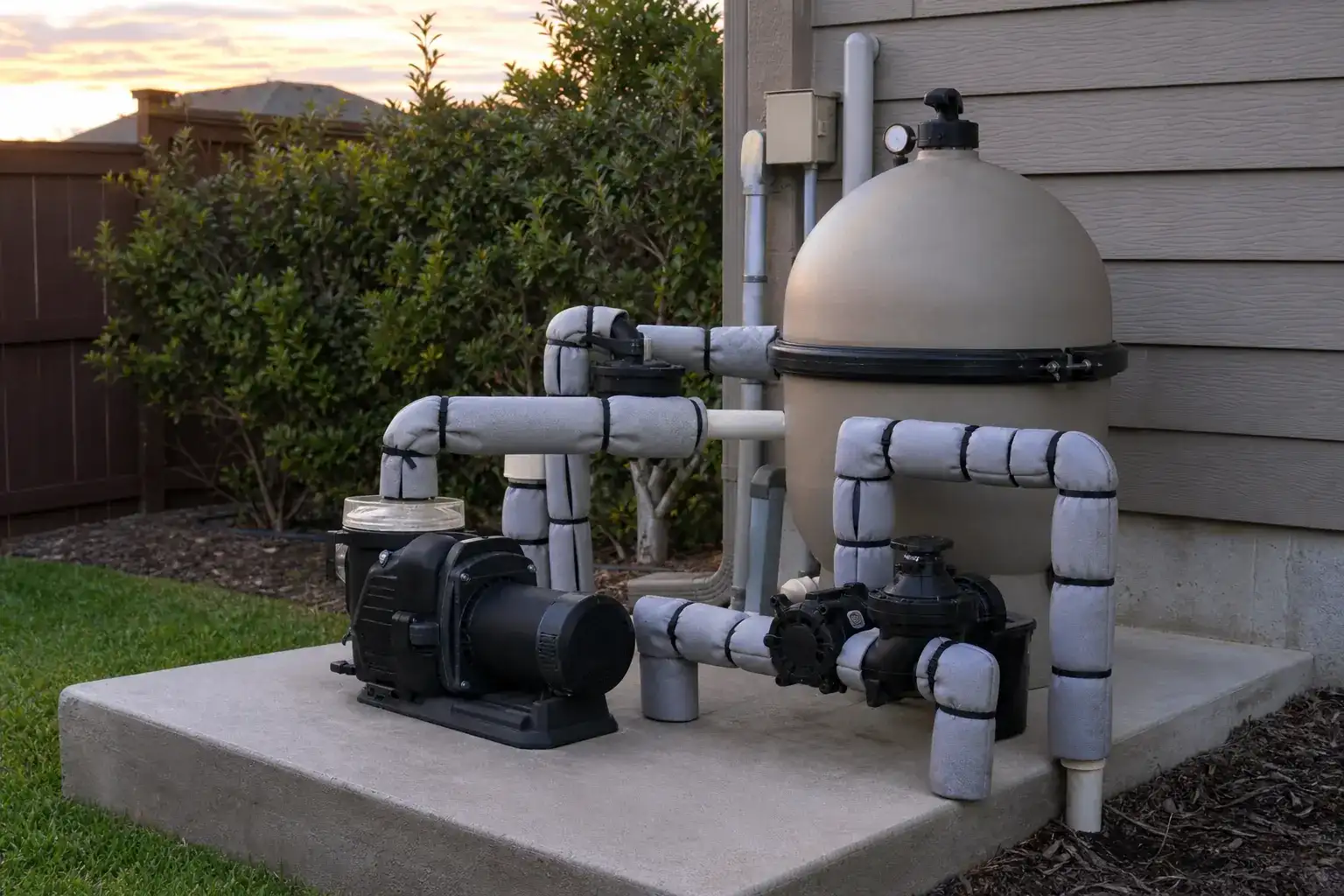
Every equipment pad is different. A pool-spa combination with a heater and water features needs a different freeze plan than a small above-ground pool. If you’re unsure which valves or plugs control each line, book pool orientation and equipment training before the forecast turns cold. Existing damage belongs with a licensed technician through pool repair and service.
Should You Close a Pool in the Crossroads?
Most in-ground pools in Victoria and the Crossroads don’t need a northern-style closure. Keeping the pool full, circulating, clean, and chemically balanced usually fits the local climate better. Full winterization may suit certain above-ground pools, seasonal properties, major renovations, or systems that will remain unattended.
Don’t drain a pool or shut off equipment based on the month alone. Groundwater, surface type, manufacturer instructions, plumbing design, and the length of vacancy all affect the decision. Owners of seasonal models can review the company’s above-ground pool options and support before storing or winterizing components.
A Practical Off-Season Pool Care Routine
A useful winter routine is lighter than peak-summer service, but it remains consistent. Check water level and clarity, remove debris, test chemistry, inspect baskets, note filter pressure, and listen to the pump. Adjust the schedule after weather changes instead of leaving one timer setting untouched until spring.
Quick takeaways for Victoria pool owners
- Keep the pool full and maintained unless a technician recommends a specific closure plan.
- Reduce pump time only after checking flow, chemistry, and debris conditions.
- Test water through winter even when it looks clear.
- Clear baskets and leaves before they restrict flow or stain the surface.
- Check freeze protection before the first cold warning, not during it.
- Arrange professional help for leaks, electrical trouble, cracked parts, or confusing valve layouts.
Final Thoughts
Pool season in Victoria, TX lasts all year from a maintenance standpoint. Keep the routine matched to the weather, and the first warm weekend won’t begin with cloudy water or a pump that won’t start. To set a fall or winter service plan, schedule pool maintenance with Victoria Pool Service or call (361) 575-5821.
Frequently Asked Questions
Do I need pool service in winter in Texas?
Yes. Texas pools still need water testing, debris removal, circulation, filter checks, and equipment inspections during winter. Victoria’s cooler water can lower chemical demand, but warm spells and organic debris still affect water quality. Winter service also helps catch freeze-protection problems before a cold front.
When should I stop running my pool pump for the season?
Most Victoria pool owners should not turn the pump off for an entire season. Reduce the schedule only after checking water temperature, flow, filter pressure, pool volume, and sanitizer readings. Run the system as directed during freezing conditions, and follow the equipment maker’s instructions.
Can you swim year-round in South Texas?
Some South Texas residents swim during warm winter afternoons, especially in heated pools. Comfort depends on water temperature, air temperature, wind, and personal preference. Test and sanitize the water before swimming after any long period of low use.
Should I close my pool in the Crossroads?
Most in-ground pools in the Crossroads stay open and maintained through winter. Full winterization may fit some above-ground pools, vacant properties, or renovation projects. Ask a local pool professional to review your surface, plumbing, and equipment before draining water or shutting down circulation.
How much does off-season pool service cost?
Off-season service depends on pool size, equipment, visit frequency, debris load, water condition, and whether repairs are needed. Victoria Pool Service evaluates the pool and recommends a service level based on its condition. Request a current estimate rather than relying on a generic figure.
Does a covered pool still need winter maintenance?
Yes. A cover reduces some debris and evaporation, but it does not test the water, clean the filter, inspect equipment, or protect plumbing during a freeze. Check water chemistry and the equipment pad on a regular schedule.
What should I do if the power goes out during a freeze?
Turn off power at the breaker if equipment stops and follow the manufacturer’s emergency winterization directions. The safe steps depend on the pump, filter, heater, valves, and plumbing layout. If you don’t know the drain points, call a pool technician before removing plugs or opening equipment.
