
A Texas pool can lose chlorine fast during hot, bright days. Add heavy swimming, debris, evaporation, or a Gulf Coast storm, and yesterday’s balanced water may need attention again. The salt water vs chlorine pool decision comes down to chlorine delivery, water balance, and equipment compatibility.
For many Victoria-area homeowners, a salt system is the more convenient choice because it makes small amounts of chlorine while the pump runs. Traditional chlorination remains a sound option for owners who prefer a simpler equipment pad and direct control over each dose. Both systems sanitize with chlorine, and both need testing.
Salt Water vs Chlorine Pool at a Glance
A salt pool uses an electrolytic cell to turn dissolved salt into chlorine. A traditional chlorine pool gets the same active sanitizer from liquid chlorine, tablets, or another approved chlorine product. Swimmers encounter chlorinated water in both pools, but the dosing method and maintenance pattern differ.
| Factor | Salt water pool | Traditional chlorine pool |
|---|---|---|
| How chlorine enters the water | A salt cell produces it while water circulates | The owner or feeder adds a chlorine product |
| Daily chlorine pattern | Small, steady production when sized and set correctly | Larger changes between doses are possible |
| Equipment | Cell, controller, flow switch, and compatible plumbing | Fewer specialized components |
| Common Texas concern | Calcium scale on the cell and rising pH | Sunlight and swimmer demand using chlorine quickly |
| Routine work | Test water, adjust output, inspect the cell, add salt after dilution | Test water, dose chlorine, clean or refill the feeder if used |
| Best fit | Owners who want automated chlorine production | Owners who favor simple equipment and hands-on dosing |
How Each System Produces Safe Pool Water
Free chlorine does the sanitizing in either setup. The Centers for Disease Control and Prevention recommends checking free chlorine and pH regularly because sunlight, swimmer waste, and debris reduce available chlorine. A salt generator changes the delivery method. It doesn’t replace filtration, circulation, brushing, or water-balance work.
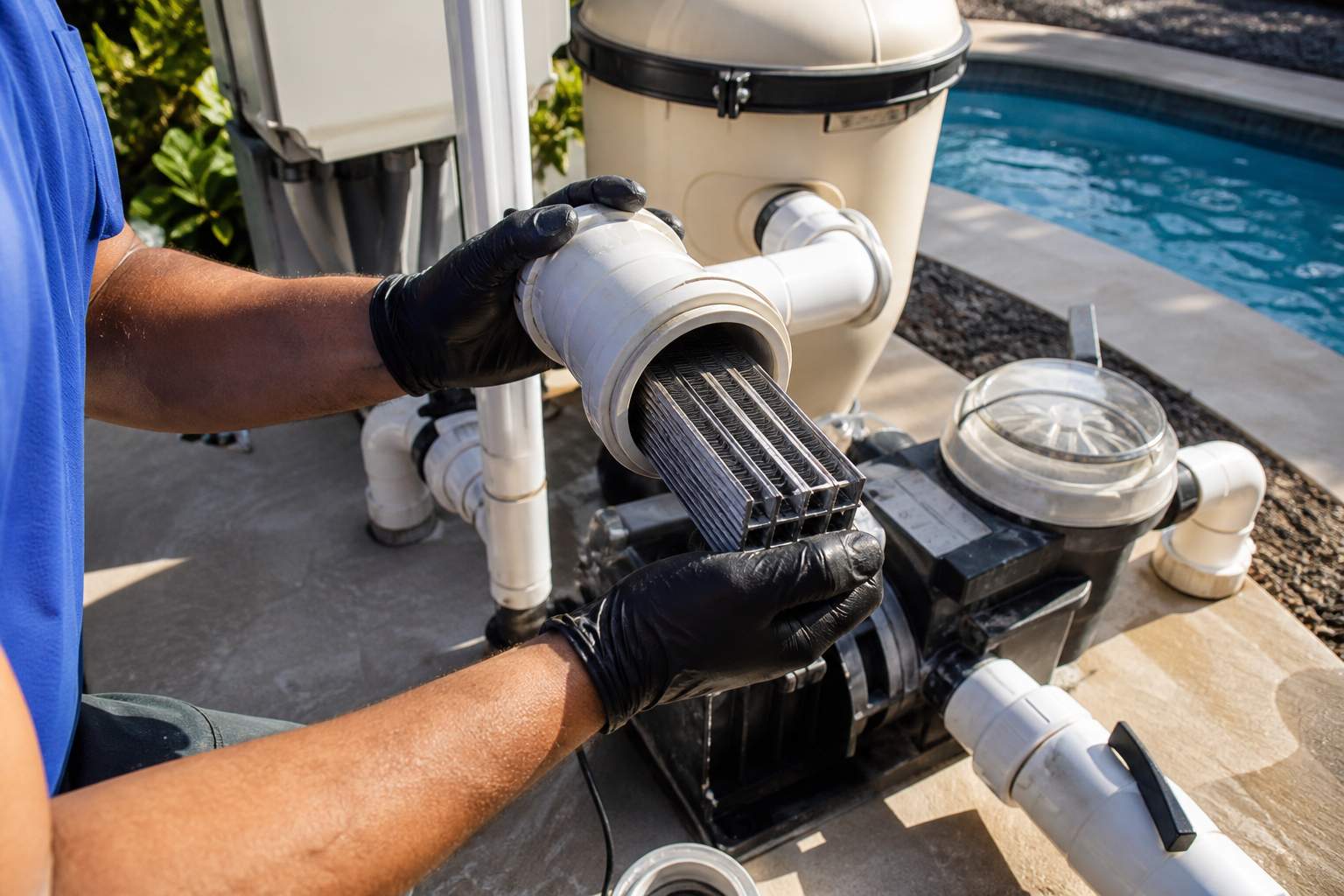
What a salt chlorine generator does
Pool-grade salt dissolves in the water and passes through an energized cell. Electrolysis converts chloride into chlorine, which sanitizes the pool and returns to chloride as the cycle continues. Most backyard salt pools taste far less salty than seawater, though the exact operating range depends on the equipment manufacturer.
The controller’s percentage setting represents production time, not a direct free-chlorine reading. A setting that works in April can fall short in July. Pump run time, cell capacity, water temperature, shade, bather load, and stabilizer level all affect the result.
How traditional chlorination works
Traditional pools receive chlorine from liquid, tablets, granules, or a feeder. Stabilized tablets can add cyanuric acid over time, while some granular products add calcium. Read the product label before treating the pool.
Direct dosing gives you quick control after a party, storm, or algae problem. Store products correctly, never mix pool chemicals, and follow the label. Victoria Pool Service carries pool chemicals and supplies for owners who maintain their own water.
Texas Heat Changes the Comparison
Long sunny days increase chlorine demand, while warm water supports faster algae growth when sanitizer drops. A salt cell can replace chlorine throughout the filtration cycle, which helps smooth out daily swings. Its output still has a ceiling. An undersized cell or short pump schedule won’t keep pace with peak summer demand.
Evaporation removes water while salt and calcium stay behind. Heavy rain can dilute salt and stabilizer. Test after major weather instead of relying on the controller display.
Victoria’s swim season stretches well beyond a short summer window. Our article on pool season in Victoria, TX explains why year-round attention pays off even when nobody swims for a few weeks.
Sunlight, stabilizer, and production capacity
Cyanuric acid protects chlorine from rapid ultraviolet loss outdoors. Too little makes either system work harder. Too much can complicate algae recovery, so the target should match the sanitizer method and pool conditions.
A salt system should have reserve capacity for hot weather. Constant maximum output uses cell life faster and leaves little room for a heat wave or busy weekend. A technician can match pool volume and pump schedule to the manufacturer rating.
Hard Water Can Shorten a Salt Cell’s Useful Life
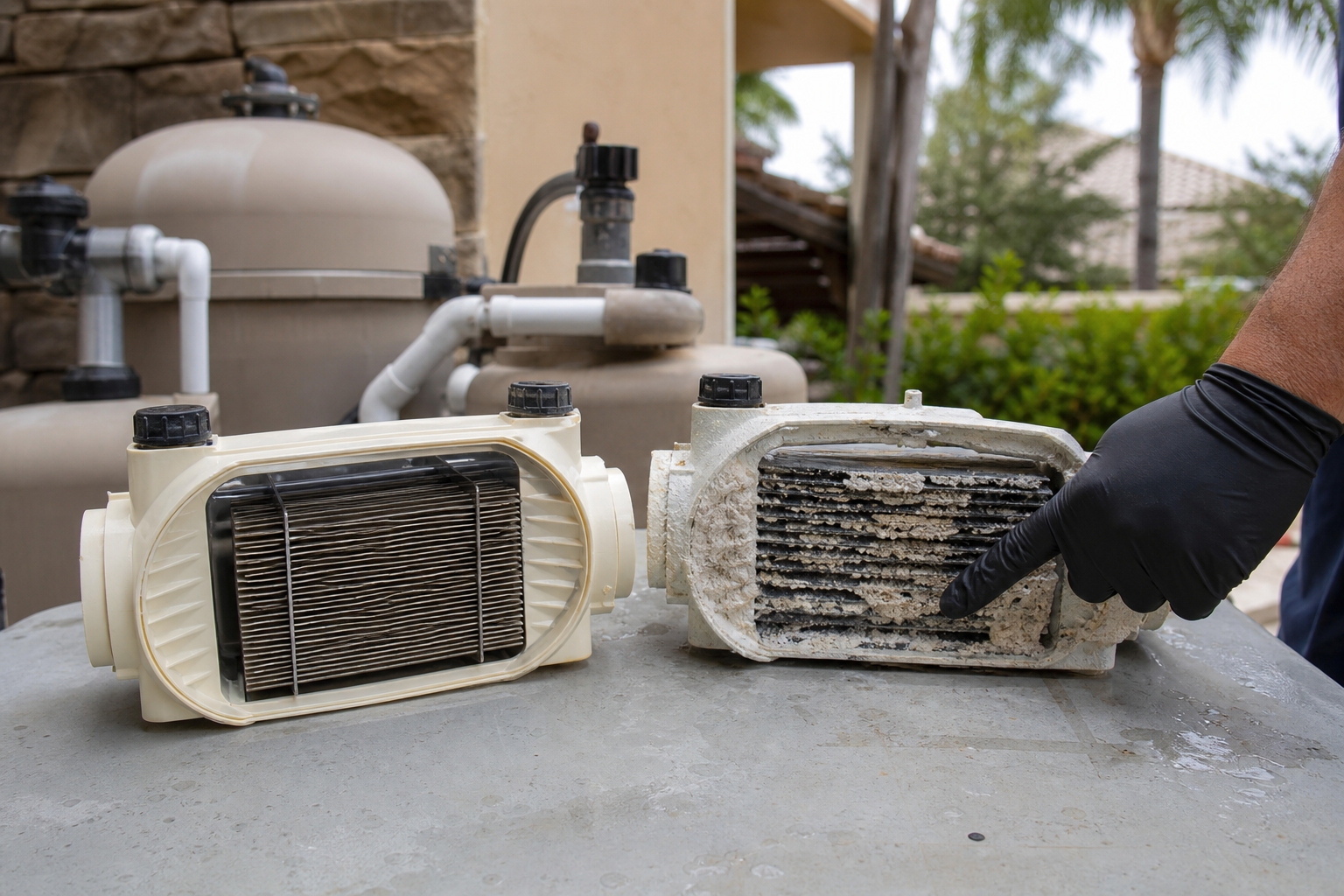
Calcium carbonate can collect on a salt cell’s coated plates, especially when calcium hardness, pH, water temperature, and total alkalinity push the water toward scale. The deposit blocks efficient chlorine production. In severe cases, it can restrict flow or damage the cell.
Hard water doesn’t rule out salt, but it raises the value of accurate testing. The U.S. Geological Survey’s water-hardness resource explains how dissolved calcium and magnesium create buildup. Salt-cell manuals call for more frequent inspection in hard-water areas.
Watch the saturation balance, not one number
Calcium hardness alone doesn’t predict scale. Pool professionals also check pH, alkalinity, temperature, and dissolved solids. The cell plates develop a high-pH environment during production, so deposits may appear there first.
Inspect the cell on schedule and when output drops. Remove deposits as directed. Pentair’s iChlor manual, for example, warns that excessive acid washing damages cell blades.
A detailed water test is a better starting point than guessing. Victoria-area owners can use our free in-store BioGuard water testing and get product guidance based on the sample.
Comfort, Odor, and Swimmer Experience
Many swimmers describe salt water as softer. Steadier sanitizer and fewer chloramines can help, but poorly balanced salt water can still sting eyes or irritate skin.
A sharp “chlorine smell” often points to chloramines, which form when chlorine reacts with swimmer waste. Good filtration, enough free chlorine, and balanced pH help control them in either system.
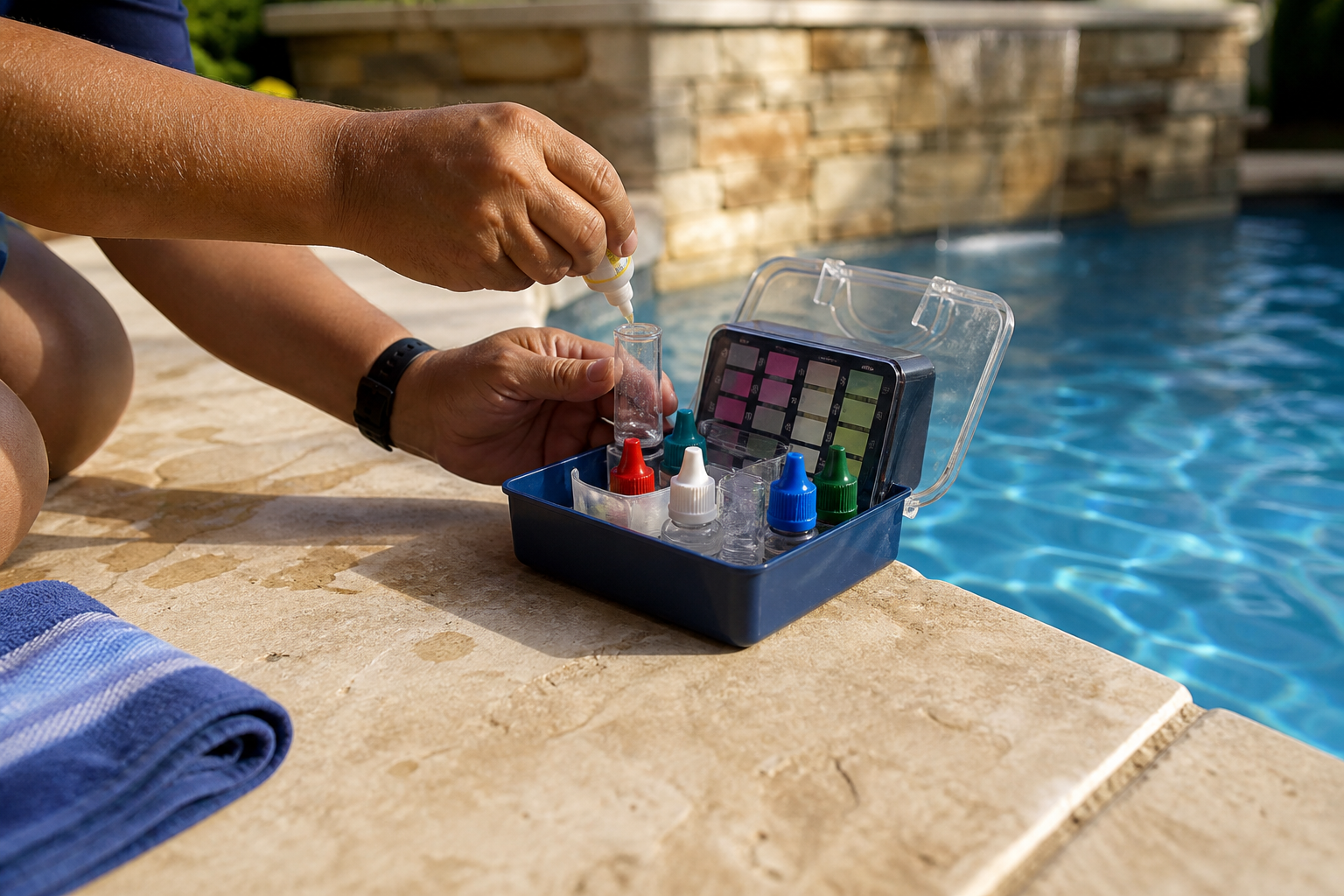
The CDC’s home pool testing guidance lists pH from 7.0 to 7.8. Test after heavy use and weather changes. Our post on why clear pool water can fool you explains what appearance can’t reveal.
Maintenance Work You’ll Still Have With Salt
A salt system automates chlorine production, not pool care. You’ll still skim, brush, vacuum, clean the filter, test chemistry, maintain circulation, and respond to storms. The cell and controller add inspection points that a traditional system doesn’t have.
- Test free chlorine and pH several times each week, with extra checks during heat, storms, and heavy swimming.
- Track total alkalinity, calcium hardness, cyanuric acid, and salt with reliable test methods.
- Adjust cell output and pump run time as seasons and swimmer demand change.
- Inspect metal fixtures, natural stone, heaters, and equipment for corrosion or scale.
- Check the cell for deposits and follow its manual for cleaning.
Owners who want these tasks handled on schedule can review our pool cleaning services and learn what weekly pool service includes.
Conversion and Equipment Compatibility
A salt conversion adds a cell, controller, flow protection, and salt. The installer checks electrical supply, bonding, plumbing, automation, heater, pool finish, metalwork, nearby stone, and manufacturer restrictions.
Older equipment deserves a closer look. Splash-out and poor bonding can speed metal corrosion, while soft natural stone may suffer near the waterline. The conversion plan should address those materials.
If the equipment pad already has leaks, weak circulation, or aging controls, schedule an inspection first. Victoria Pool Service provides pool maintenance and repairs, plus pool orientation and training for owners who want to run their system with confidence.
Which Pool System Fits Your Household?
Salt usually fits an owner who wants steady chlorine production, swims often, and accepts cell inspection plus water-balance work. Traditional chlorine fits an owner who wants fewer specialized parts, prefers direct dosing, or has materials that make salt exposure a poor match.
Salt may fit you if
- You want less frequent handling of chlorine products during normal operation.
- Your pump schedule can support enough chlorine production in peak heat.
- You’ll test pH, calcium balance, and salt instead of treating the system as hands-off.
- Your equipment, metalwork, and deck materials are compatible.
Traditional chlorine may fit you if
- You prefer a simpler equipment setup with no cell to replace.
- You’re comfortable dosing and storing pool chemicals safely.
- You want quick, direct adjustments after changing swimmer demand or weather.
- Your pool has materials or equipment that need extra caution around salt.
Key Takeaways for Texas Pool Owners
- Both systems sanitize with chlorine. Salt pools make chlorine on site.
- Texas sun and warm water increase sanitizer demand in either pool.
- Salt systems can keep chlorine delivery steadier, but cell capacity and pump time set the limit.
- Hard fill water and rising pH can create calcium scale on salt cells.
- Water testing, circulation, filtration, and cleaning remain required with either system.
- The best choice depends on the existing equipment, pool materials, and the owner’s preferred maintenance routine.
Final Thoughts
For many Victoria-area pools, a correctly sized salt system offers welcome convenience through the Texas summer. A traditional chlorine setup remains dependable and easier to troubleshoot when owners keep a close testing and dosing routine. Before converting or selecting equipment for a new pool, contact Victoria Pool Service for a pool-specific inspection and recommendation.
Frequently Asked Questions
Is a salt water pool cheaper than chlorine?
Salt systems can reduce routine chlorine-product purchases, but they add a generator and a cell that wears out. Long-term ownership depends on pool size, swim season, cell life, electricity, and maintenance.
Are salt pools better for your skin?
Many swimmers find balanced salt water gentler because sanitizer levels stay steadier. Either pool can irritate skin and eyes when pH or chlorine drifts out of range.
How much does it cost to convert to salt water?
Conversion scope depends on pool volume, equipment capacity, automation, electrical work, plumbing, and equipment condition. An on-site evaluation defines the required work without relying on a one-size-fits-all figure.
Do salt cells last as long in hard water?
Calcium scale and frequent acid cleaning can shorten cell life. Balanced water, regular inspection, and manufacturer-approved cleaning help protect the plates.
Is a salt pool really chlorine-free?
No. A salt chlorine generator converts chloride in dissolved salt into chlorine. The pool still relies on free chlorine to control germs and algae. The difference lies in how chlorine enters the water.
Can a salt system keep up with Texas summer heat?
Yes, if the cell has enough capacity and the pump runs long enough. Stabilizer, shade, swimmer load, debris, and cell condition affect production, so verify it with a water test.
Can I convert an older pool to salt?
Many older pools can be converted after a technician checks the finish, heater, metal fittings, bonding, plumbing, and deck materials. Repair existing corrosion, leaks, or scale first.
