Most pool water treatment products fall into five groups: sanitizer, pH control, alkalinity control, calcium hardness control, and algae or stain prevention.
A pool store aisle can make water care look harder than it is. There are bottles for cloudy water, green water, stains, foam, scale, metals, phosphates, chlorine lock, and a dozen other problems. Some products earn a place on the shelf. Others belong there only after a water test points to a real issue.
The better order is simple: test first, treat what the water actually needs, then keep the pool filtered and brushed. If you want a cleaner read before buying chemicals, Victoria Pool Service offers free water testing and BioGuard water testing for pool owners.
Fast Answers for Pool Owners
A basic pool chemical setup should handle sanitizer, pH, alkalinity, calcium hardness, shock, and testing before specialty products enter the picture.
- Most pools need sanitizer, pH adjuster, alkalinity adjuster, calcium hardness control, shock, and a test kit.
- Algaecide can help with prevention or cleanup, but it does not replace chlorine.
- Clarifier, phosphate remover, and stain products should follow test results, not guesswork.
- Clear water can still be unsafe if sanitizer and pH are out of range.
Which Pool Water Treatment Products Do Most Pools Need?
The core pool water treatment products are sanitizer, shock, pH control, alkalinity control, calcium hardness control, and reliable testing supplies.
Think of these as routine water care, not emergency fixes. They help control germs, keep water comfortable, protect surfaces, and reduce the chance of equipment damage. For local product help, the Pool Chemicals and Supplies page is the closest match on the Victoria Pool Service site.
| Product Type | What It Does | How Often | Best Use |
|---|---|---|---|
| Chlorine or bromine | Kills germs and controls organic waste | Routine | Day-to-day sanitation |
| Shock | Raises sanitizer fast | As needed | After storms, heavy use, or algae |
| pH increaser or decreaser | Keeps water comfortable and sanitizer working | As tests show | Correcting high or low pH |
| Alkalinity increaser | Helps pH stay steadier | As tests show | Stopping pH swings |
| Calcium hardness product | Protects plaster and equipment from aggressive water | As tests show | Balancing low calcium |
| Algaecide | Helps prevent or treat algae | Sometimes | Algae-prone pools |
| Clarifier | Helps the filter catch tiny particles | Sometimes | Mild cloudiness |
What Does Sanitizer Do in Pool Water?
Sanitizer kills germs, breaks down organic waste, and keeps pool water safer between cleaning visits and filter cycles.
For most residential pools in the USA, sanitizer means chlorine. Some pools use bromine, salt chlorine generators, mineral systems, UV, or ozone. Even then, the water still needs an approved sanitizer residual in the pool.
Chlorine comes as tablets, liquid, or granular products. Tablets dissolve slowly. Liquid chlorine works fast. Granular chlorine can serve routine treatment or shock, depending on the label. The mistake many homeowners make is treating chlorine as the only number that counts. Chlorine works best when pH is in range.
The CDC recommends regular home pool and hot tub testing for disinfectant and pH levels. Their home pool water treatment advice is plain, but it prevents a lot of bad water.
Why pH and Alkalinity Should Be Checked Early
pH affects swimmer comfort, chlorine strength, scale, corrosion, and cloudy water. Total alkalinity helps pH stay steady.
A pool with high pH can look dull, feel rough on skin, and make chlorine weaker. A pool with low pH can irritate eyes and damage metal parts over time. Total alkalinity acts like a buffer, so the two readings belong together.
Use pH increaser when pH is low. Use pH decreaser when pH is high. Use alkalinity increaser when total alkalinity is low and pH keeps bouncing. Do not add three products at once because the water looks off. Test, adjust one issue, circulate, then retest.
If your pool keeps drifting out of balance, regular pool cleaning and maintenance can catch patterns before they turn into green or cloudy water.
Do You Need Pool Shock?
Pool shock helps after heavy swimming, storms, algae growth, body oils, sunscreen load, or a low sanitizer reading.
Shock is a higher-dose sanitizer treatment. It burns through contaminants faster than routine chlorination. Many pool owners use it weekly during hot weather, but timing should still depend on pool use and test readings.
Shock can help when the pool smells strongly of chlorine, water looks hazy, free chlorine is low, algae is starting on steps, or a storm dropped debris into the pool. A strong chlorine smell often points to chloramines, not clean water. Shock can help clear that up when used according to the label.
Which Pool Water Treatment Products Can You Skip?
Most pool owners can skip specialty products until a test result or visible symptom proves they need them.
You probably do not need a cart full of weekly additives. A well-filtered pool with steady sanitizer and balanced pH usually needs fewer products than people expect.
- Skip clarifier when low chlorine or a dirty filter is causing cloudy water.
- Skip algaecide when sanitizer, brushing, and filtration already control algae.
- Skip phosphate remover before phosphate testing.
- Skip stain remover before checking for metals.
- Skip enzymes unless oils, lotions, or scum lines keep returning.
For algae problems, this related article on why pool water turns green gives a more focused cleanup path.
What Should You Test Before Buying Chemicals?
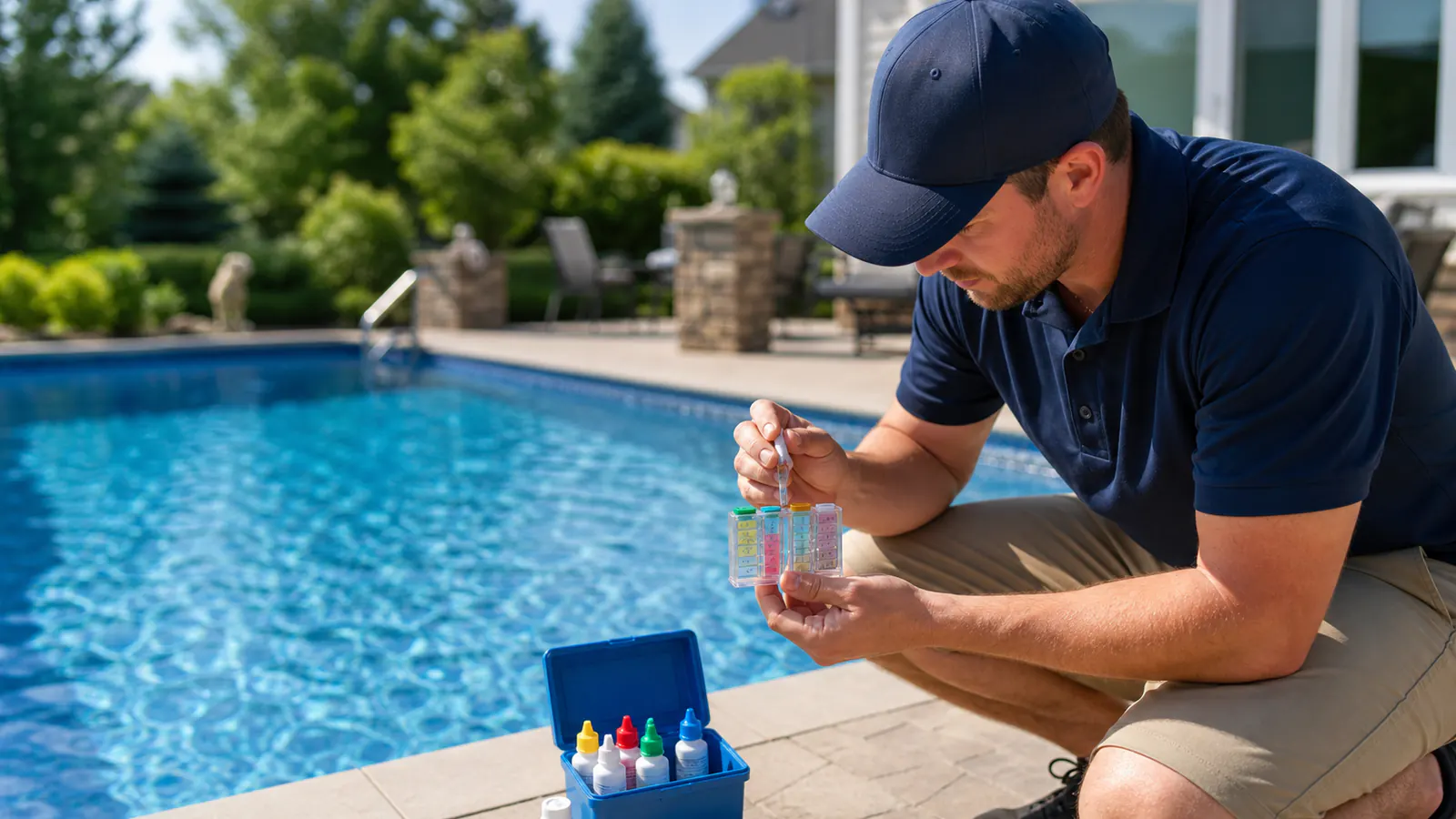
Test sanitizer, pH, total alkalinity, calcium hardness, cyanuric acid, and, when needed, metals or phosphates.
Basic strips are fine for quick checks, but they are not perfect. Liquid kits and in-store testing give better detail. Pool owners who keep fighting the same problem should bring a water sample to a store before buying another bottle blindly.
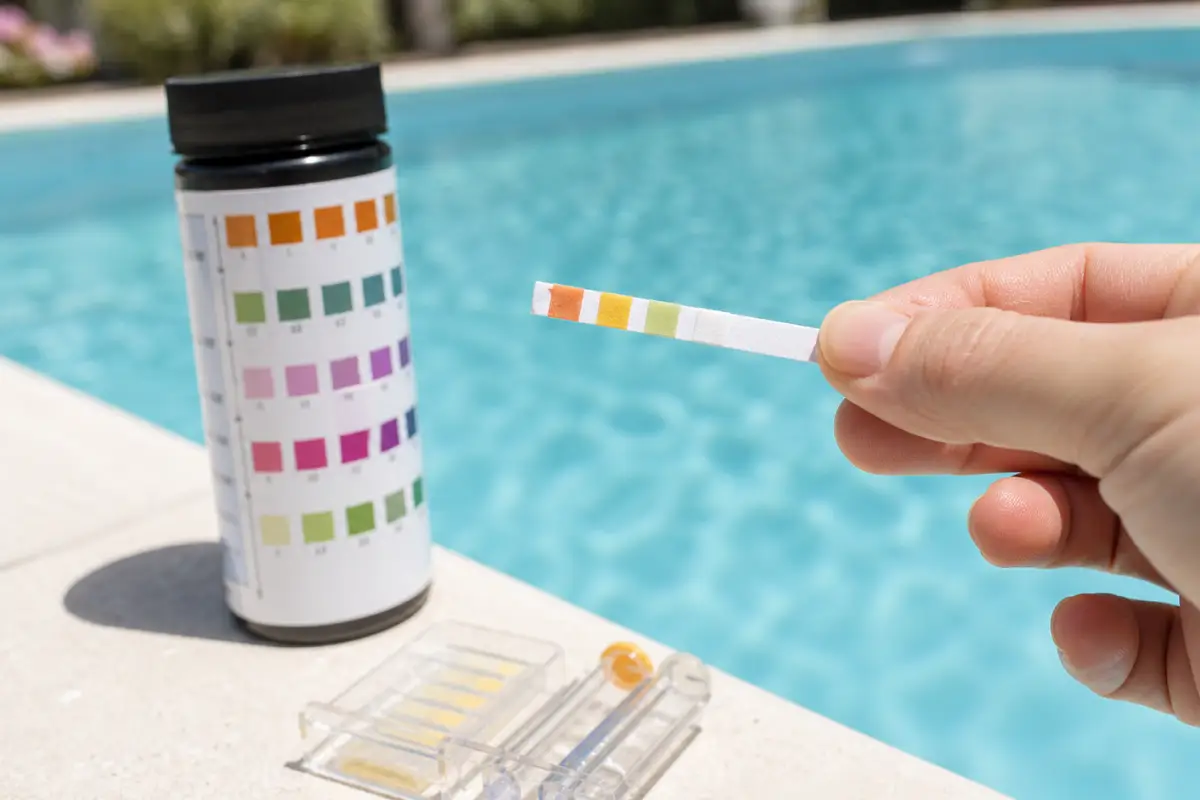
Take water from elbow depth, away from returns. Test after storms, heavy swimming, algae treatment, or large chemical changes. Keep strips dry and replace expired kits. Clear water can fool you, which is why Victoria Pool Service also explains why clear pool water can still be unsafe.
A Simple Buying List for Home Pool Owners
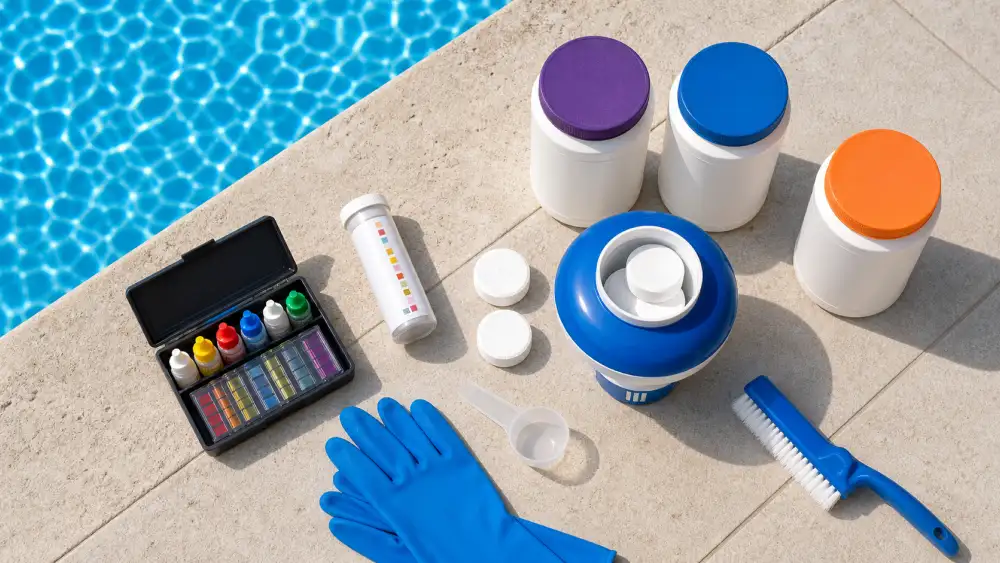
A practical starter kit includes sanitizer, shock, pH control, alkalinity increaser, calcium hardness product, and a test kit.
- Chlorine tablets or liquid chlorine
- Pool shock
- pH increaser and pH decreaser
- Alkalinity increaser
- Calcium hardness increaser, if your pool surface needs it
- Test strips or a liquid test kit
- Gloves, a clean scoop, and safe storage
Store chemicals in a cool, dry, ventilated area. Keep lids tight. Never mix chemicals together in a bucket. Add each product according to its label, and let the pump circulate water between treatments. The EPA also explains why users should follow pesticide label directions for registered products, including many disinfectants and algaecides.
Victoria Pool Service has a Supply Store page for pool owners who want help matching products to their pool.
Final Thoughts
Pool water treatment products work best when they follow testing, not guessing.
Start with sanitizer, pH, alkalinity, calcium hardness, shock, and reliable testing. Add specialty products only when the water proves they are needed. For recurring water problems, Victoria Pool Service can help with pool chemicals and supplies, testing, cleaning, and repair support.
FAQs
What are the main pool water treatment products every pool owner should have?
Most pool owners should keep sanitizer, shock, pH adjusters, alkalinity increaser, calcium hardness product, and a reliable test kit. Specialty products can wait until testing shows a specific problem.
Is chlorine enough to keep pool water clean?
Chlorine is the main sanitizer for many pools, but it works best when pH, alkalinity, filtration, and brushing are also under control. Chlorine alone will not fix every water issue.
How often should I test my pool water?
During warm weather, test sanitizer and pH two to three times per week. Test after storms, heavy swimming, algae treatment, or any large chemical adjustment.
Do I need algaecide every week?
Many pools do not need weekly algaecide if sanitizer, pH, brushing, and filtration are steady. Algaecide is more useful for prevention in algae-prone pools or as support during cleanup.
Why is my pool cloudy after adding chemicals?
Cloudiness can come from unbalanced pH, low sanitizer, dead algae, dirty filters, poor circulation, or too many products added too quickly. Test the water before adding clarifier.
Should I use liquid chlorine or tablets?
Liquid chlorine works fast and does not add stabilizer. Tablets dissolve slowly and are convenient, but many add cyanuric acid. The better choice depends on your test readings and pool routine.
Can I add pool chemicals at the same time?
Avoid adding multiple chemicals at the same time unless the labels say it is safe. Add one product, let the pump circulate, then retest when the product has had time to mix.
