
Shocking means raising chlorine far above the everyday 1 to 3 parts per million, fast enough to burn through sweat, sunscreen, algae and everything else the water is carrying.
Adding the shock takes ten minutes. A bleached spot on the plaster, or a heater corroded by shock poured through the skimmer, costs far more to fix, so the details below matter.
When to shock
Shock after a crowded swim day or a heavy rain, and any time the water turns cloudy or green.
A strong chlorine smell is another reason to shock, odd as that sounds. That smell is chloramines, which form when your chlorine has been spent breaking down sweat and urine, and a shock burns them off.
Once a month is enough for a pool nobody swims in. Weekly is closer to right for a busy pool in a hot South Texas July.
Test first
You need free chlorine and pH readings before you start. Bring pH to 7.2 to 7.4 first, because chlorine works faster at lower pH; shock added to water at 8.0 loses most of its strength before it does any work.
Take the sample from elbow depth using the method in how to test pool water.
Cal hypo, dichlor or liquid
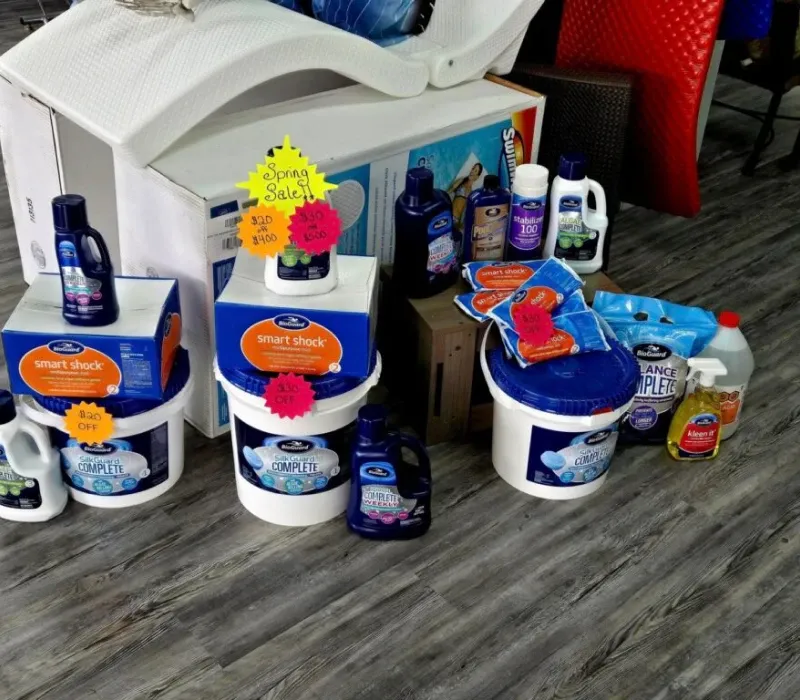
Calcium hypochlorite is the common one. It is cheap and strong, and it adds calcium to the water. On a pool that is already hard, that calcium builds up over the years, and our post on calcium hardness explains where that ends.
Dichlor dissolves fast and is gentler on vinyl. It adds stabilizer instead of calcium, about 0.9 ppm of stabilizer for every 1 ppm of chlorine, so regular dichlor shocks push stabilizer past the 30 to 50 ppm target.
Liquid chlorine adds no calcium and no stabilizer, and it is what we use on most service pools.
How much and when
For 10,000 gallons, one pound of 65% cal hypo raises free chlorine about 8 ppm, which makes a sound routine shock. Light green water needs about 10 ppm, or roughly 1.25 pounds, and dark green needs 20 ppm or more, which is about 2.5 pounds of cal hypo or 2 gallons of 10% liquid. The full sequence for algae is in how to clear a green pool.
Scale the dose to your pool. A 20,000-gallon pool is twice the 10,000-gallon figures, so a routine 10 ppm shock there takes about 2 gallons of 10% liquid chlorine or about 2.5 pounds of cal hypo. Measure the gallons once and write the number on the pump room wall.
Stabilizer changes the target. Cyanuric acid holds chlorine in a weaker form, and a common rule puts the shock level at about 40% of the stabilizer reading. A pool at 80 ppm stabilizer needs about 32 ppm to kill algae, and shocking leaves the stabilizer where it was. When you test at those levels, a standard DPD kit or a strip can bleach out and read falsely low; an FAS-DPD drop kit gives the real number.
Shock at dusk. In water with no stabilizer, strong sun can burn off about half the chlorine in under an hour; stabilizer at 30 to 50 ppm slows that loss a lot, but even a stabilized pool loses more at noon than overnight. Run the pump all night afterwards.
The two mistakes that cost money
Never put shock in the skimmer. It hits the pump and heater at full strength and corrodes the metal inside.
Granules thrown straight into the pool sink, sit on the plaster and bleach a permanent white spot. Dissolve cal hypo in a bucket first: water in the bucket, then the shock, always in that order. Pour the mix slowly around the deep end with the pump running.
Storing shock safely
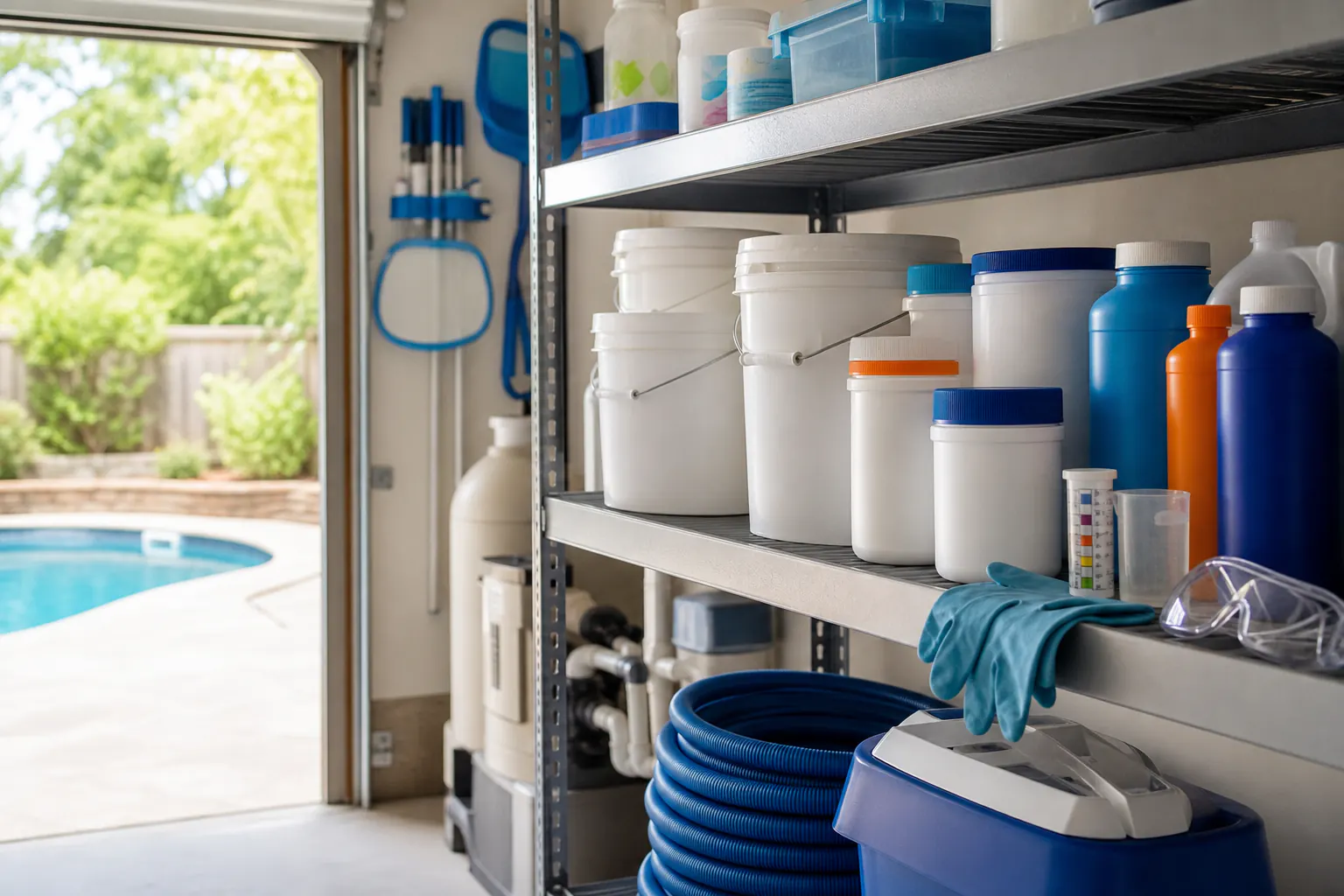
Keep cal hypo dry, cool and sealed, on a separate shelf from tablets and acid. Cal hypo mixed with trichlor tablets or a few drops of acid can heat up, give off chlorine gas and start a fire, so give each chemical its own scoop and never pour one product into a bucket that held another. Liquid chlorine loses strength in heat, and a jug sitting in a July garage in Victoria weakens within weeks. Buy what you will use in about a month and store it in the shade.
If the chlorine disappears overnight
Test free chlorine at dusk after the shock, then again at sunrise before the sun hits the water. A drop of more than 1 ppm overnight means something in the pool is still eating chlorine, usually algae you cannot see yet or a heavy load of chloramines. Bring the level back up, brush the walls and steps, and repeat the overnight test until the loss stays under 1 ppm.
Getting back in the water
Swim once free chlorine falls back to 1 to 3 parts per million, usually eight to twenty four hours after a routine shock. Test before anyone gets in, since smell tells you little about the reading.
If the water is still cloudy two days after a full shock, bring a pint from elbow depth for free water testing and tell us how much shock went in and when.
Frequently Asked Questions
How much shock does a pool need?
One pound of cal hypo per 10,000 gallons raises chlorine about 8 ppm, a normal routine shock. Light green water needs about 10 ppm, and dark green needs 20 ppm or more, about 2.5 pounds per 10,000 gallons.
What time of day should I shock a pool?
At dusk. Strong sun can burn off half the chlorine in unstabilized water in under an hour, and even a stabilized pool loses more during the day than overnight.
Can I put shock in the skimmer?
Keep it out of the skimmer. Undissolved shock goes straight through the pump, filter and heater at full strength and corrodes the metal inside. Dissolve it in a bucket first.
How long after shocking a pool can you swim?
Wait until free chlorine drops back to 1 to 3 parts per million, usually eight to twenty four hours. Test it before anyone swims.
Why does my pool smell like chlorine after shocking?
That smell is chloramines, which form when chlorine is used up breaking down sweat and other waste. A strong smell means the pool needs more chlorine to finish the job.
Is pool shock the same as chlorine?
Most shock is chlorine sold in a concentrated, fast-dissolving form: cal hypo, dichlor or liquid. The difference is the dose. A non-chlorine shock (potassium monopersulfate) burns off chloramines and lets you swim sooner, and it leaves algae alive.
How often should I shock my pool?
Weekly in a hot Texas summer with regular swimmers, monthly for a quiet pool, and always after heavy rain or a crowded swim day.
