
Every pool heater sits in the same spot in the plumbing: water leaves the filter, picks up heat and flows back to the pool. What separates gas heaters, heat pumps and solar is the heat source, which sets how fast the pool warms, what it costs to run and what tends to break.
The path water takes
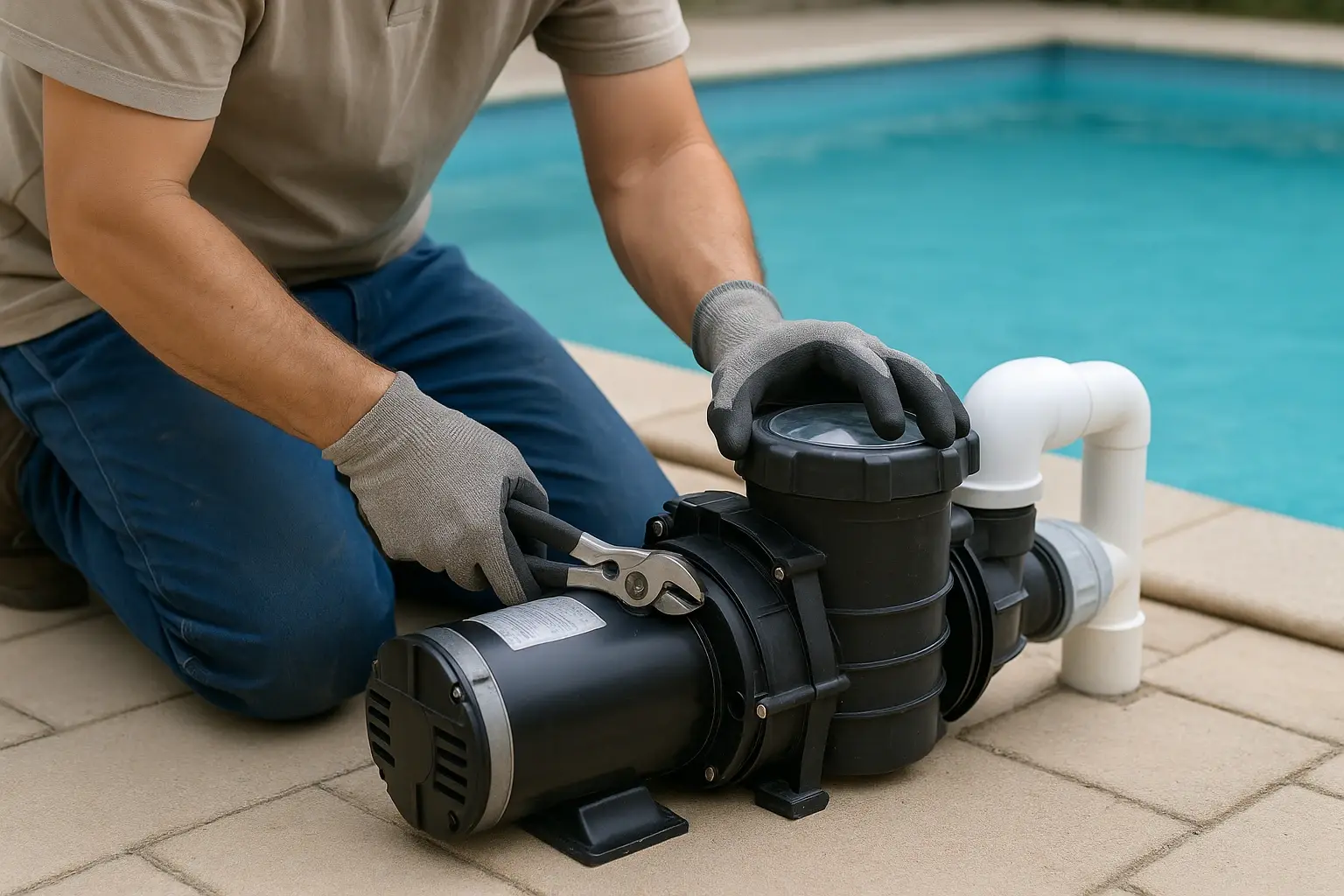
Water runs from the skimmer to the pump, through the filter and the heater, then back out the returns. The heater sits last because dirt would foul the inside of it, so the filter cleans the water first.
A heater needs flow to fire. With a dirty filter or a packed basket, its pressure switch shuts it off, so the pressure check in how to backwash a pool filter matters for heating too.
Gas heaters burn fuel
Natural gas or propane feeds a burner, and the flame heats a coil called a heat exchanger, usually copper, with your pool water running through it. Most residential gas pool heaters are rated somewhere around 250,000 to 400,000 BTU per hour.
That output makes gas fast. A gas heater can lift a pool a degree or two an hour whatever the air temperature, which makes it the right pick for a spa or for a pool you heat a few weekends a year and want warm today.
The arithmetic shows why gas is quick. A gallon of water weighs about 8.3 pounds and one BTU warms a pound by one degree, so a 15,000 gallon pool needs about 125,000 BTU per degree. A 400,000 BTU heater puts roughly 330,000 of that into the water after flue losses, about two and a half degrees an hour on paper; a breezy night and an uncovered surface pull the real figure back toward one or two.
Running one all season gets expensive on propane, and the operating costs are laid out in what a pool heater costs in South Texas.
Heat pumps move heat instead
A heat pump pulls warmth out of the air and moves it into the water. A fan draws air across a coil full of refrigerant, the refrigerant absorbs that warmth, and a compressor squeezes it to raise its temperature. A second coil, usually titanium, passes the heat to your pool water.
In 80 degree air, the standard rating condition, a heat pump delivers roughly five to six units of heat for each unit of electricity, and that ratio falls as the air cools. Below about fifty degrees it slows down enough that it is hardly worth running.
A 100,000 BTU heat pump on that same 15,000 gallon pool works out to under one degree an hour before losses, so it suits holding a set temperature through the season.
Victoria sees few days that cold during swim season, so a heat pump covers most of our year at a low running cost.
Solar borrows it from the roof
Pool water is pumped through black collector tubing on the roof, warms in the sun and comes back. Solar costs nothing to run, but a cloudy week leaves the water where it was, so it works best as a season stretcher alongside a gas heater or heat pump.
What breaks and why
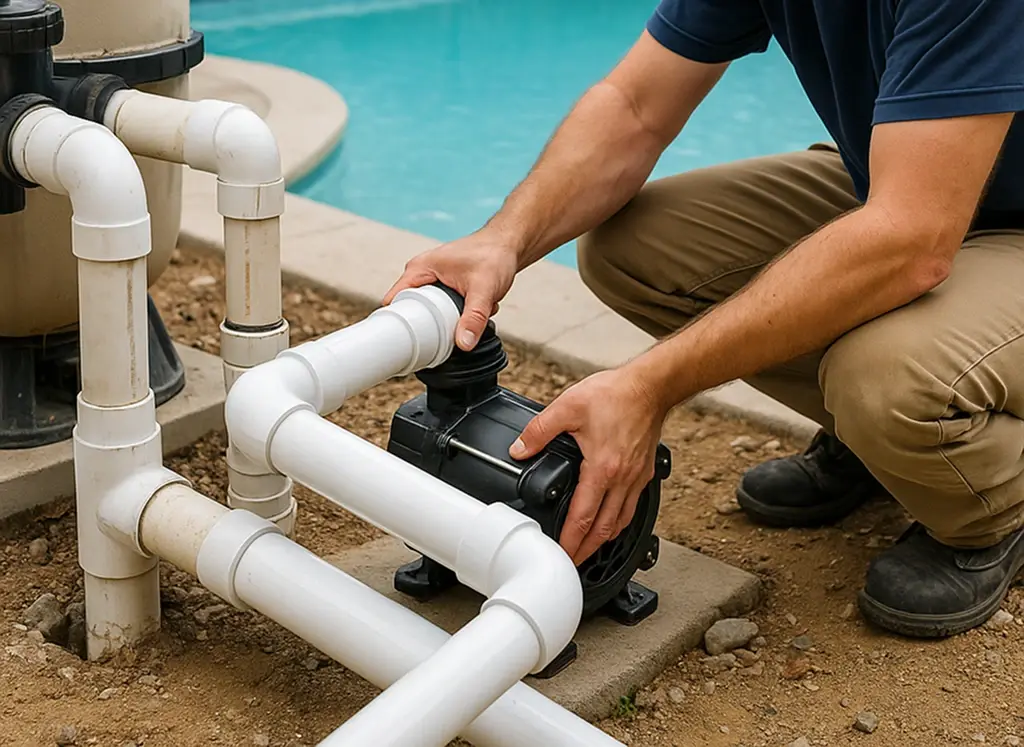
Scale inside the heat exchanger is the top killer. Hard water leaves a crust that chokes the flow and overheats the coil, and the numbers that prevent it are in our guide to calcium hardness in pool water.
Low pH is the other one for gas heaters, because acidic water corrodes their copper exchangers from the inside. Keep pH at 7.4 to 7.6 and keep trichlor tablets out of the skimmer, where they send acidic water straight through the heater. Heat pump exchangers are mostly titanium and hold up far better.
A heater that shuts off on low flow usually has a dirty filter or a full basket behind it, and it fires again once the flow comes back.
Store chlorine and muriatic acid away from the equipment pad. Their fumes rust the heater cabinet and eat at the control board and wiring.
If the heater will not fire
Confirm the pump is running and the pressure gauge reads normal, the water covers the skimmer opening, and the thermostat is set above the current water temperature. On a gas unit, check that the gas valve is open, or that the propane tank has fuel. If the plumbing has a bypass valve, make sure it sends water through the heater. Most newer heaters show a code on the display; write it down, because it tells our technician which part to bring.
Have yours looked at before winter
A heater that sat all summer often fails to fire on the first cold night, and November is a better time to find that out than January.
Our heater repair technicians hold Texas RAIL licenses, which cover heater installation and repair. When you call (361) 575-5821, have the brand and model off the heater’s rating plate and tell us whether it is gas, propane or a heat pump.
Frequently Asked Questions
How does a pool heater heat the water?
Water leaves the filter and passes through the heater on its way back to the pool. A gas heater burns fuel to warm a copper coil, a heat pump pulls warmth out of the air, and solar warms the water on the roof.
Which is better, a gas heater or a heat pump?
Gas heats fast in any weather and suits spas or occasional use. A heat pump costs far less to run but slows down below about fifty degrees. In Victoria a heat pump covers most of the season.
How long does a pool heater take to warm a pool?
A gas heater lifts a typical pool one to two degrees an hour. A heat pump is slower, often taking a day or more to raise a cold pool to swimming temperature.
Why does my pool heater keep shutting off?
Most often low flow. A dirty filter, a packed skimmer basket or a low water level trips the pressure switch and the heater shuts down to protect itself.
What ruins a pool heater?
Scale inside the heat exchanger from hard water, and on gas heaters, low pH eating the copper exchanger. Keeping calcium hardness and pH in range is the cheapest heater protection there is.
Can I run a pool heater with a solar cover?
Yes, and you should. A cover holds the heat you paid for overnight, which cuts run time on any heater by a large margin.
Is my heat pump leaking?
A running heat pump drips condensation off its air coil, often a lot of it on humid days. Test the puddle with a chlorine strip: plain condensate shows no chlorine, while a leak in the water side shows the same reading as the pool.
