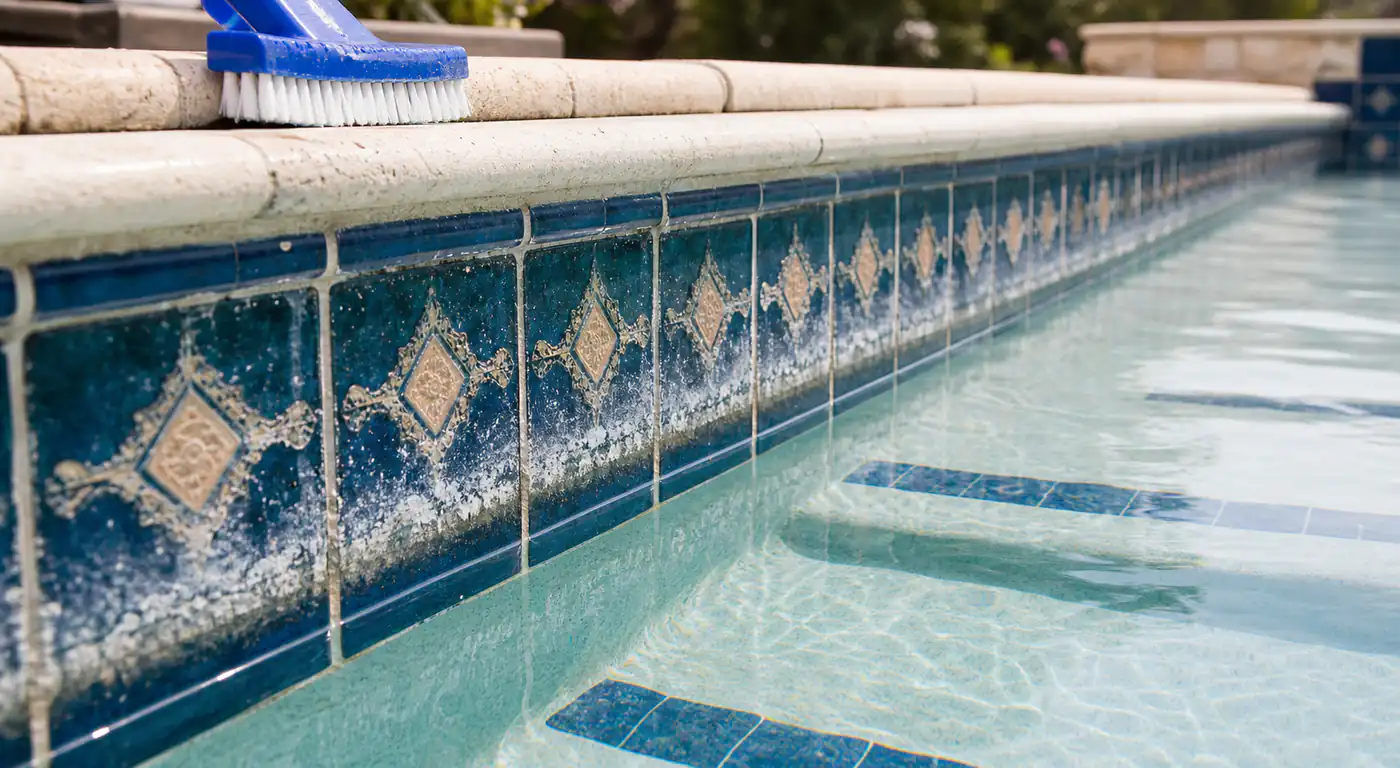
There is a chalky white band around your pool right at the waterline. It started faint. Now it is rough enough to scrape a knee.
That is calcium scale, and hard South Texas fill water makes it common here.
Two kinds, two different jobs
Before you buy anything, find out which one you have. This decides everything.
Calcium carbonate is white, flaky, and sits on the surface. Drip a little vinegar or muriatic acid on it. If it fizzes and foams, this is what you have, and it comes off with normal effort.
Calcium silicate is grayish white, very hard, and takes months to build. Acid barely touches it and it will not fizz. This one usually needs professional equipment.
Ninety percent of home pools have the carbonate kind. Test before you assume the worst.
Small buildup: start gentle

For a light film, drop the water level a few inches so the band is exposed.
Spray it with white vinegar, let it sit a few minutes, then scrub with a nylon brush. Rinse with a hose.
Vinegar is weak, which is exactly why it is the right first try. If it works, you are done in an afternoon with nothing harsh near your plaster.
Moderate buildup: pumice stone
A pumice stone cuts calcium off tile, and it works on the carbonate kind.
Two rules. Keep the stone wet and keep the tile wet the entire time, because dry pumice scratches. And use it only on ceramic, stone, or concrete.
Never use pumice on fiberglass, vinyl, or glass tile. It will leave permanent scratches you cannot polish out.
Work in small sections with light pressure. Let the stone do it rather than leaning on it.
Heavy buildup: get help
A thick crust or calcium silicate needs bead blasting, which fires a soft media at the tile under pressure. It strips the scale without cutting the tile.
That is not a rental job. The pressure and the media choice both matter, and getting either wrong ruins the tile face.
Some companies drain the pool for this and some do it with the water down a few inches. Ask which before you book.
Skip these
Do not use a wire brush or a metal scraper. They gouge grout and scratch tile permanently.
Do not use a pressure washer on tile or grout. It blows grout out of the joints, and regrouting a waterline costs far more than the cleaning did.
Do not pour acid straight into the pool to dissolve scale. It will crash your pH, damage plaster, and leave the tile mostly the same.
Why it came back last time
Cleaning the tile treats the symptom. Scale forms because the water chemistry is pushing calcium out of solution.
Three numbers drive it. Calcium hardness above 400 parts per million, pH above 7.6, and total alkalinity above 120 all push toward scaling.
Evaporation makes it worse over time, because water leaves and calcium stays. A pool topped off all summer keeps concentrating.
We go through the whole picture in calcium hardness in pool water.
Keep the ring from returning
Hold pH at 7.4 to 7.6 and alkalinity between 80 and 120. Brush the waterline every week, because new scale is soft and wipes off before it hardens.
Watch the equipment too. The same crust forms inside a heater and on a salt cell. It made our list of warning signs worth catching early.
Bring a water sample in for free testing at the supply store and we will tell you whether your water is scaling. Call (361) 575-5821.
Frequently Asked Questions
What is the white stuff on my pool tile?
Calcium scale. Calcium carbonate is white and flaky and fizzes when you drip vinegar on it. Calcium silicate is grayer, much harder, and does not fizz.
How do I remove calcium from pool tile myself?
For a light film, lower the water, spray white vinegar, let it sit, and scrub with a nylon brush. For heavier carbonate scale, use a wet pumice stone on ceramic or stone tile only.
Can I use a pumice stone on pool tile?
On ceramic, stone, or concrete, yes, as long as both the stone and the tile stay wet. Never use pumice on fiberglass, vinyl, or glass tile, because it leaves permanent scratches.
Does vinegar remove calcium from pool tile?
It removes light calcium carbonate buildup. It will not touch calcium silicate, and it is too weak for a thick crust.
Why does calcium keep building up on my tile?
Your water chemistry is pushing calcium out of solution. Calcium hardness above 400 ppm, pH above 7.6, or alkalinity above 120 will all do it. Evaporation concentrates calcium further because the water leaves and the mineral stays.
Can I pressure wash calcium off pool tile?
No. The pressure blows grout out of the joints. Regrouting a waterline costs far more than the cleaning would have.
