Why Commercial Pool Management Matters
Importance of Professional Pool Care
We set up customized maintenance plans for hotels, apartment complexes, HOAs, gyms and other commercial pools in Victoria and the surrounding towns. Each plan is built around how the pool is used: a 40-room hotel pool that fills up on summer weekends needs a different routine from an HOA pool that sits quiet until the neighborhood swim party. The plan covers cleaning, water chemistry and equipment.
Risks of Poorly Managed Commercial Pools
A commercial pool carries more swimmers per gallon than a backyard pool, so chlorine gets used up faster and a missed day shows sooner. Low chlorine lets bacteria and algae get a start, and the result is cloudy water, a strong chloramine smell and red eyes among guests. A failed health inspection can close the pool until it is fixed and rechecked, which for a hotel in July means refunds. Steady commercial pool cleaning and maintenance keeps those problems small enough to fix on a routine visit.
What to Expect from Commercial Pool Management
Routine Cleaning and Maintenance
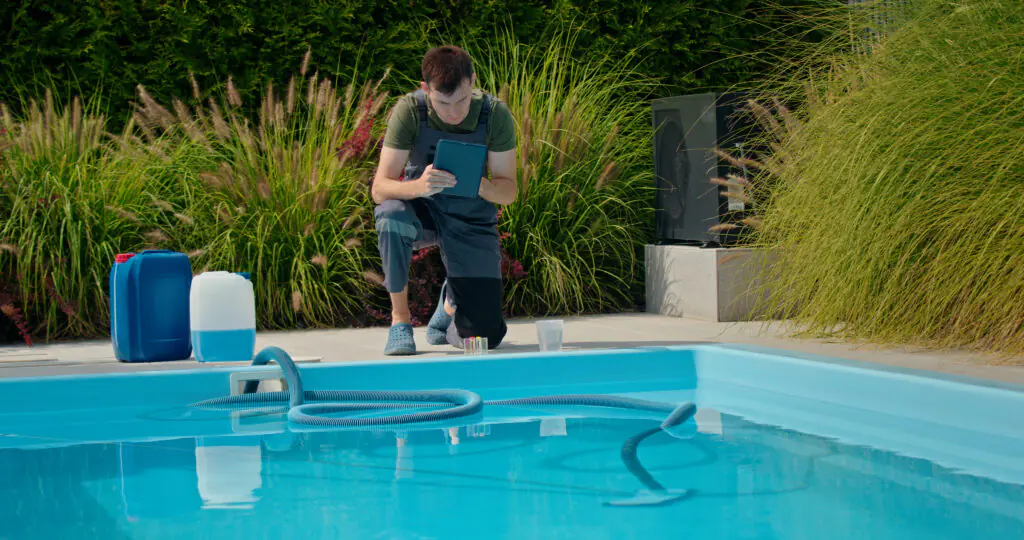
Each visit covers skimming, brushing the walls, steps and tile line, vacuuming, and emptying the skimmer and pump baskets. We test free chlorine, combined chlorine, pH, alkalinity, calcium hardness and cyanuric acid, then dose what the readings call for. For reference, we hold free chlorine at 1 to 3 ppm, pH at 7.4 to 7.6, alkalinity at 80 to 120 ppm and stabilizer at 30 to 50 ppm on a chlorine pool. Heavy-use pools drift faster, so the visit schedule is set per facility.
Equipment Inspection and Repairs
Commercial pumps and filters run long hours, so wear adds up quickly. A leaking pump shaft seal drips water onto the motor bearings, and left alone for a season it can take the motor with it. Our pool equipment repair crew works on pumps, filters, heaters, chlorinators and valves, and our repair technicians hold Texas RAIL licenses for pump, heater and electrical work.
Compliance with Health and Safety Standards
Public and semi-public pools in Texas, which includes hotel, apartment, HOA and gym pools, fall under the state rules in 25 TAC Chapter 265, enforced by the Texas Department of State Health Services. The rules cover water quality, testing and records, safety equipment, signage and fencing. You can read the current text in the Texas DSHS public swimming pool and spa rules. When we set up a plan, we go through the facility’s testing log with the manager so the person on site knows what is recorded on the days we are there and what staff record between visits.
Commercial Pool Services for Businesses in Victoria TX
Hotels and Resorts
Hotel pools swing hard between empty weekdays and full weekends, plus the rush around events in town. Guests notice cloudy water, slick steps and a heavy chlorine smell right away. A hotel plan puts more attention on the days before a busy weekend and on the deck and tile line, where guests look first.
HOAs and Apartment Complexes
Community pools serve children, older residents and the occasional party of fifty, often with nobody at the gate. The board or property manager needs one point of contact, a clear record of what was done on each visit, and early warning when equipment starts to fail so they can approve a repair before the pool closes.
Gyms and Recreation Centers
Gym pools take a steady load of swimmers every day, and many are indoors, where chloramines collect in the air and members smell them the moment they walk in. Keeping combined chlorine low takes regular shocking and good circulation, so a gym plan leans on frequent testing and close watch on the filter.
Benefits of Hiring Local Experts in Victoria, TX
Quick Response and On‑Site Support
Our crew and our pool supply store on North Navarro are both in Victoria, so parts and chemicals are close by when a pump or heater fails. Staff can bring a pint of pool water, taken from elbow depth, to the store for free testing on our BioGuard Spin Lab.
Knowledge of Local Codes and Regulations
The state rules in 25 TAC 265 apply across Texas, and the City of Victoria handles permits for construction and remodeling. Hard Victoria water pushes calcium up as the pool evaporates and gets topped off, so scale on tile and inside heaters is common on commercial pools. We test calcium hardness on every visit and keep it in the 200 to 400 ppm range on plaster.
How to Choose a Commercial Pool Management Company
Qualities of a Trusted Pool Service Provider
When you compare providers, look for these:
- Insurance, and the right license for any electrical or equipment work.
- Written test results after each visit, so your log stays complete.
- A service agreement that spells out what each visit includes, how often visits happen and how repair calls are billed.
Questions to Ask Before Hiring
Before you sign, ask:
- Who do we call when something breaks, and how are repairs scheduled?
- Can you give us references from comparable businesses in Victoria?
- What do you record on each visit, and how does it get into our testing log?
- How is the plan priced: flat monthly, per visit or hourly, and what costs extra?
Keep Your Commercial Pool Safe and Sparkling
We have kept Victoria pools running since 1968. Our commercial plans are priced after we walk the facility and see the pool, the equipment pad and the current testing log, so the cheapest pool to run is the one where problems get caught on a routine visit.
To set up a walk-through, call (361) 575-5821 or reach us through the Victoria Pool Service website. Have your pool’s size, the age of the pump and filter, and your busiest months ready.

FAQs
1. How often should a commercial pool be checked?
The state rules in 25 TAC 265 set how often public and semi-public pools must be tested and logged, so read the current rule for your pool type. Our visit schedule is set per facility on top of that, based on swimmer load and how fast the water drifts between visits.
2. Do I need a special permit for a business pool in Victoria?
Public and semi-public pools fall under 25 TAC 265, and building or remodeling a pool goes through the City of Victoria’s permit process. Check with both before opening a new pool or reopening after major work.
3. What kind of certifications should pool management technicians have?
Certified Pool Operator (CPO) and Aquatic Facility Operator (AFO) are the common national operator training programs. For pump, heater and electrical repairs in Texas, ask about a TDLR RAIL license.
4. Can poor pool maintenance affect business insurance?
It can. An injury or illness at a pool out of compliance makes a liability claim harder to defend, so ask your insurer which records to keep.
5. What happens if a pool fails a state inspection?
The inspector can close the pool until the problems are corrected, and repeated violations can bring penalties.
