Victoria pool owners deal with long swim seasons, hard-working equipment, windblown live oak leaves, and water chemistry that can shift fast after a hot week or heavy rain. A dependable pool service company Victoria TX homeowners can call should handle more than surface debris. The company should document its work, explain equipment concerns in plain language, and send technicians who are trained for the jobs they perform.
Start With the Work Your Pool Actually Needs
Write down what you expect before comparing companies. Routine cleaning, water testing, chemical adjustments, filter care, and equipment repair require different tools and training. A clear scope helps you compare service plans on equal terms and exposes vague promises before they become a weekly frustration.
Some homeowners need full weekly care. Others test their own water and want help with circulation, seasonal cleanup, or a stubborn algae problem. If you’re unsure, review the company’s description of pool cleaning and maintenance in Victoria and ask which tasks happen every visit.
Ask the company to describe its first visit. A careful technician should inspect the pool surface, walls, baskets, filter pressure, pump operation, return flow, visible plumbing, and water chemistry. That baseline gives both sides a record of the pool’s condition before recurring work starts.

9 Checks for a Pool Service Company Victoria TX Homeowners Can Trust
A strong pool company can answer direct questions about licensing, insurance, technician training, visit records, and repair limits. Look for specific answers backed by documents or a written service scope. Vague claims such as “we take care of everything” don’t tell you who will visit or what the technician will do.
1. Verify the License That Matches the Work
Texas doesn’t issue one blanket license for every pool-cleaning task. The license question depends on the work. Cleaning and water care differ from electrical work on pumps, motors, heaters, lights, controls, or automation.
For pool-related electrical devices, ask whether the technician or contractor holds the proper Texas electrical credential. The Texas Department of Licensing and Regulation explains the work a Residential Appliance Installer License holder may perform, including certain load-side work on pumps, motors, heaters, GFCIs, lights, and automation. New or upgraded line-circuit work calls for a licensed electrical contractor with a designated master electrician.
Victoria Pool Service & Supply states that its technicians are licensed and certified. You can review the company’s history and technician credentials before scheduling.
2. Ask for Proof of Insurance
Request a current certificate of insurance showing general liability coverage. If the company has employees, ask about workers’ compensation or its applicable workplace coverage. The document should identify the insured company, coverage dates, and carrier.
Insurance doesn’t prove that a technician knows pool chemistry. It does show that the company treats backyard work, equipment access, and property risk as a real responsibility. Confirm that the business name on the certificate matches the company you are hiring.
3. Look for Pool-Specific Training
Certifications such as Certified Pool Operator, Aquatic Facility Operator, or comparable training show that a technician has studied circulation, sanitation, water balance, and safe chemical handling. Certification carries extra weight for commercial or shared-use pools, where recordkeeping and health rules are stricter.
Texas requires trained and certified operators for Class A, B, and C public pools and spas. The Texas Department of State Health Services lists accepted operator-training paths. Residential owners can use the same credentials as a useful sign of technical study, even though a private backyard pool falls under different rules.
4. Get the Weekly Scope in Writing
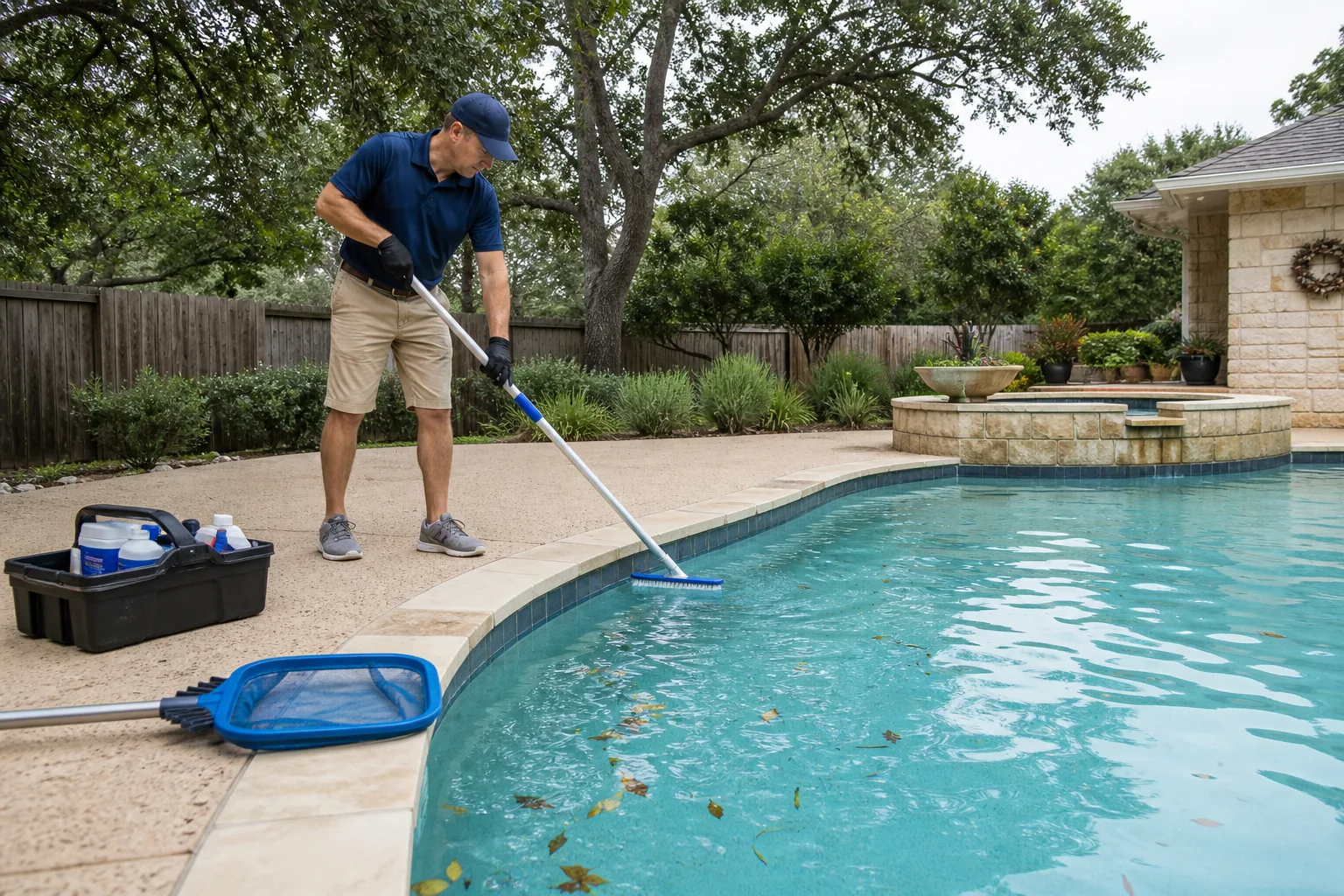
Weekly service should spell out physical cleaning, chemistry checks, equipment observations, and communication. The exact tasks can vary by pool, finish, surrounding trees, weather, and service plan. Written details prevent disagreements about brushing, vacuuming, filter work, and chemicals.
Use this table while comparing companies:
| Service area | What to ask | Reliable evidence |
|---|---|---|
| Water chemistry | Which readings are taken and recorded? | Visit report with test results and adjustments |
| Surface cleaning | Are skimming, brushing, and vacuuming included? | Written task list for each visit |
| Baskets and circulation | Are skimmer and pump baskets checked? | Technician notes or service app record |
| Filter care | When is pressure checked and the filter cleaned? | Defined trigger or maintenance schedule |
| Equipment review | Does the technician flag leaks, noise, or poor flow? | Photos and a written condition note |
| Weather response | What changes after storms, high heat, or heavy debris? | Documented service policy |
For a closer look at common visit tasks, see what weekly pool service should include. Compare that list with the agreement you receive.
5. Expect Water-Test Results, Not a Guess
Clear water can still have poor sanitizer balance, an unsuitable pH, or rising stabilizer levels. A technician should test with dependable equipment, record the readings, and make measured adjustments. Ask whether you receive the results after each visit.
A good report may track free chlorine or another sanitizer, pH, total alkalinity, and other readings relevant to the pool system. Salt pools also need salt-system checks, and pools using stabilized chlorine need attention to cyanuric acid. Homeowners who want a separate test can use Victoria Pool Service & Supply’s BioGuard water testing service.
6. Check How the Company Communicates
Reliable service leaves a trail. Look for arrival records, completed-task notes, water readings, treatment details, equipment observations, and photos when useful. A mobile app, email, or text report can work well as long as the information is consistent.
Ask who handles questions and how quickly the office responds during business hours. You should know what happens if a gate is locked, a pet blocks access, severe weather changes the route, or the technician finds a leak. The company’s maintenance scheduling page should also make the next step easy to find.
7. Read Reviews for Patterns
Five-star averages provide a quick signal, but the written reviews tell you more. Read recent comments and look for repeated mentions of on-time visits, clear explanations, clean work areas, and consistent results across several months.
Pay attention to how the company answers criticism. A calm, factual response shows more than a defensive argument. Ask two references with pools similar to yours how the company handled missed visits, recurring algae, or an equipment problem.
8. Test the Company’s Repair Knowledge
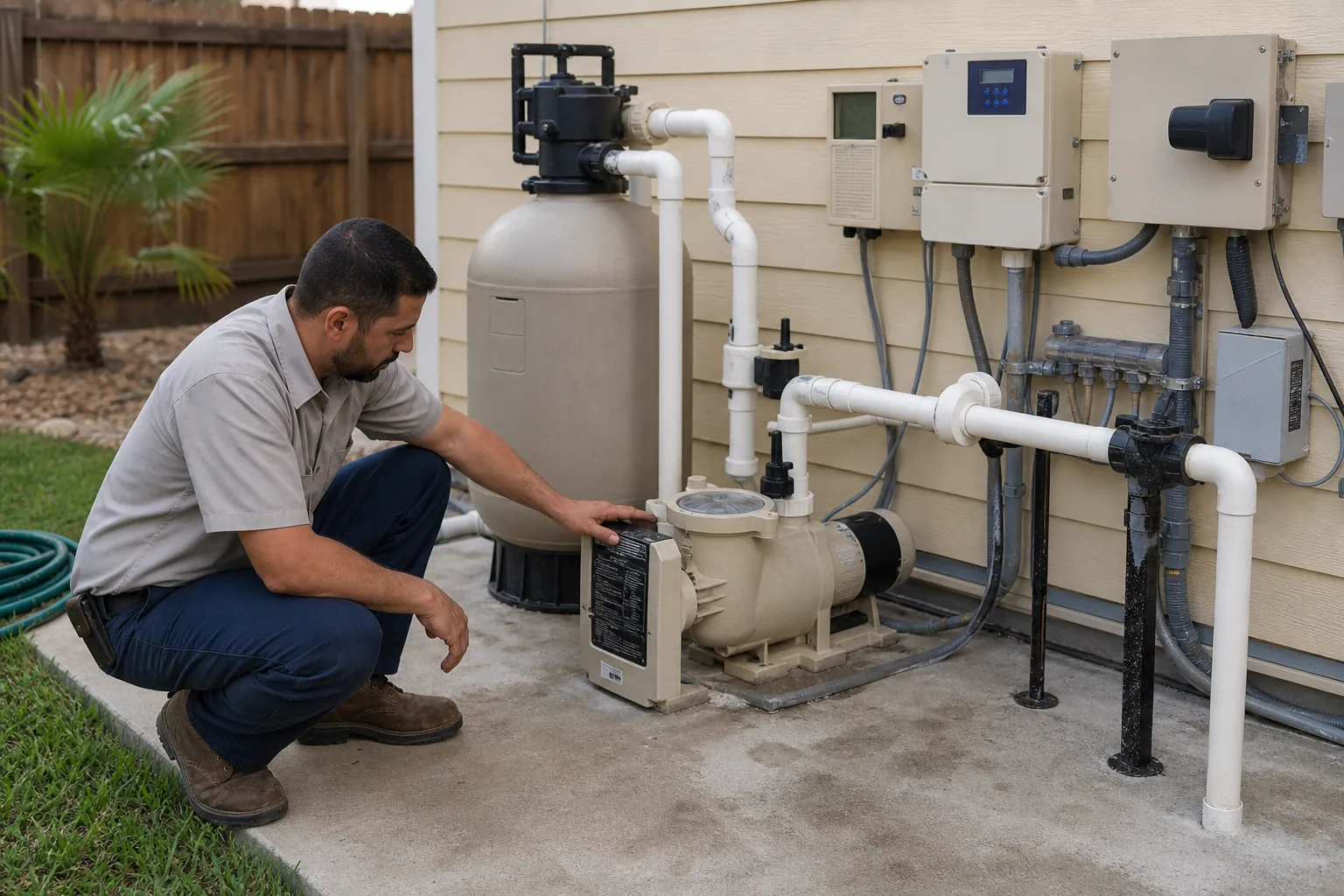
Cleaning and equipment repair overlap. Low flow, air in the pump basket, rising filter pressure, a noisy motor, or weak returns can affect water quality. A weekly technician should recognize those warning signs and explain whether the company can repair the problem within its licensed scope.
Ask which pump, filter, heater, cleaner, salt-system, and automation brands the team services. Victoria Pool Service & Supply lists pool repair and equipment service in Victoria, including warranty work for several major manufacturers. Brand familiarity helps with diagnostics, parts, and warranty procedures.
9. Read the Agreement Before the First Visit
The agreement should name the service frequency, included tasks, homeowner responsibilities, access rules, chemical policy, weather procedure, and cancellation terms. Ask how the company handles extra cleanup after a storm or a pool that arrives with algae, heavy debris, or equipment trouble.
Look for a clear process when work falls outside recurring service. The company should inspect the issue, explain the options, and get authorization before starting separate repair work. Keep a copy of the signed scope and the starting-condition report.
Red Flags That Deserve a Second Look
Several warning signs can save you from a poor fit. One issue may have an innocent explanation, but a pattern should slow down the hiring decision.
- The company won’t identify the technician’s license for electrical equipment work.
- The service description uses broad promises without a task list.
- No one records water-test results or completed work.
- Reviews repeatedly mention skipped visits or unanswered messages.
- The technician recommends major equipment work without showing the fault.
- The agreement leaves weather delays, gate access, or extra work unexplained.
- The company can’t provide proof of insurance under its operating name.
Questions to Ask Before You Hire
Bring the same questions to every company. Consistent questions make the answers easier to compare.
- Who will service my pool, and what training or licenses does that person hold?
- What tasks happen on every visit, and which tasks follow a separate schedule?
- Will I receive chemistry readings and a completed-work report?
- How do you handle storms, heavy leaf fall, or route delays?
- Who contacts me if the technician finds a leak or equipment fault?
- Which repairs can your team perform, and when do you call another licensed trade?
- Can you provide proof of insurance and two recent local references?
- What are the access, pause, and cancellation terms?
Key Takeaways for Victoria Pool Owners
- Match the technician’s license to the actual work, especially electrical equipment service.
- Get weekly cleaning, chemistry, filter, and reporting tasks in writing.
- Favor companies that share test results and photos instead of relying on verbal updates.
- Look for recent review patterns and references from owners with similar pools.
- Ask how the team handles Victoria heat, storms, leaf debris, and long swim seasons.
- Confirm repair skills, brand experience, insurance, and authorization steps.
Final Thoughts
The best pool service company in Victoria gives you proof: licensed work, recorded water readings, a defined visit checklist, and direct communication. Call Victoria Pool Service & Supply at (361) 575-5821 or use the contact page to discuss your pool and request a written service scope.
Frequently Asked Questions
Should a pool company be licensed in Texas?
Texas licensing depends on the work performed. Routine cleaning and water care don’t fall under one blanket pool-company license, but electrical work on pool pumps, motors, heaters, lighting, controls, and related equipment may require a TDLR electrical credential. Ask the company to identify the license that covers the proposed work.
What is a TDLR pool license?
People often use “TDLR pool license” to mean a Residential Appliance Installer License, commonly shortened to RAIL, or the related contractor license used for certain pool and spa electrical equipment work. TDLR defines the allowed scope. Some line-side electrical changes require a licensed electrical contractor with a designated master electrician.
How do I know if a pool service is reliable?
Check recent reviews for repeated patterns, request proof of insurance, verify licenses for regulated work, and get the weekly scope in writing. Reliable companies record water readings, document completed tasks, report equipment concerns, and explain schedule changes promptly.
What should be included in weekly pool service?
A weekly visit commonly includes skimming, brushing, basket cleaning, water testing, chemical adjustments, circulation checks, and a visual equipment inspection. Vacuuming and filter cleaning may follow the service plan or pool condition. The company should state the exact schedule in writing.
Are certified pool techs worth the extra cost?
Certification can be valuable because it shows formal study of circulation, sanitation, water balance, and chemical handling. Credentials don’t replace references or good communication, but they provide another way to judge technical preparation. For public pools in Texas, trained and certified operator supervision is required.
Should I receive a report after every pool visit?
Yes. A useful report lists the visit date, completed tasks, water readings, chemical adjustments, and equipment concerns. Photos can document closed gates, storm debris, leaks, or finished work. Written records make recurring service easier to manage.
Can the same company clean my pool and repair equipment?
Many companies offer both services, but the technician must stay within the scope allowed by Texas law and the credentials held. Ask which brands the company services, whether it handles warranty work, and who performs electrical tasks that fall outside a pool technician’s license.
