A pool pump that hums but won’t move water, a filter gauge that keeps climbing, or a heater that shuts down mid-cycle can make any Crossroads pool owner pause before booking service. You want repair-vs-replace direction before someone comes out. That’s why pool equipment repair cost Victoria TX is best discussed by failure type, equipment age, access, and part condition instead of a public price list.
Victoria pools work hard. Long swim seasons, hot equipment pads, mineral-heavy fill water, oak debris, and storm cleanup all add wear. This article covers pumps, filters, heaters, salt cells, valves, and plumbing with the same plain framework a technician uses on site: what failed, why it failed, and whether repair still makes sense.
Pool Equipment Repair Cost Victoria TX Starts With Diagnosis
Pool equipment repair cost Victoria TX changes fast once the actual cause is found. A noisy pump motor, clogged impeller, suction leak, dirty filter, bad sensor, or cracked fitting can create similar symptoms, but each one calls for a different repair path.
A good service visit separates symptoms from causes. Low water flow can make a heater stop firing, make a pump sound starved, and push filter pressure out of range. Replacing one part without checking flow, pressure, water balance, and plumbing can lead to repeat calls.
- Pump trouble: grinding, humming, no prime, leaking seal, air in the basket, or weak returns.
- Filter trouble: high pressure, cloudy water, torn cartridges, bad grids, or debris returning to the pool.
- Heater trouble: error codes, no ignition, short cycling, soot, or weak heat.
- Salt system trouble: low salt alerts, no chlorine output, scale, or flow warnings.
- Pad leaks: loose unions, brittle PVC, worn O-rings, cracked valves, or heat-stressed fittings.
For more pump-specific signs, see the Victoria Pool Service article on common pool pump repair causes in Victoria.
Pool Equipment Repair Cost Victoria TX by Repair Category
Pool equipment repair cost Victoria TX usually lands in a service category rather than one flat number. A gasket or sensor job sits in a different category than a full equipment replacement with plumbing changes.
| Equipment | Common Signs | Service Category | Repair-vs-Replace Clue |
|---|---|---|---|
| Pool pump | Noise, no prime, leaks, low flow | Seal, motor, impeller, plumbing, or replacement | Replace when age, cracks, repeat failures, or poor efficiency stack up |
| Filter | High pressure, cloudy water, broken internals | Cleaning, media, internal parts, or tank replacement | Replace when the tank is damaged or the unit is undersized |
| Heater | No ignition, short cycling, error codes | Sensor, flow, ignition, exchanger, gas, or electrical diagnosis | Replace when corrosion or major internal failure is present |
| Salt cell | Low output, scale, flow warnings | Cleaning, water balance correction, cell, sensor, or board check | Replace when output stays low after proper cleaning and testing |
| Valves and PVC | Drips, air bubbles, stiff handles | O-rings, unions, valve rebuilds, or pipe repair | Replace sun-baked parts before repeat leaks begin |
This category view protects homeowners from false certainty. A common part on an open pad is a different job than the same part trapped behind old plumbing. Victoria Pool Service’s pool repair and service team can inspect the equipment and explain both paths before work starts.
Noisy Pumps and Weak Flow
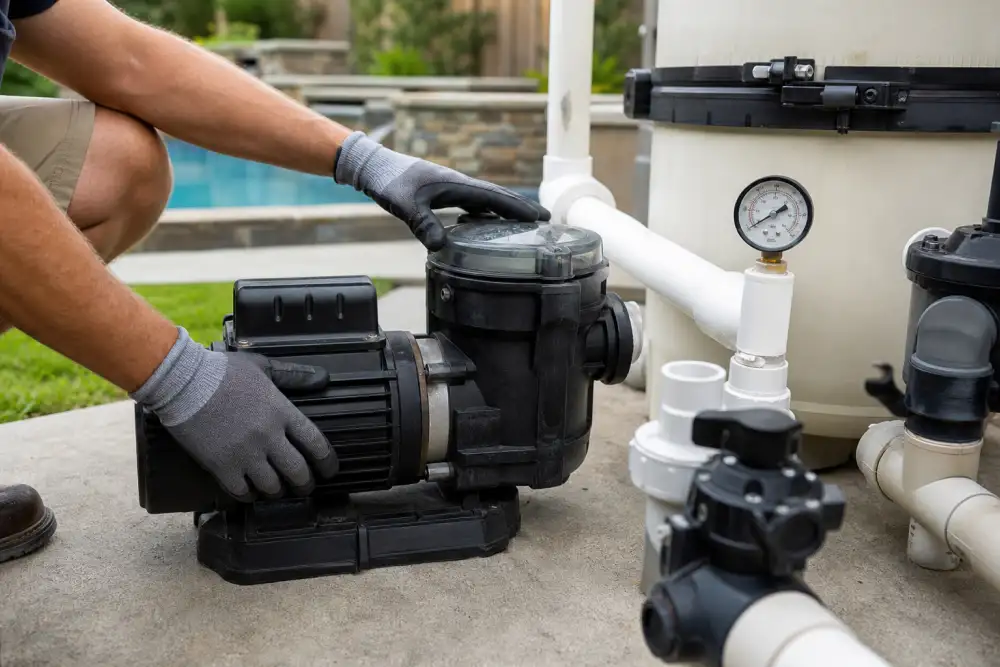
A noisy pump deserves attention because the sound often points to friction, air, or heat. Bearings, capacitors, seals, impellers, lids, baskets, and suction-side plumbing can all be involved.
A high whine often points to bearings. A low hum can point to a capacitor, motor, jammed impeller, or power issue. A rattling basket area may come from cavitation, debris, a loose lid, or a bad O-ring.
Repair signs
Repair often makes sense when the pump body is sound, the motor is not too old, parts are available, and the system still fits the pool’s flow needs. Seal kits, baskets, O-rings, and some motor components can extend the life of a healthy pump.
Replacement signs
Replacement starts to look better when the pump is older, cracked, loud after previous repairs, or poorly sized for the pool. ENERGY STAR notes that certified pool pumps can use less energy than standard models, which can matter for pools that run many hours in Texas heat.
Filters, Cloudy Water, and Pressure Warnings
Filter problems often show up as cloudy water, weak returns, rising pressure, or debris coming back into the pool. The right fix depends on filter type, debris load, water balance, and the condition of the internal parts.
Cartridge filters can clog fast during pollen season or after storms. Sand filters can channel, which lets water pass through paths in the sand instead of the full bed. DE filters can return powder when grids, manifolds, or seals fail.
Water chemistry affects filter life too. Scale, low pH, high sanitizer, and heavy debris can shorten the life of cartridges, grids, gaskets, heaters, and salt cells. If the equipment looks fine but the water is struggling, start with free water testing.
Heater Repair Requires More Safety Checks
Heater repair involves water flow, gas supply, ignition, sensors, venting, corrosion, and electrical controls. A heater fault can begin inside the heater or elsewhere in the circulation system.
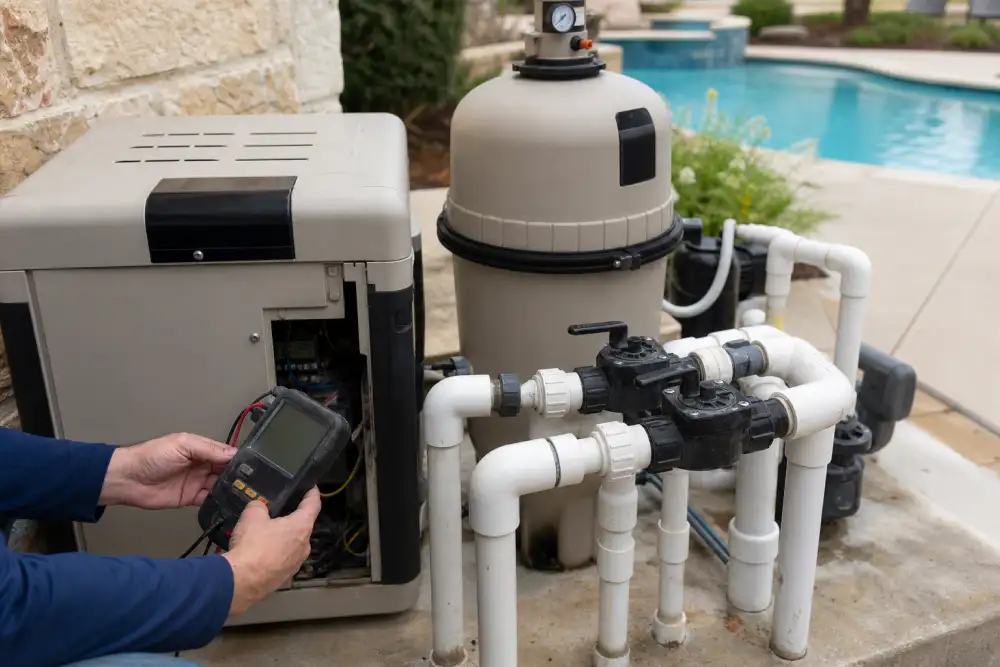
Low flow through a dirty filter can stop a heater from firing. Poor water balance can corrode internal parts. Storm moisture and rodents can damage wiring. A sensor may be the visible failure, but the cause may be flow, chemistry, or age.
Corrosion changes the decision. If a heat exchanger or internal metal parts are damaged, repair can turn into a short-term patch. A technician should explain what failed, what caused it, and whether surrounding parts still have useful life.
Salt Cells, Automation, and Control Boards
Salt systems and automation panels are convenient, but warnings need proper testing. A salt alert can mean scale, low flow, poor water balance, an aged cell, a bad sensor, or control board trouble.
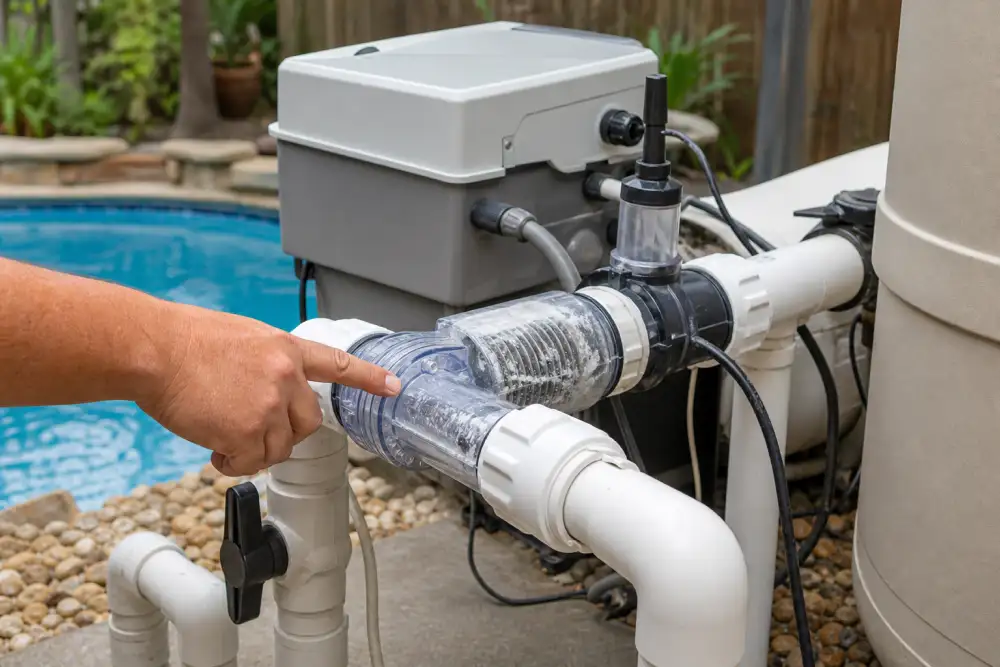
Salt cells wear based on operating hours, output setting, scale, and water balance. Cleaning helps when scale is the issue. Cleaning will not restore a cell that has reached the end of its output life.
The Victoria Pool Service supply store can help with pool chemicals, parts, and water care products. The pool chemicals and supplies page is also useful for keeping water balance from damaging equipment.
Repair or Replace: A Crossroads Checklist
The repair-or-replace call gets easier when you compare age, repeat failures, part availability, energy use, warranty, and plumbing condition. A cheap part can still be the wrong move if the equipment is near the end of its life.
- Check equipment age. Older pumps, heaters, and salt cells may have limited parts support.
- Count repeat failures. More than one repair in a season points to a larger issue.
- Inspect the pad. Brittle PVC, tight access, and old valves can add labor.
- Review energy use. Older single-speed pumps can work harder than needed.
- Ask about warranty. Replacement equipment may carry better coverage than a one-part repair.
- Plan around swim season. A temporary repair may buy time, but diagnosis should drive the final call.
For routine care that catches problems earlier, see pool cleaning and maintenance or the VIP Premium pool care plan. If a larger replacement or backyard update is on the table, the pool financing and pool renovations and remodeling pages can help with planning.
Key Takeaways for Victoria Pool Owners
- Pool equipment repair cost Victoria TX depends on diagnosis, equipment age, access, parts, and safety checks.
- Noisy pumps, high filter pressure, heater errors, salt alerts, and pad leaks need different tests.
- Repair makes sense when the equipment still has useful life and the failure is isolated.
- Replacement makes sense when corrosion, cracks, repeat failures, or poor efficiency stack up.
- Water chemistry and filtration problems can damage equipment faster in Crossroads heat.
Final Thoughts
If your pump is noisy, filter pressure is climbing, or heater keeps shutting down, book a diagnostic visit before the problem closes the pool. Start with the Victoria Pool Service contact page or use the schedule maintenance page.
Frequently Asked Questions
How much does a pool pump replacement cost?
Pool pump replacement cost depends on pump type, plumbing changes, electrical needs, equipment access, and warranty coverage. A technician should compare repair and replacement after checking the motor, housing, seals, flow, and age of the pump.
Is it worth repairing an old pool pump?
Repair can make sense when the pump body is sound, parts are available, and the failure is isolated. Replacement is often better when the pump is old, loud, inefficient, cracked, or has needed several repairs in a short period.
How often do salt cells need replacing?
Salt cells wear out based on operating hours, output setting, water balance, and scale buildup. Many last for years with proper care, but heavy use and poor chemistry can shorten service life.
Does home warranty cover pool equipment?
Some home warranty plans include pool equipment, but coverage varies by plan, age, maintenance history, failure type, and exclusions. Read the pool equipment section before assuming a pump, heater, filter, or salt system repair is covered.
What causes a pool leak?
Pool leaks can come from cracked fittings, worn O-rings, loose unions, damaged valves, plumbing breaks, structural cracks, skimmer issues, or equipment pad leaks. Air bubbles, water loss, and wet soil near the pad are common clues.
Why is my pool heater turning on and off?
A heater that short cycles may have low water flow, a dirty filter, sensor trouble, ignition issues, gas supply problems, or internal corrosion. Because heaters include gas, water, and electrical parts, professional diagnosis is safer.
Can bad water chemistry damage pool equipment?
Yes. Low pH, scale, high sanitizer levels, and poor balance can wear out seals, cartridges, heater internals, salt cells, and metal parts. Regular testing protects the equipment as well as the water.
